 How-to
How to Spot High Quality Jewelry Before You Buy
Last Updated: November 5, 2026
Quick Summary
To spot high quality jewelry online, first confirm the metal is named, such as 925 sterling silver or solid gold, and that gemstones are described by type and size. Then compare the product description with the photos and check the back of the piece and the clasp. A listing that only says high quality without naming a material tells you very little.
- Confirm the metal is named, such as 925 sterling silver or gold-plated.
- Check that gemstones are described by type and size.
- Know the difference between solid gold, gold-filled, gold-plated and vermeil.
- Look at the prongs or bezel holding each stone for tight, even finishing.
- Verify any stamp or certificate through the issuing lab's own website.
Table of Contents
- How to Spot High Quality Jewelry Online Before You Order
- Reading Jewelry Materials and Hallmarks
- How to Inspect Jewelry Settings and Stone Security
- Checking Finish, Construction and Closures
- Gemstone Quality Basics for Everyday Pieces
- Jewelry Quality Checklist by Piece Type
- Your Next Step: Choosing a Piece You Will Keep Wearing
- Frequently Asked Questions
How to Spot High Quality Jewelry Online Before You Order
Buying jewelry online means you cannot touch the piece before it arrives. That makes it harder to know if you are paying for high quality jewelry. This guide shows you what to check first.
A good starting point is the product page itself. Look for clear photos from several angles, a stated metal, and a size. Vague listings that hide the material are a warning sign.
Here is a quick way to screen a listing:
- Confirm the metal is named, such as 925 sterling silver or gold-plated.
- Check that gemstones are described by type and size.
- Read the dimensions, including width and weight.
- Compare the description with the photos.
Watch out: A listing that only says "high quality" without naming a material tells you very little. Ask for the metal and stone details before you buy.
Reading Jewelry Materials and Hallmarks
Recognizing high quality jewelry starts with what the piece is made of. Hallmarks and stamps can help, but not every good piece has one. A missing stamp alone does not prove a piece is low quality. Look at the product description for the material and verify it through other evidence.
Solid Gold, Gold-Filled, Gold-Plated and Vermeil
These terms describe very different products, and sellers sometimes blur them.
- Solid gold is gold throughout the piece. It is the most durable option and costs the most.
- Gold-filled has a thick layer of gold bonded to a base metal. It wears far longer than plating.
- Gold-plated has a thin gold coating over a base metal. It can look bright at first but wears off faster.
- Vermeil is sterling silver with a thick gold layer. It is a middle option for everyday pieces.
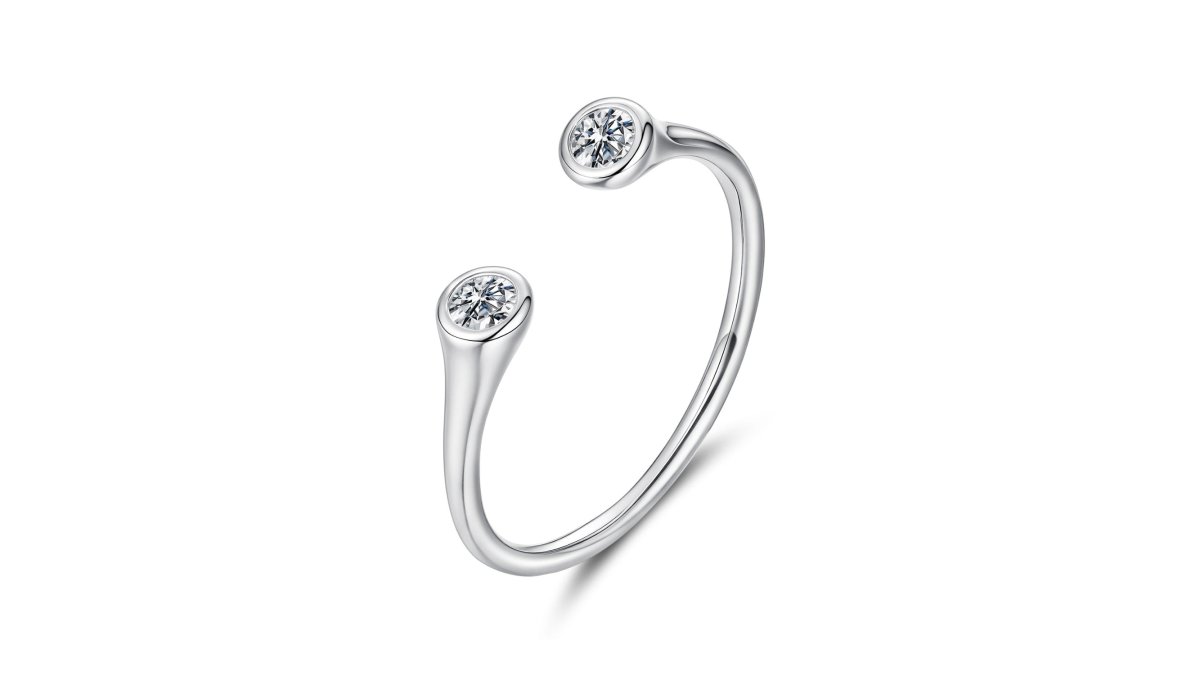
Our Pueblo Blue Turquoise and Sterling Silver Oval Ring is listed with its metal named clearly. Our 925 Sterling Silver Moissanite Ring Size E is plated with white gold over 925 sterling silver, and its listing states what the piece is made of. Reading the exact material line helps you tell these categories apart.
What Karat and Sterling Markings Tell You
Karat marks show how much pure gold an alloy contains. A higher number means more gold. Sterling silver is marked ".925," meaning 92.5% pure silver. If a listing names one of these markings, it is a useful clue. If it names neither, ask the seller what the metal is before you order.
How to Verify a Stamp or Certificate Independently
A stamp is a claim, not proof. Anyone can engrave "14K" or ".925" on a piece, and a printed certificate is only as reliable as the lab that issued it. Treat both as starting points and confirm them through a second source.
A practical sequence:
- Read the stamp in context. A karat mark should match the metal named in the listing. If the description says "gold-plated" but the photo shows a "14K" stamp, ask which is accurate.
- Ask for the full material line in writing. A seller who can state the base metal, the plating thickness, and the stone type in a message is easier to hold to that claim than one who only uses marketing language.
- Check whether a grading report exists and who issued it. For colored stones and diamonds, independent labs such as the Gemological Institute of America (GIA) and the American Gem Society (AGS) issue reports that can be looked up by report number on the lab's own website. A report you cannot verify on the issuer's site is not evidence.
- Match the report number to the piece. The report should describe the same stone weight, shape, and measurements as the listing. A report for a different stone proves nothing about the one you are buying.
- Confirm the seller's return and authentication terms. A written return window gives you a remedy if an independent jeweler or appraiser finds the piece does not match its description after it arrives.
Watch out: A certificate photo that shows only the front page, with no report number or lab name visible, cannot be verified and should not be treated as proof of quality.
Care, Repairability and Long-Term Cost
Durability and repairability matter as much as the initial material. Before you order, ask whether the seller offers resizing, what the repair policy is, and whether the piece can be serviced locally.
How to Inspect Jewelry Settings and Stone Security
The setting holds the stone, so a weak setting can mean a lost gem. When you check product photos, look at the prongs or bezel holding each stone. Prongs should look evenly spaced and tight around the stone. Gaps or uneven tips can point to poor finishing.
Use a magnifier if you have one. Look for small cracks in the metal near the stone and for any loose or wobbling gem in close photos.
A common mistake is ignoring the back of a ring or pendant. The underside often shows the real construction quality, so check it in photos whenever the seller provides them.
Checking Finish, Construction and Closures
High quality jewelry has a smooth, even finish. Rough edges, visible solder marks, or file scratches can show a rushed build. Close-up photos are the best way to spot these details online.
Closures matter just as much as the body of the piece. Clasps on necklaces and bracelets should look sturdy and close securely in the photos. A flimsy clasp is one of the most common reasons a piece breaks early.
925 Sterling Silver Moissanite Ring Size E →
For plated pieces, plating can wear away with friction and sweat. Keep plated jewelry away from water, lotions and perfume to help it last longer.
Gemstone Quality Basics for Everyday Pieces
Gemstones vary widely in quality, even within the same type. Natural stones show slight variation in color and pattern, which is part of their appeal. Listings often note this, as in our turquoise pieces, which state that each piece will vary slightly from the image shown.
Look for these basics in the listing:
- The gemstone type, such as turquoise, agate or moissanite
- The stone size, such as the 0.65 cm moissanite in our Pavé setting ring
- Whether the stone is natural, lab-created or simulated
Knowing what the stone actually is helps you set fair expectations.
What You Can and Cannot Judge From a Photo
If a listing does not say whether a stone is treated, natural, or lab-created, ask before you buy.
A Calibrated Way to Compare Stones
For diamonds, the industry standard is the 4Cs: cut, color, clarity, and carat weight. Cut has the largest effect on how lively a diamond looks, so a well-cut stone of lower color or clarity often outperforms a poorly cut stone of higher grades. Color and clarity are graded on established scales, and carat is a weight measure, not a size measure, so two stones of the same carat can look different depending on cut proportions.
For colored stones such as turquoise and agate, compare:
- Hue and saturation. A strong, even color is generally more valued than a pale or muddy one.
- Tone. How light or dark the stone appears.
- Clarity and matrix. In turquoise, some matrix is normal and expected; the question is whether it is stable and attractive rather than chalky or crumbly.
- Cut and polish. Facets should meet cleanly and the surface should not show scratches or dull patches.
- Size relative to the setting. A stone that sits too high or is poorly seated is a durability risk regardless of grade.
When to Ask for Professional Grading
Visual inspection has limits, and a listing photo is not a grading report. For lower-cost pieces, a written description of the stone type and whether it is natural or lab-created is usually enough to set expectations. If a seller cannot or will not state the stone type in writing, treat that as a reason to look elsewhere.
Jewelry Quality Checklist by Piece Type
Use this checklist before you add anything to your cart:
Rings
- Metal is named in the listing
- Ring size is clearly stated
- Setting looks secure in close photos
- Band width is listed
Earrings
- Post or hook type is described
- Weight and length are listed
- Both earrings look matched in photos
Necklaces and bracelets
- Clasp type is shown in photos
- Chain or band construction is visible
- Length is listed
Stone pieces
- Gemstone type is named
- Natural variation is mentioned
- Stone size is given
Your Next Step: Choosing a Piece You Will Keep Wearing
The best piece is one you will wear often and care for well. Start with a clear material, a secure setting and a finish that looks even in close photos. Then pick a style that fits your everyday routine.
Shop our curated collections at CSShop | Jewelry & Crystals at csshop.shop. Explore our 925 Sterling Silver Moissanite Ring, our Pueblo Blue Turquoise and Sterling Silver Oval Ring, and our Barcelona Blue Turquoise and Pink Agate Golden Drop Earrings. Our Jewelry Mystery Boxes are another affordable way to discover new pieces. 💎
Frequently Asked Questions
How can you tell if jewelry is high quality?
Start with the metal. Look for a clear stamp such as 14K, 18K or 925 on gold or silver pieces, and check that the finish is smooth with no flaking or dark patches on the edges. Then examine the stones and settings: prongs should be even and firm, and stones should not wiggle. Well-made pieces also show clean solder joints, consistent polish and closures that snap securely. No single sign proves quality, so combine several checks before deciding.
What should you look for in well-made jewelry?
Well-made jewelry shows careful construction. Look for even edges, symmetrical shapes and a uniform polish across the piece. Solder seams should be neat with no visible gaps, and the back of a ring or pendant should be finished as carefully as the front. Clasps on necklaces and bracelets should close firmly and feel solid. Stones should sit flush and centered. Pieces that feel light, hollow or rough at the joints often signal lower quality.
How can you check jewelry quality when shopping online?
Ask for the metal type, karat or fineness, stone details and dimensions before you order. Check that the listing shows close-up photos from several angles and clearly states whether a piece is solid, plated or filled. Read the return policy and look for reviews that mention accuracy of color and finish. If the description is vague about materials, treat that as a warning sign and contact the seller before buying.
How can you tell if a gemstone is securely set?
Gently press on the stone with a fingertip or tilt the piece. A securely set stone does not move or rattle. Check each prong, which should be evenly shaped, smooth and tightly wrapped around the stone's edge without cracks or thin spots. Look at the setting from the back as well, since loose stones are often visible there first. If a setting feels loose, have a professional jeweler inspect it before wearing the piece regularly.