
 comparison
Is Gold Vermeil Jewelry Worth the Price? 2026 Review
Table of Contents
- What Gold Vermeil Jewelry Actually Is (and the 2.5 Micron Rule)
- Gold Vermeil vs Gold Plated: Where the Money Goes
- Is Gold Vermeil Hypoallergenic? What Sensitive Skin Should Know
- Cost Per Wear: The Math That Answers Whether It's Worth It
- Gold Vermeil Jewelry Care Tips That Extend Its Life
- Repair, Replating, and the Environmental Trade-Off
- Verdict: Who Should Buy Gold Vermeil and Who Shouldn't
- Conclusion
- Frequently Asked Questions
Last Updated: October 3, 2026
What Gold Vermeil Jewelry Actually Is (and the 2.5 Micron Rule)
Gold vermeil jewelry is a piece made with a sterling silver base that carries a thick layer of gold, and the thickness is what separates it from cheaper gold-plated items.

That single standard is why so many shoppers ask whether gold vermeil jewelry is worth the price. At CSShop, we field this question constantly, and the honest answer starts with the numbers behind the label.
The Federal Trade Commission Standard for Vermeil
The FTC Jewelry Guides on precious metal claims spell out three conditions a piece must meet before it can legally be called vermeil. The base metal must be sterling silver.
Miss any one of those, and the piece is gold plated, not vermeil. That distinction carries real weight, because a 0.5-micron plating and a 2.5-micron layer look identical on day one and completely different after a year of daily wear.
Gold Vermeil vs Gold Plated: Where the Money Goes
Gold vermeil and gold plated jewelry differ in base metal, gold thickness, and how long the finish survives. Vermeil uses sterling silver with a legally defined 2.5-micron gold layer.
That gap explains most of the price difference.
| Feature | Gold Vermeil | Gold Plated |
|---|---|---|
| Base metal | Sterling silver | Brass or copper alloy |
| Gold thickness | 2.5 microns minimum | Often under 0.5 microns |
| Legal standard | FTC-defined | No minimum |
| Typical lifespan | Years with care | Months |
| Repairable | Yes, replating works well | Rarely cost-effective |
The practical upshot: a gold plated ring that costs a third as much can still be the worse deal if it fades in six months.
Is Gold Vermeil Hypoallergenic? What Sensitive Skin Should Know
Gold vermeil is usually a better choice for sensitive skin than gold plated jewelry, because sterling silver sits underneath the gold. The most common trigger for irritation is nickel, which shows up in cheap base metals and alloys.
That said, hypoallergenic does not mean allergy-proof. If your skin reacts to gold alloys themselves, even a vermeil piece can cause a reaction once the plating wears thin at the edges.
A few things we tell customers with reactive skin:
- Look for sterling silver as the stated base, not "alloy" or "mixed metal"
- Avoid pieces where the gold layer is described only as "flash plated"
- Take rings off before swimming or showering to slow wear at the high-contact points
Cost Per Wear: The Math That Answers Whether It's Worth It
Cost per wear is the price of a piece divided by the number of times you actually wear it, and it settles the "worth it" question faster than any list of pros and cons.
That is the framework we use with customers. The sticker price is not the story. Wear frequency is.

The Three Variables That Actually Move the Number
Cost per wear is not a single calculation, it is a function of three inputs, and changing any one of them flips the verdict:
- Purchase price. The obvious one, but the least decisive on its own.
- Wear frequency. How many days per month the piece is actually on your body, not how much you like it in the box.
- Service life. How many months the finish survives before it needs replating or replacement, which depends on the piece type and how you treat it.
Most shoppers fixate on variable one and ignore two and three, which is exactly backwards. A cheap piece with a short service life and low wear frequency loses to a pricier piece you never take off.
Wear-Frequency Tiers
A common pattern is to sort pieces into three tiers before doing any math:
| Tier | Wear Frequency | Typical Piece |
|---|---|---|
| Daily driver | 20+ days per month | Signet ring, huggie hoops, layering chain |
| Regular rotation | 5-15 days per month | Statement pendant, stackable band |
| Occasional | Under 5 days per month | Event piece, seasonal accent |
Vermeil earns its price in the first two tiers. In the occasional tier, a plated piece is often the rational buy because the finish never gets enough contact to fail.
The Replacement-Cycle Math
Here is the part most comparisons skip. A plated piece does not fail once, it fails repeatedly, and each replacement resets the clock. Over a three-year stretch, a shopper replacing a plated piece every six to nine months buys three to six pieces.
The relevant comparison is not "$40 versus $150." It is the total spent across the replacement cycles versus the total spent on one piece plus any replating.
Finding Your Break-Even
The break-even point is the number of wears at which the vermeil piece's cost per wear drops below the plated piece's. You do not need a spreadsheet. Estimate the plated piece's realistic service life in wears, divide its price by that number, then divide the vermeil price by the wears you expect before replating.
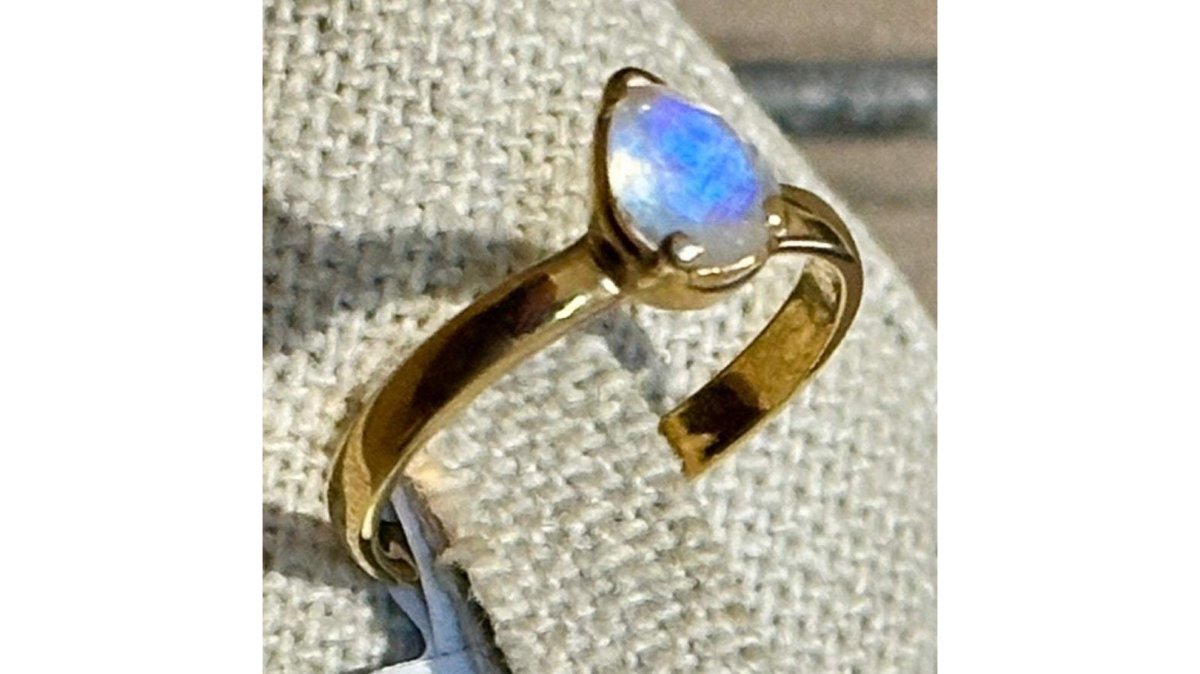
Rainbow Moonstone Teardrop-Open Wrap Ring – Gold Vermeil – Size 6 →
The math rarely favors the cheaper piece. It favors the piece you keep wearing.
Gold Vermeil Jewelry Care Tips That Extend Its Life
Good gold vermeil jewelry care comes down to three habits: keep it dry, keep it separate, and keep it clean. The gold layer is thin by design, so anything abrasive shortens its life.
- Put jewelry on last, after perfume, lotion, and hairspray have dried
- Take rings and bracelets off before washing dishes, swimming, or working out
- Store each piece in its own pouch or compartment so metal does not scratch metal
Sweat and chlorine are the two biggest enemies. Both sit on the surface and gradually work at the plating. A quick wipe-down costs ten seconds and buys months.
Where Vermeil Fails First
The wear pattern is predictable. The gold layer thins fastest at high-friction contact points: the underside of a ring band where it rubs against neighboring fingers, earring posts and backs, the clasp area of a necklace, and the edge of a pendant that rests against skin. These are the spots to inspect monthly. Catching thinning early is what separates a piece that gets replated once from one that gets retired.
Replating: The Repair Path Competitors Rarely Mention
This is the part most care guides leave out, and it is the single biggest reason vermeil holds value over gold plated jewelry. Because the core is solid sterling silver, a jeweler can strip the worn gold layer and electroplate a fresh one, restoring the piece to its original finish.
A few practical points:
- Replating is routine, not exotic. Many jewelers offer it as a standard service, and turnaround is typically a matter of weeks.
- It is far cheaper than replacing the piece. You are paying for labor and a small amount of gold, not a new setting or stone.
- Plated costume pieces rarely justify it. By the time the gold fails, the base metal underneath is often pitted or discolored, so the repair does not hold.
- Ask before you buy. A piece with a sterling silver core and a documented micron thickness is a piece that can be brought back. A piece described only as "gold tone" usually cannot.
This is the quiet advantage of vermeil: it is designed to be maintained, not discarded. That maintenance path is what turns a finite service life into an indefinite one.
The Environmental Angle
Replating a piece you already own uses a fraction of the newly mined metal required to make a replacement, and it keeps the item out of a drawer or a landfill. For a shopper weighing vermeil against solid gold on sustainability grounds, the honest comparison is not "plated versus mined", it is "maintained versus replaced." A vermeil piece that gets replated every few years carries a much lighter footprint than a cycle of disposable plated pieces, even though it is not solid gold.
Repair, Replating, and the Environmental Trade-Off
One advantage vermeil holds over gold plated jewelry is that it can be replated.
There is an environmental angle too. Replating a piece you already own uses far less newly mined metal than buying a replacement, and it keeps the item out of a drawer or a landfill.
The trade-off is honesty about limits. Vermeil is not solid gold. It will eventually need attention if you wear it hard, and no care routine changes that.
Verdict: Who Should Buy Gold Vermeil and Who Shouldn't
Gold vermeil is worth the price if you want the look of gold, will wear the piece often, and are willing to spend ten seconds a day on care.
Here is how we would decide:
| Your Situation | Our Recommendation |
|---|---|
| Daily-wear ring or necklace | Gold vermeil |
| Occasional statement piece | Gold plated is fine |
| Sensitive skin | Gold vermeil over sterling silver |
| Heirloom you pass down | Solid gold |
| Tight budget, frequent rotation | Gold vermeil, cared for well |
If you fall in the vermeil camp, our Rainbow Moonstone Teardrop-Open Wrap Ring - Gold Vermeil is built on exactly that standard: gold vermeil over sterling silver, with a luminous moonstone set in an open teardrop wrap.
Conclusion
The hardest part of buying vermeil is trusting that the gold will still be there in a year. That is a fair worry, and it is why the base metal and micron thickness matter more than the marketing copy. CSShop curates gold vermeil and sterling silver pieces with that standard in mind, alongside our Jewelry Mystery Boxes for anyone who wants to explore the collection at a lower entry point.
Frequently Asked Questions
How long does gold vermeil jewelry typically last?
With daily wear, expect the gold layer to hold up for roughly one to three years before replating becomes likely. Worn a few times a week and stored dry, many pieces last five years or longer. The deciding factors are the micron thickness of the gold layer, how much you sweat, and whether you expose the piece to perfume, chlorine, or abrasive cleaners. A thicker, compliant plating holds up noticeably better than a thin flash coating.
Is gold vermeil hypoallergenic?
Usually, yes. Vermeil starts with a sterling silver base, which most sensitive skin tolerates well, and the gold layer covers the surface that touches your skin. Nickel, the metal behind most jewelry reactions, is not part of a compliant vermeil build. If you have reacted to cheap costume pieces before, vermeil is a reasonable step up. Anyone with a known gold or silver allergy should still test a small area first.
Does gold vermeil tarnish easily?
Less easily than plated brass, but it is not tarnish-proof. The gold layer resists oxidation while it stays intact. Once wear thins it and the sterling silver base is exposed, that silver can darken. Humidity, sweat, lotions, and storing pieces loose in a drawer all speed this up. Keeping vermeil dry, wiping it after wear, and storing it in an airtight pouch or lined box keeps tarnish to a minimum.
Can you wear gold vermeil jewelry every day?
You can, with a few habits. Put vermeil on last, after lotion and perfume have dried, and take it off before showering, swimming, or cleaning. Rings and bracelets take the most abuse because they knock against surfaces all day, so rotate them rather than wearing one piece nonstop. Necklaces and earrings generally hold their gold layer longer. Following gold vermeil jewelry care tips like these is what separates a piece that lasts one year from one that lasts five.
Is gold vermeil considered high-quality jewelry?
It sits in the middle tier, above gold plated costume jewelry and below solid gold. The sterling silver base and the minimum gold thickness required for the vermeil label are what separate it from a thin flash coating over brass. It is not an heirloom metal, and it will eventually need replating with heavy wear. For everyday pieces you want to actually wear rather than lock in a safe, that trade-off is usually the point.