 How-to
How Do You Maintain Gold-Plated Jewelry?
Last Updated: October 25, 2026
Quick Summary
To maintain gold-plated jewelry, clean gently with mild soap and lukewarm water, dry immediately with a soft cloth, and store each piece separately in a cool, dry place away from moisture and heat. Proper care extends the life of your pieces from one to three years or longer with regular wear.
- Clean gold-plated jewelry by soaking for 2-3 minutes in mild soap and lukewarm water, then pat dry immediately with a lint-free cloth.
- Store each piece separately in individual pouches or compartments to prevent metal-on-metal friction that wears away plating.
- Remove jewelry before showering, exercising, and sleeping to minimize exposure to moisture, sweat, and friction.
- Avoid ultrasonic cleaners, ammonia-based products, hard scrubbing, and extreme heat, which damage or strip the gold layer permanently.
- Thicker plating, stainless steel or sterling silver bases, and nickel-free construction extend jewelry lifespan compared to cheaper alternatives.
Table of Contents
- Understanding Gold-Plated Jewelry and Its Care Needs
- How to Clean Gold-Plated Jewelry at Home
- How to Store Gold-Plated Jewelry Properly
- Can You Shower With Gold-Plated Jewelry?
- How Long Does Gold-Plated Jewelry Last?
- Daily Habits That Protect Your Gold-Plated Pieces
- What to Avoid When Maintaining Gold-Plated Jewelry
- Start Your Gold-Plated Jewelry Care Routine Today
- Frequently Asked Questions
Understanding Gold-Plated Jewelry and Its Care Needs
The gold layer is delicate. It can wear away with exposure to moisture, chemicals, and friction.
Plating thickness varies; thicker layers last longer, but all gold-plated jewelry requires gentle handling to preserve its shine.
Most people think gold-plated jewelry is fragile and temporary. That's partially true, but only if you ignore basic care.
Prevention beats restoration: keeping jewelry away from damaging elements is easier than repairing worn plating.
How to Clean Gold-Plated Jewelry at Home
Gentle cleaning removes dirt and oils without damaging the gold layer, no expensive products needed.
The Basic Soap and Water Method
This is the safest way to clean most gold-plated pieces.
What you'll need:
- Warm (not hot) water
- Mild dish soap
- Soft cloth or lint-free cloth
Steps:
- Fill a bowl with lukewarm water and add a drop of mild dish soap
- Place your jewelry in the soapy water for 2-3 minutes
- Gently rub the piece with your soft cloth to remove dirt
- Rinse thoroughly under running water
- Pat dry immediately with a clean, lint-free cloth
- Let air dry completely before storing
Mild soap breaks down oils without stripping the plating, and lukewarm water protects the base metal.
Don't soak for long periods, water can seep between layers and lift the plating. Pat dry rather than rubbing hard, which can scratch the surface.
Using a Soft Brush for Detailed Pieces
Intricate designs trap dirt in crevices. A soft brush reaches these spots without scratching.
What works best:
- Soft-bristled toothbrush (new, reserved for jewelry only)
- Natural bristles are gentler than synthetic; very soft baby toothbrushes work well
How to use it:
- Mix mild soap and lukewarm water as above
- Dip the soft brush in the soapy water
- Gently brush textured areas and crevices
- Rinse under running water
- Pat dry with a lint-free cloth
Use minimal pressure, hard scrubbing damages the gold layer.
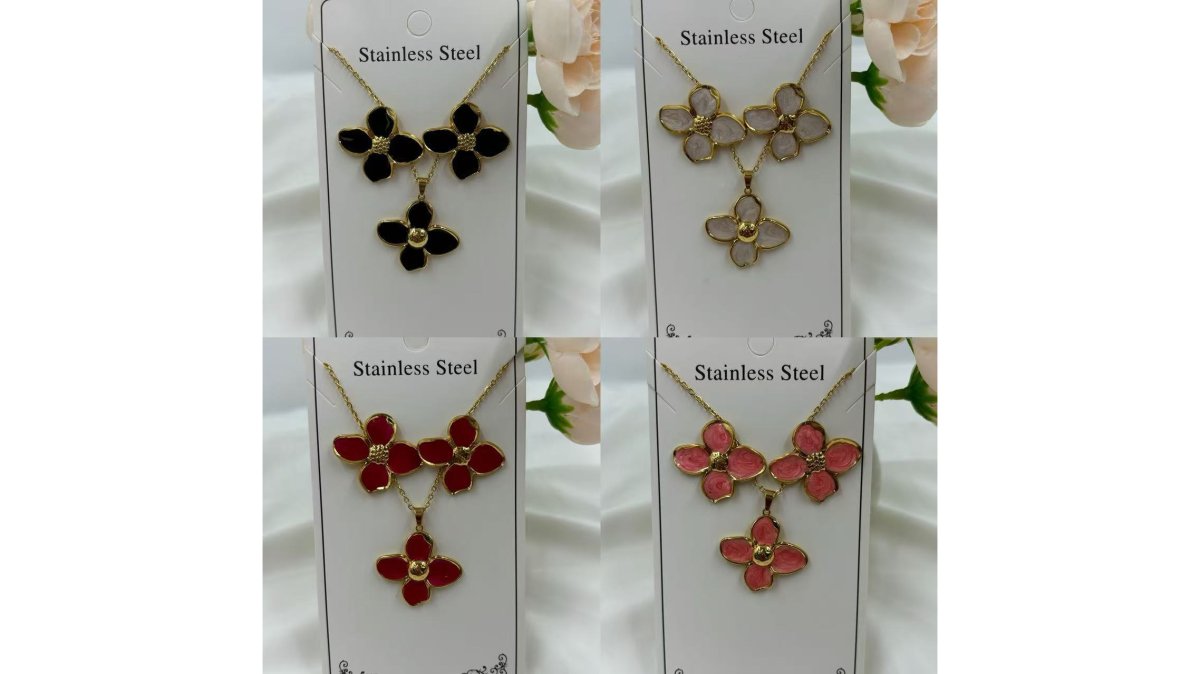
Detailed pieces like the Women's Oil Dripping Petals Stainless Steel Gold Plating Elegant Jewelry Set benefit from this method. The soft bristles clean between the petals and leaves without wearing away the finish.

How to Store Gold-Plated Jewelry Properly
Storage is where most gold-plated jewelry survives or quietly degrades. The goal is to remove three enemies: friction, moisture, and sulfur compounds that drive tarnish.
The four storage rules that actually matter
- Separate every piece. Gold plating is measured in microns, and metal-on-metal contact at chain links, ring bands, and earring posts is the fastest way to rub it thin. Use individual soft pouches, divided trays, or small cloth bags, one piece per compartment.
- Control humidity, not just light. A bedroom dresser drawer is better than a bathroom cabinet because bathrooms cycle through steam. If you live in a humid climate, add a silica gel packet to the box and swap it when the indicator changes color.
- Use anti-tarnish protection for silver-bearing base metals. Anti-tarnish strips absorb sulfur compounds that cause darkening. Replace them every three to six months, or sooner in homes near industrial areas or with gas appliances.
- Keep pieces out of direct sun and heat. Heat stresses the bond between the gold layer and the base metal, and repeated temperature swings are harder on plating than a steady cool environment.
Storage by jewelry type and construction
Chains and necklaces. Hang them on a padded hook or lay them flat.
Earrings. Store pairs in their own compartment or on an earring card.
Rings. Rings take the most abrasion. Store them separately and avoid stacking, band edges wear through first.
Bracelets and cuffs. Store cuffs and bangles individually to prevent scratching, and close hinged bracelets before storing to avoid stress on the joint.
Storage mistakes that quietly shorten lifespan
- Plastic bags without a desiccant. Plastic can trap moisture against the piece. If you use a zip bag, add a silica packet and don't seal it while the jewelry is still warm.
- Storing while damp. Let a piece air dry completely before it goes into a pouch or box, trapped moisture is worse than open air.
- Piling pieces into one dish. A catch-all dish is effectively a scratch-and-rub chamber. Use it for one piece, not the whole collection.
Can You Shower With Gold-Plated Jewelry?
The short answer: it's better not to. 💧
Water doesn't instantly damage gold plating, but repeated exposure, especially to hot water, accelerates wear, and soap residue dulls the shine. Chlorinated pool and ocean salt water speed up corrosion, so remove jewelry before swimming.
Best practice: remove jewelry before showering, it takes five seconds and extends its life. If you accidentally shower with it on, dry it immediately; one exposure won't ruin it, but repeated exposure causes problems.
How Long Does Gold-Plated Jewelry Last?
With proper care, most gold-plated jewelry lasts roughly one to three years of regular wear, depending on plating thickness, base metal, friction, and care consistency. The key is telling the difference between a piece that needs cleaning and one whose plating is gone.
Women's Oil Dripping Petals Stainless Steel Gold Plating Elegant Jewelry Set →
What drives the lifespan
- Plating thickness. Thicker gold layers last longer. Gold vermeil, which uses a thicker gold layer over sterling silver, generally outlasts standard gold plating over brass or alloy. Is Gold Vermeil Jewelry Worth the Price? 2026 Review breaks down how thickness affects durability.
- Base metal. Stainless steel and sterling silver bases are more stable than cheaper alloys and resist corrosion better, which helps the gold layer hold on longer.
- Wear frequency and friction. A daily-worn piece may show wear in six to twelve months; an occasional piece can last five years or more. Rings and bracelets wear faster than earrings and necklaces.
Tarnish vs. worn-through plating: how to tell the difference
This diagnosis determines whether you clean, repair, or replace.
Likely tarnish (cleanable):
- A uniform dulling or dark film across the surface
- Discoloration that improves after gentle soap-and-water cleaning
- Darkening in crevices and recessed areas rather than on high points
Likely worn-through plating (not cleanable):
- A different color showing at edges, high points, or high-friction zones, for example, a brassy or coppery tone at the edge of a ring band or the tip of an earring post
- A dull patch that does not brighten after cleaning
- Green or black marks on skin that persist after cleaning (often oxidation of the base metal)
Skin discoloration and green marks
Green or black marks on skin usually indicate tarnish transferring from the surface, base-metal oxidation where plating has worn, or a sensitivity to a component such as nickel. Cleaning helps if the cause is tarnish; if marks persist, the plating may be thinning at contact points or the base metal may contain an allergen. Hypoallergenic, nickel-free pieces reduce this risk; our own gold-plated styles are made nickel-free for that reason.
When plating wears through: your options
- Replate. Some jewelers can re-plate gold over the existing base metal, usually worthwhile for pieces with sentimental value or a solid, high-quality base. Ask whether they use electroplating and what thickness they apply, since a very thin re-plate wears quickly again.
- Repair. If the wear is localized, a single worn edge or a loose setting, a jeweler may be able to address just that area rather than replating the whole piece.
- Retire and replace. For inexpensive pieces with thin plating and a base metal that is already corroding, replacement is often the more practical choice. When you replace, look for thicker plating, a stainless steel or sterling silver base, and nickel-free construction.
Realistic expectations by wear pattern
- Occasional wear (a few times a month): often three to five years with good care.
- Regular wear (several times a week): typically one to three years.
- Daily wear, including rings and bracelets: six to twelve months before visible wear at high-friction points is common.
Daily Habits That Protect Your Gold-Plated Pieces
Small daily choices add up to longer-lasting jewelry. 💎
Put jewelry on last. Apply perfume, lotion, and deodorant first to prevent product buildup.
Remove jewelry before bed. Pillow and sheet friction wears down plating.
Avoid touching your jewelry excessively. Skin oils create buildup and handling speeds dulling.
Limit moisture exposure. Remove jewelry before washing dishes, exercising, or activities that cause sweating.
Rotate your pieces. Wearing the same piece daily wears it faster.
What to Avoid When Maintaining Gold-Plated Jewelry
Certain methods damage plating permanently. Avoid these at all costs.
Don't soak jewelry for hours. Extended water exposure weakens the bond; a few minutes is fine.
Don't expose jewelry to extreme heat. High temperatures can melt the adhesive bonding the layers.
Why Fashion Jewelry Tarnishes Fast: Prevention & Care covers additional protection strategies for keeping your jewelry vibrant.
These cleaning methods and practices damage gold plating permanently and should be avoided entirely.
| Method or Practice | Why It Damages Plating | What to Do Instead |
|---|---|---|
| Ultrasonic cleaners | Vibrations separate gold layer from base metal | Use gentle soap and water |
| Ammonia-based cleaners | Ammonia dissolves the gold layer | Check labels; use mild dish soap |
| Hard scrubbing with abrasive materials | Steel wool and rough cloths scratch plating | Use only soft brushes and lint-free cloths |
| Harsh household cleaners | Bleach, vinegar, and baking soda strip gold | Stick to mild soap and lukewarm water |
| Extended soaking | Hours-long water exposure weakens the bond | Soak for 2-3 minutes maximum |
| Extreme heat exposure | High temperatures melt adhesive between layers | Keep away from ovens, stoves, direct sun |
| Wearing during exercise or sleep | Sweat and friction wear plating faster | Remove before workouts and at bedtime |
Start Your Gold-Plated Jewelry Care Routine Today
Maintaining gold-plated jewelry is straightforward: gentle cleaning, proper storage, and smart daily habits keep your pieces beautiful for years.
The investment in care pays off, jewelry that lasts longer means better value and more time wearing pieces you love. Explore elegant gold-plated jewelry sets to apply your new maintenance knowledge and expand your collection.
CSShop | Jewelry & Crystals offers beautiful gold-plated pieces designed to be loved and worn. The 14K Gold Plated Necklace Accented With Cz Bar Center and 14K Gold Plated Links Chain Bracelet With Cz Open Heart Center are crafted to withstand regular wear when cared for properly.


If you're looking to expand your collection with curated selections, explore our Jewelry Mystery Boxes, a delightful way to discover new gold-plated pieces while building a diverse jewelry wardrobe.
Browse our full selection of gold-plated jewelry and start building a collection that reflects your style. How Long Does Gold Plated Hypoallergenic Jewelry Last? explores how our pieces compare to other options in terms of durability and longevity.
Frequently Asked Questions
How do you clean gold-plated jewelry at home?
Mix warm water with a few drops of mild dish soap in a shallow bowl. Soak your gold-plated jewelry for a few minutes, then gently wipe it with a soft, lint-free cloth. For detailed pieces with crevices, use a soft brush to remove dirt. Rinse with lukewarm water and pat dry immediately with a clean cloth. Never scrub aggressively or use ultrasonic cleaners, as these can damage the delicate gold layer.
Can you shower with gold-plated jewelry?
It's best to remove gold-plated jewelry before showering. Prolonged exposure to hot water, soap, and moisture can accelerate wear on the gold plating and may cause the underlying metal to tarnish or corrode. Chlorine in some water supplies and harsh bathroom products can also damage the finish. Make it a habit to take off your pieces before bathing for maximum longevity.
How long does gold-plated jewelry last?
With proper care, gold-plated jewelry typically lasts 1 to 3 years before the plating begins to wear noticeably. The lifespan depends on how often you wear the piece, how well you maintain it, and the thickness of the original plating. Pieces worn daily may show wear sooner, while jewelry worn occasionally can last longer. Regular cleaning, careful storage, and avoiding exposure to moisture and chemicals all extend the life of your gold-plated pieces.
How do you keep gold-plated jewelry from tarnishing?
Store your gold-plated jewelry in a cool, dry place away from humidity and direct sunlight. Use individual soft pouches or anti-tarnish cloth to prevent scratches and limit air exposure. Remove your jewelry before swimming, showering, or exercising to minimize contact with moisture and sweat. Avoid spraying perfume or lotions directly on your pieces. Clean regularly with mild soap and water to remove dirt and residue that can contribute to tarnishing.
Your gold-plated jewelry deserves care that matches its beauty. Follow these steps, avoid the common mistakes, and your pieces will remain stunning. CSShop | Jewelry & Crystals is here to help you find jewelry worth maintaining. Visit us today to discover pieces you'll love wearing for years to come. 🌟