 How-to
How to Choose High Quality Gold Filled Jewelry
Table of Contents
- What High Quality Gold Filled Jewelry Actually Means
- 14/20 Gold-Filled Jewelry: Why the Numbers Matter
- Gold-Filled vs Gold-Plated Jewelry: The Difference You Can Feel
- How to Identify Gold-Filled Jewelry Before You Buy
- A Step-by-Step Buying Checklist for Gold-Filled Jewelry
- Component-by-Component Material Disclosure
- Gold-Filled Jewelry Care That Protects Your Investment
- Conclusion
- Frequently Asked Questions
Last Updated: October 17, 2026
What High Quality Gold Filled Jewelry Actually Means
Gold filled jewelry is a piece made with a thick layer of real gold bonded to a base metal core, and that layer is heavy enough to count as a real gold content standard, not a thin wash. At CSShop, we explain this distinction to shoppers every week, because it changes how long a piece lasts. The layer is measured by weight, not by looks. A high quality piece keeps that layer thick, even, and fully bonded. Thin, patchy layers are what turn skin green and fade within weeks. Below, we'll show you exactly how to spot the difference before you pay.

14/20 Gold-Filled Jewelry: Why the Numbers Matter
The numbers in 14/20 gold-filled jewelry tell you two things at once. The "14" means the gold layer is 14 karat. The "20" means gold makes up one-twentieth of the piece's total metal weight by law. Together, they give you a clear, checkable standard.
Higher karat means a richer color and better tarnish resistance. A 14K layer holds up well for daily wear. An 18K layer looks warmer but is softer. Both beat any plated finish.
- 14/20: 14 karat gold, one-twentieth of total weight
- 12/20: 12 karat gold, same weight ratio, paler tone
- 18/20: 18 karat gold, richer color, softer layer
Ask for the ratio in writing. A seller who hesitates is telling you something.
Gold-Filled vs Gold-Plated Jewelry: The Difference You Can Feel
Gold-plated jewelry carries a microscopic gold flash over brass or copper. That flash wears through fast with friction, sweat, and water. Gold filled carries a bonded layer many times thicker, so it resists wear far longer.

You can often feel the difference. Plated pieces feel lighter and cheaper in the hand. Gold filled pieces have more heft and a warmer, deeper tone.
How to Identify Gold-Filled Jewelry Before You Buy
Check the stamp first, then look closer at the construction. A genuine piece is marked "14/20 GF," "12/20 GF," or "1/20 14K GF" on the clasp, tag, or inner band. The Federal Trade Commission's jewelry advertising guidance treats these marks as regulated claims, so a false stamp is a real violation, not just bad manners.
A stamp alone is not proof. It tells you what the maker claims, not what every part of the piece actually is. Verify quality beyond the stamp by inspecting the areas that wear first and the parts that are easiest to substitute with plated metal.
Inspect the wear-prone areas.
- Clasp: Open and close it several times. The gold layer should look continuous across the tongue and the body, with no copper or brass peeking through at the hinge or spring.
- Jump rings and connectors: These take constant friction. Look for even color on the inside of the ring, not just the outward-facing side.
- Solder joints: A quality piece has clean, color-matched joints. Dark or brassy seams signal a plated component or a poorly finished bond.
- Edges and cut ends: Chain ends and pendant bails are where thin layers fail first. A gold-filled edge should show the same tone as the face.
- Posts and ear wires: On earrings, the post is often the cheapest part. Confirm it carries the same material claim as the body.
Ask for documentation, not just a description. A seller who stands behind the material can usually provide a spec sheet, a supplier statement, or a written material breakdown by component. Request it in writing. Vague answers like "it's all gold filled" without a karat or weight ratio are a warning sign.

Compare the claim against the price and the piece. A gold-filled claim on a very low-priced item deserves extra scrutiny, because the gold layer is priced by weight. If the numbers do not reconcile, ask why.
Use a loupe or a phone macro lens. A cheap jeweler's loupe or a phone camera in macro mode can reveal plating seams, color mismatches, and patchy layers that are invisible at arm's length. This is the same inspection a careful buyer does at a counter, done before checkout.
Check the seller's transparency signals. Clear material descriptions, component-level disclosure, published care terms, and a real return policy are trust signals. A seller who publishes all four is usually the one worth buying from.
A Step-by-Step Buying Checklist for Gold-Filled Jewelry
Use this checklist before you add anything to your cart. It takes a few minutes and turns a vague "looks nice" decision into a verifiable one. The goal is not to memorize a stamp; it is to confirm that the gold content, the components, and the seller's terms all line up.
Step 1: Confirm the stamp on the piece. Look for 14/20 GF, 12/20 GF, or 1/20 14K GF on the clasp, tag, or inner band, not just on the packaging. If the mark is missing or only on the box, treat the claim as unverified.
Step 2: Ask for the gold content in writing. The seller should state the karat and the weight ratio (for example, 14 karat and one-twentieth by weight). A seller who cannot state both is asking you to take the claim on faith.
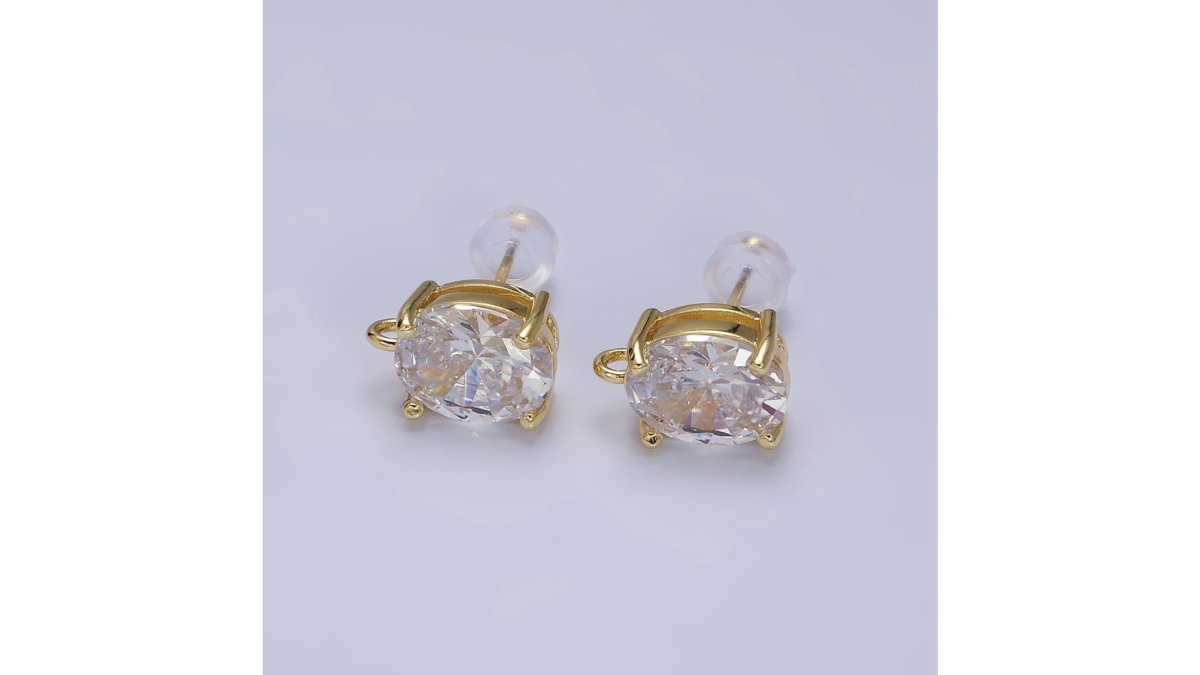
16K Gold Filled 12mm Clear Oval CZ Cubic Zirconia Open Loop Stud Earrings →
Step 3: Check the base metal. Brass and jeweler's brass are standard cores. The core matters because it is what shows through when a layer wears, and it drives how the piece behaves near water and sweat.
Step 4: Inspect every component, not just the chain. Ask specifically about the clasp, jump rings, posts, ear wires, and any charms. A gold-filled chain with a plated clasp is a half-finished product, and the clasp will discolor first. Request component-by-component disclosure.
Step 5: Read the care, return, and warranty terms. A confident seller publishes care instructions and a clear return window. Read the warranty exclusions too: many policies exclude damage from water, perfume, or improper cleaning, so the terms tell you what the seller actually stands behind.
Step 6: Compare price against gold content and intended use. Gold-filled pricing tracks the weight of the gold layer. A very low price on a piece claimed as gold filled is a reason to ask questions, not a bargain to grab. Match the piece to how you will wear it: a daily-wear ring or bracelet takes more friction than an occasional pendant, so the construction and findings matter more.
Step 7: Look for real photos and real specifications. Close-ups of stamps, clasps, and edges build trust. A listing that shows only styled lifestyle shots and no material detail is a weaker signal than one that shows the piece up close.
| Check | What to Look For | Why It Matters |
|---|---|---|
| Stamp | 14/20 GF or 12/20 GF on the piece | Proves the gold standard is claimed on the item |
| Gold content | Karat and weight ratio stated in writing | Confirms the layer standard, not just a color |
| Base metal | Brass or jeweler's brass core disclosed | Predicts how the piece behaves at wear points |
| Findings | Clasp, rings, and posts match the body | Wear and discoloration start at the smallest parts |
| Policies | Care guide, return window, warranty exclusions | Shows what the seller will stand behind |
| Price vs. content | Price reconciles with the stated gold layer | Flags claims that do not add up |
A note on lifespan claims. Treat specific year counts with caution. Wear depends on the layer, the base metal, the findings, and how often the piece meets water, sweat, and friction. A well-made piece worn carefully will outlast a poorly made one worn hard, so judge the construction and the terms rather than a promised number of years.
Component-by-Component Material Disclosure
Quality hides in the small parts. A chain can carry a perfect gold layer while its clasp is plated brass, and that clasp will discolor first. Ask about every component: chain, clasp, jump rings, and any charms.
Our consumer jewelry shopping guidance from the Jewelers Vigilance Committee recommends buyers request written material details for each part. Sellers who disclose component by component are usually the ones worth trusting.
Gold-Filled Jewelry Care That Protects Your Investment
Care is simple and it doubles the life of the piece. Keep gold filled jewelry dry during showers, swimming, and workouts. Sweat and chlorine attack the base metal at any exposed edge.
- Wipe pieces with a soft dry cloth after wearing
- Store each piece separately in a pouch
- Remove jewelry before cleaning products or lotions
- Polish gently with a soft cloth, never an abrasive pad
Follow that routine and a well-made piece stays bright for years. Skip it and even good gold filled jewelry will dull at the joints.
Conclusion
Choosing well comes down to one habit: verify the gold content before you fall for the design. Check the stamp, ask about every component, and buy from sellers who publish their standards.
At CSShop, we curate gold filled pieces with that same standard in mind. Our 14K gold filled rectangle chain and 24K gold filled sunburst necklace both list their material and karat openly, and our gold filled charm pendants make it easy to build a set that lasts. If you are still deciding where to start, our jewelry mystery boxes are a low-pressure way to explore gold filled pieces in person and judge the weight, tone, and finish for yourself. Browse the full collection at csshop.shop and choose pieces you can wear every day with confidence.
Frequently Asked Questions
Is gold-filled jewelry considered high quality?
Yes, when it is made correctly. Gold-filled jewelry has a bonded layer of gold that makes up at least 5% of the piece's total weight, which is far more than gold-plated jewelry carries. That thicker layer holds up to daily wear, resists tarnishing better, and lasts longer. It is not solid gold, so it costs a fraction of the price, but for everyday pieces like chains and studs it delivers strong value.
What does 14/20 gold-filled mean?
The first number is the karat of the gold layer, so 14/20 means 14-karat gold. The second number is the fraction of the piece's total weight that gold represents, so 20 means one-twentieth, or 5%. A 14/20 stamp is the most common quality mark you will see on gold-filled jewelry in the US market. If a seller cannot tell you both numbers, ask before you buy.
Does gold-filled jewelry tarnish?
It can tarnish over time, but far more slowly than gold-plated pieces. The gold layer is thick enough to shield the base metal core through normal daily wear. Tarnishing usually shows up when the piece is exposed to perfume, chlorine, sweat, or harsh cleaners for long periods. Wipe it with a soft cloth after wearing, store it dry, and keep it out of the shower and pool to extend its life.
How should you care for gold-filled jewelry?
Put jewelry on last, after lotion and perfume have dried, and take it off first at night. Keep it away from water, chlorine, and abrasive cleaners. Wipe it with a soft dry cloth after each wear, then store it in a dry pouch or box away from direct sunlight. For deeper cleaning, use mild soap and lukewarm water, rinse well, and dry completely before storing.