
 ultimate-guide
How Long Does Gold Plated Hypoallergenic Jewelry Last?
Table of Contents
- How Long Does Gold Plated Hypoallergenic Jewelry Last? The Short Answer
- Gold Plated vs. Gold Vermeil vs. Solid Gold: What Changes the Lifespan
- Plating Thickness in Microns: The Number That Decides Everything
- Signs of Low Quality Gold Plating to Check Before You Buy
- Hypoallergenic Metals for Sensitive Skin: Base Metals and Allergy Triggers
- Gold Plated Jewelry Care Tips That Extend Wear by Months
- How to Clean Hypoallergenic Jewelry Without Stripping the Gold Layer
- When to Replate, Repair, or Replace Your Jewelry
- Frequently Asked Questions
Last Updated: October 3, 2026
How Long Does Gold Plated Hypoallergenic Jewelry Last? The Short Answer
Most gold plated hypoallergenic jewelry lasts six months to two years of regular wear, and the biggest factor is plating thickness. "Gold plated" covers everything from a 0.5-micron flash coating that fades in a season to a 2.5-micron layer that holds up for years.

Below, we break down exactly what decides that lifespan, how to spot weak plating before you buy, and how to make any gold plated piece last months longer.
Gold Plated vs. Gold Vermeil vs. Solid Gold: What Changes the Lifespan
Gold vermeil uses a sterling silver base with a gold layer of at least 2.5 microns, which is why it outlasts standard gold plating by a wide margin.
Here is how the three compare:
| Type | Base Metal | Gold Layer | Typical Lifespan |
|---|---|---|---|
| Gold plated | Brass, copper, steel | 0.5-2.5 microns | 6 months-2 years |
| Gold vermeil | Sterling silver | 2.5+ microns | 2-5 years |
| Solid gold | None (solid 14k/18k) | Full thickness | Decades |
Solid gold never wears off because there is no layer to lose, but the price gap is enormous. Vermeil sits in the sweet spot for longevity without solid-gold pricing, while standard plating is the budget option.

Plating Thickness in Microns: The Number That Decides Everything
Plating thickness is measured in microns, and it is the most reliable predictor of how long gold plating survives. One micron equals one-thousandth of a millimeter, so even small differences matter.
- 0.5 microns or less: Decorative flash plating. Expect fading within months.
- 1-2 microns: Mid-range plating suited to occasional wear.
- 2.5 microns and up: Durable plating that handles frequent use.
Electroplating bonds the gold layer to the base metal using an electrical current, and thicker deposits take longer to wear through. If a listing does not state microns, that silence usually means the number is low.
Signs of Low Quality Gold Plating to Check Before You Buy
Low quality gold plating usually announces itself before you wear the piece once, most often through a price that seems too good for the gold content described.
Watch for these red flags:
- No micron rating listed anywhere on the product page
- Vague claims like "gold tone" instead of "14k gold plated"
- Visible color inconsistency between the clasp and the chain
- Base metal described only as "alloy" with no specifics
- No mention of nickel content on a piece marketed as hypoallergenic
Hypoallergenic Metals for Sensitive Skin: Base Metals and Allergy Triggers
Hypoallergenic jewelry is made from materials that reduce the likelihood of an allergic skin reaction, most often by eliminating nickel. The base metal underneath the gold matters as much as the gold itself.

Common base metals and how they behave:
- Sterling silver: Excellent for sensitive skin, but it can tarnish over time.
- Stainless steel: Durable and naturally resistant to corrosion, though it contains trace nickel in some grades.
- Brass and copper: Affordable and easy to plate, but both can oxidize and cause green discoloration on skin.
- Surgical steel posts: A frequent choice for earrings because reactions are rare.
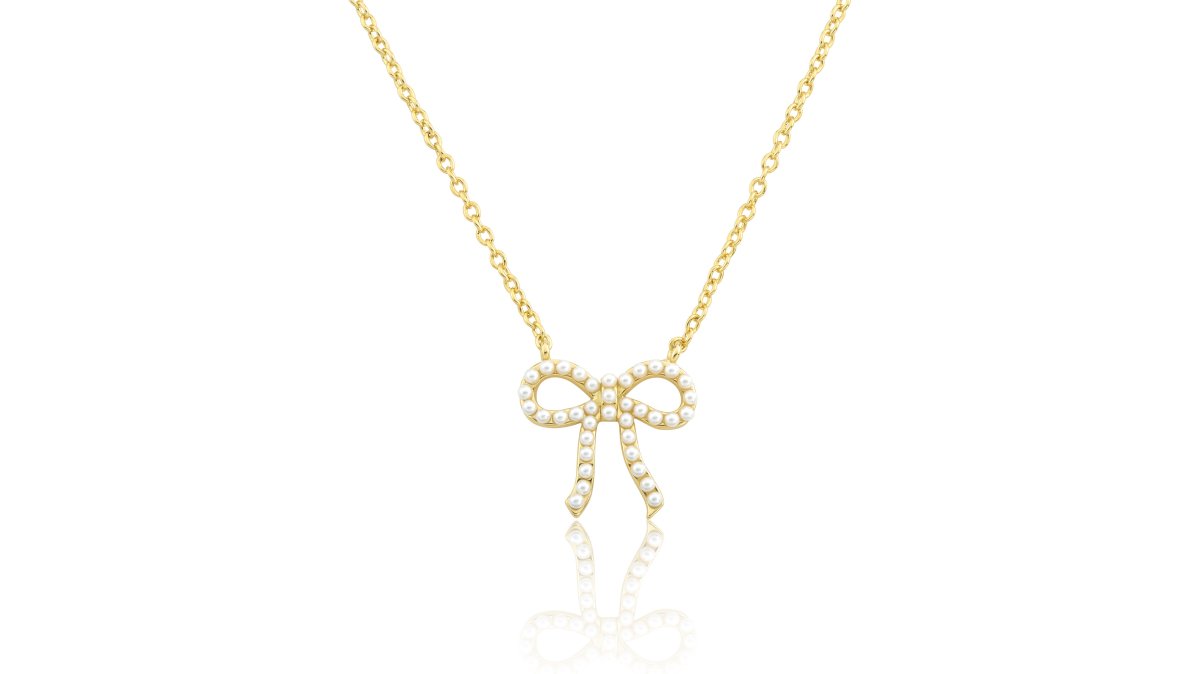
Nickel-free construction is the standard most sensitive-skin shoppers should look for, and it is one reason our LMTS Classic! 14k Gold Plated Pearls Bow Necklace is built as hypoallergenic and nickel-free.
One factor most guides skip: your own skin acidity.
Gold Plated Jewelry Care Tips That Extend Wear by Months
Gold plated jewelry care tips come down to one principle: keep moisture and chemicals away from the gold layer. Abrasion and chemical exposure, not time alone, strip plating, but body chemistry explains why the same necklace lasts two years on one person and six months on another.

Why Your Skin Chemistry Changes the Lifespan
Skin pH sits slightly acidic for most people, and a more acidic surface reacts faster with the base metal underneath the gold, especially copper and brass. That reaction produces the green or black discoloration people blame on 'cheap jewelry' and accelerates how quickly the gold layer wears thin at contact points.
Sweat composition matters too. Sweat contains salts and trace acids, so people who sweat heavily or work out in their jewelry expose the plating to a mild chemical bath every session.
The Specific Chemicals That Do the Damage
The useful version of 'avoid chemicals' names them:
- Perfume and cologne: alcohol and fragrance oils sit directly on the plating and dissolve the protective topcoat.
- Sunscreen: the active ingredients and the emollients both leave a film that traps moisture against the metal.
- Hairspray and styling products: these deposit a sticky residue that attracts dust, and dust is abrasive.
- Lotions and body creams: water-based formulas are less harmful than oil-based ones, but both soften the topcoat over time.
- Chlorine and salt water: pool and ocean water attack the base metal through any pinhole in the plating, which is how corrosion starts.
- Cleaning products: ammonia and bleach are the fastest way to strip a plated finish.
Habits That Actually Add Months
Follow these habits:
LMTS Classic! 14k Gold Plated Pearls Bow Necklace →
- Put jewelry on last, after lotion, perfume, and hairspray have dried
- Take pieces off before showering, swimming, or washing dishes
- Wipe each piece with a dry polishing cloth after wearing to remove skin oils and sweat residue
- Store items separately in a fabric-lined box to prevent scratching, which exposes base metal
- Rotate your collection so no single piece takes daily wear
Daily wear accelerates fading far faster than occasional wear. A piece worn twice a week can outlast the same piece worn daily by a wide margin, because it spends less time in contact with skin, sweat, and friction.
Storage That Prevents Tarnish
Tarnish is a surface reaction that needs air and moisture to proceed. Store plated pieces in a fabric-lined box or soft pouch, not loose in a drawer where they rub against each other. Anti-tarnish strips or a small silica packet absorb moisture and slow the reaction, and the box should stay out of the bathroom, where humidity is highest.
A quick wipe-down before a piece goes back in the box removes the sweat and oils that would otherwise sit on the plating overnight, the highest-return care step in this section.
How to Clean Hypoallergenic Jewelry Without Stripping the Gold Layer
To clean hypoallergenic jewelry safely, use lukewarm water, a drop of mild soap, and a soft cloth. Never use abrasive polishes, baking soda, or ultrasonic cleaners on plated pieces.
The process takes two minutes:
- Mix a drop of gentle dish soap into a bowl of lukewarm water
- Dip a soft cloth and wipe the piece gently, avoiding scrubbing
- Rinse with clean water and pat completely dry
- Buff with a dry polishing cloth to restore shine
- Let the piece air-dry fully before storing
Harsh chemicals and rough cloths remove the protective coating over the gold, speeding up tarnishing and fading. Gentle beats aggressive every time.
When to Replate, Repair, or Replace Your Jewelry
Replating makes sense when the piece has sentimental or material value and the base metal is still intact. A jeweler applies a fresh gold layer through electroplating, restoring the finish for another stretch of wear.
Repair is the right call when a clasp, chain link, or post has failed but the plating is fine. Replacement wins when the base metal has corroded, cracked, or pitted, because new plating will not bond to a damaged surface.
Here is a quick decision guide:
| Situation | Best Option | Why |
|---|---|---|
| Plating worn, base metal solid | Replate | Cheapest path to a fresh finish |
| Broken clasp or chain | Repair | Plating is still intact |
| Corroded or pitted base metal | Replace | New plating will not adhere |
| Sentimental value, thin plating | Replate | Preserves the original piece |
What Replating Actually Costs
Replating is priced by the piece, the metal, and the thickness of the new layer, not by the original retail price. Independent jewelers often apply a minimum shop charge for small items like studs and thin chains, with larger or multi-part pieces quoted higher because they require more surface area and handling.
A few practical benchmarks:
- Small pieces (studs, single pendants): often quoted at or near a shop minimum.
- Chains and bracelets: priced higher than studs because of length and the number of links that must be masked and plated.
- Rings with stones: priced highest, because stones usually must be removed and reset, adding labor.
- Vermeil pieces: replating is more worthwhile than on standard plating, since the sterling silver base holds value and the thicker gold layer is the whole point of the piece.
Ask for a written quote that states the target micron thickness, not just 'replated.' A quote that does not name a thickness is a quote for flash plating.
When Replacement Beats Replating
For inexpensive fashion pieces, replacement is often the more practical choice. If the base metal is brass or a generic alloy, the piece was never built to be serviced, and a jeweler may decline the job or quote it at a price that does not make sense. The same is true when the gold layer was under 1 micron to begin with.
Replacement also wins when the allergy profile matters. If a piece triggered a reaction, replating does not fix the underlying base metal. A new piece built nickel-free from the start is the better path.
A Simple Three-Step Test
- Check the base metal. If it is pitted, green, or flaking, replace. If it is solid and only the color has dulled, replating is viable.
- Get a quote with a stated micron thickness. Compare it against the price of a comparable new piece.
- Weigh sentiment. If the piece has meaning a replacement cannot replicate, replating is worth a premium. If not, let the numbers decide.
Frequently Asked Questions
Does hypoallergenic jewelry mean it is gold plated?
No. Hypoallergenic describes what a piece is unlikely to irritate, not how it is finished. A necklace can be hypoallergenic because it is nickel-free, made from surgical steel, or plated with 14k or 18k gold over a safe base metal. Some hypoallergenic pieces contain no gold at all. When you shop, check two separate things: the plating (such as 14k gold plated) and the allergy claim (such as nickel-free).
What factors cause gold plating to wear off faster?
The biggest ones are abrasion, moisture, and chemicals. Rings and bracelets rub against surfaces all day, so they fade first. Showering, swimming, and sweating expose the gold layer to moisture and salts that speed up corrosion. Perfume, hairspray, sunscreen, and household cleaners trigger chemical reactions that break the plating down. Thin plating, under about 0.5 microns, wears through in weeks of daily wear, while thicker plating lasts far longer.
Is gold plated jewelry safe for sensitive skin?
It can be, if the base metal is safe. Reactions usually come from nickel or copper in the base, not the gold itself. Look for nickel-free pieces with a stainless steel or sterling silver base, like a 14k gold plated stud earring with a surgical steel post. If your skin is highly reactive, keep plated pieces away from broken skin and remove them before swimming or showering to limit contact with the metals underneath.
Can you wear gold plated jewelry in the shower?
You can, but it shortens the lifespan. Water, soap, and shampoo gradually wear down the protective coating and the gold layer, and repeated moisture exposure leads to tarnishing and oxidation. If a piece is part of your daily wear routine, take it off before showering and pat it dry with a soft cloth afterward. That single habit can add months to a plated necklace or pair of earrings.