 How-to
How to Choose Crystal Jewelry for Every Outfit
Last Updated: October 31, 2026
Quick Summary
To choose crystal jewelry for every outfit, fill two of three zones, ears, neck, and hands or wrists, and leave the third quiet. Match your pendant to your neckline, repeat one outfit color in the stone, and scale pieces to the occasion.
- A longer chain of roughly 20 to 24 inches sits on top of crew and high necklines.
- Layer three necklace lengths at most, keeping a small gap between each stone.
- Small hands suit delicate bands and stones under about 8mm.
- Keep a bracelet stack's total width to roughly the width of your wrist bone.
- Everyday wear calls for one or two light pieces; formal looks can carry bigger stones.
Table of Contents
- Start With a Jewelry-Balancing Framework
- How to Match Crystal Jewelry to Necklines and Sleeves
- Crystal Jewelry Color Combinations That Always Work
- How to Layer Crystal Necklaces Without Clutter
- Matching Crystal Rings and Bracelets to Your Look
- Everyday Wear vs. Formal Looks: Choosing by Occasion
- Crystal Jewelry Gift Ideas for Every Personal Style
- Build Your Outfit-Ready Crystal Collection at CSShop
- Frequently Asked Questions
Start With a Jewelry-Balancing Framework
Crystal jewelry is the art of using natural stone pieces to finish a look with color, light, and intention. Many people buy beautiful pieces but freeze when it's time to wear them. The fix isn't more jewelry. It's a simple balancing framework you can apply in seconds.
The Three-Point Rule for Balance and Proportion
Think of your look as having three zones: ears, neck, and hands or wrists. Fill two, and leave the third quiet.
- Ears + neck: skip the bracelet stack
- Neck + wrist: keep earrings small
- Ears + wrist: wear a bare neckline
This is how you choose crystal jewelry without overthinking it. One bold piece per look reads as confidence. Three bold pieces read as noise.
How to Match Crystal Jewelry to Necklines and Sleeves
The neckline decides your necklace before color ever enters the conversation. The mechanism is simple: a pendant reads best when it sits inside or just below the opening, so the stone is framed by skin rather than buried in fabric. Match the shape of the pendant to the shape of the opening, then check the drop point.
- Crew and high necks: a longer chain (roughly 20 to 24 inches) sits on top of the fabric instead of hiding under it. A short chain disappears into the collar.
- V-necks: a teardrop or drop pendant follows the line of the V. The tip of the stone should land near the point of the V, not above it.
- Strapless or off-shoulder: a short, delicate necklace (16 to 18 inches) fills the open space without competing with the bare shoulder line.
- Collared shirts: skip the necklace and wear crystal earrings instead. A pendant under a buttoned collar bunches the fabric and hides the stone.
- Square and sweetheart necks: a pendant with a soft curve softens the straight edge; a rigid bar pendant echoes it. Pick one effect on purpose.
Sleeves matter too, because they control how much wrist is visible. Bare arms carry a bracelet stack well. Three-quarter sleeves show a cuff or a single slim bracelet at the wrist. Long sleeves push the focus to your ears and neck, so let the wrists stay simple, a bracelet under a sleeve is felt, not seen.
Fabric weight changes everything. A chunky knit swallows dainty chains, so scale the chain and stone up to match the texture. Fine jewelry needs a smooth, lighter fabric behind it to show up. A quick test before you leave: stand in front of a mirror and check that the stone sits against skin or a smooth surface, not against a lump of fabric or a seam.
Earrings follow the same logic in reverse. A high, closed neckline leaves the ears as the main frame, so larger crystal drops can work. A wide, open neckline already fills the space, so smaller earrings often balance the look.
Crystal Jewelry Color Combinations That Always Work
Color is where crystal jewelry gets fun, and where most people stall. The safest method is to pull one color from what you're already wearing and repeat it in stone.
Pairing Stones With Neutrals, Soft Hues, and Bold Colors
- Neutrals: amethyst, turquoise, and mother-of-pearl all pop against cream, gray, and black
- Soft hues: keep stones in the same family, like lavender amethyst with dusty pink
- Bold colors: pick one clear contrast and stop there
Here's a pairing table we use when styling:
| Outfit Color | Crystal That Works | Why |
|---|---|---|
| Cream or ivory | Amethyst, turquoise | Warm contrast without clashing |
| Denim blue | White mother-of-pearl | Echoes the blue, adds shine |
| Black | Turquoise, amethyst | Saturated stones glow against dark |
| Soft pink | Lavender amethyst | Same soft family, richer depth |
| Olive or rust | Turquoise | Classic complementary pairing |
The rule behind the table: match the temperature, then decide how much contrast you want.
How to Layer Crystal Necklaces Without Clutter
Layering works when each chain has a job. Use three lengths at most, and keep at least a small gap between each one so the stones don't collide.
- Start with a short chain at the collarbone
- Add a mid-length pendant below it
- Finish with one longer piece if the neckline allows
Keep the metals consistent unless you're deliberately mixing. A purple amethyst teardrop golden chain necklace makes an easy anchor for a layered look, since the drop pendant gives the eye a clear focal point.
Watch out: layering three pendants of the same length creates a tangled knot, not a stack. Vary the lengths or wear one.
Matching Crystal Rings and Bracelets to Your Look
Rings and bracelets are the quiet half of jewelry styling, and that's their advantage, but quiet doesn't mean random. Treat them as a proportion problem with three variables: stone size, band width, and how many pieces share one hand or wrist.
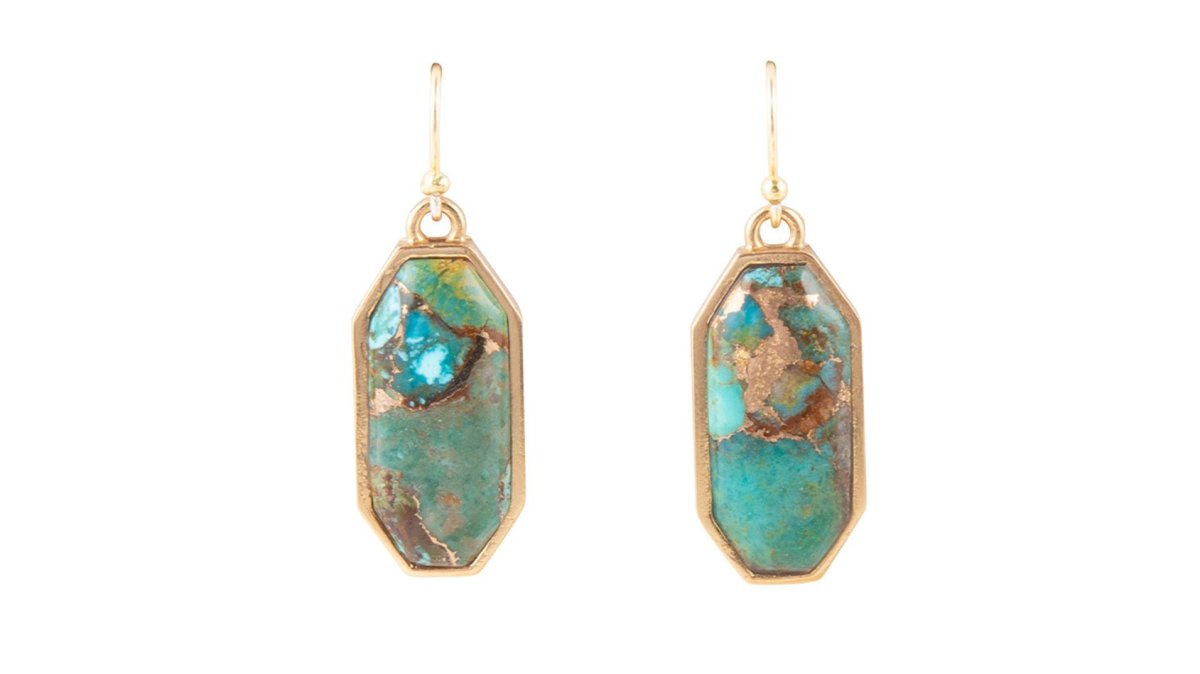
Dolce Teal Blue Turquoise Matrix Golden Drop Earrings →
Rings. Proportion is the whole game. Small hands suit delicate bands and stones under about 8mm. Longer fingers carry wider stones and bolder settings without looking crowded. Stack thin bands on one hand and leave the other bare, two or three slim rings on one hand read as a stack, while the same rings split across both hands read as clutter. If you wear a wide statement ring, give it its own finger and keep the rest of that hand plain.
Bracelets. Two or three slim pieces beat one heavy cuff on most wrists. A useful limit: keep the total width of a stack to roughly the width of your wrist bone, and leave a little slack so the pieces move independently instead of locking together. Mix textures, a smooth chain, a beaded strand, a thin bangle, rather than three of the same, so the stack has depth instead of repetition.
Comfort and security. A piece you have to adjust all day is a piece you'll stop wearing. Check three things before you commit:
- Clasp tension: a lobster clasp should close with a firm click, not a soft one.
- Setting security: prongs should grip the stone with no wiggle; a loose stone in a ring is the most common way crystals get lost.
- Edge smoothness: run a finger along the inside of a band or the back of a pendant. Rough edges catch on skin and fabric.
Mirror your neckline. If you're wearing a delicate necklace, keep rings dainty. If your ears are carrying large statement pieces, let the hands stay minimal. The three-point rule from earlier still applies: ears, neck, and hands or wrists, fill two, leave the third quiet.
Care matters here too. Rings and bracelets take more knocks than necklaces, so storing them separately can help avoid scratches.
Everyday Wear vs. Formal Looks: Choosing by Occasion
Occasion sets the volume. Everyday wear calls for one or two light pieces. Formal looks can carry a full set, bigger stones, and more shine. For a closer look at everyday fashion essentials vs statement pieces, that guide breaks down which jewelry to reach for by occasion.
Casual Days, Workdays, and Evening Events
- Casual: small studs or a single delicate necklace
- Workdays: one polished piece, like a pendant or slim bracelet, see our best versatile jewelry for office wear for more workday options
- Evenings: statement earrings or a gemstone set, browse gemstone jewelry sets for formal events for dressy inspiration
Crystal Jewelry Gift Ideas for Every Personal Style
Gifting crystal jewelry goes wrong when you buy for your own taste instead of theirs. Match the stone to how the person already dresses.
- Minimal dressers: a single small pendant or stud earrings
- Color lovers: turquoise or amethyst drop earrings
- Collectors: a piece with visible natural matrix, since no two stones match
- Hard-to-shop-for friends: a jewelry mystery box takes the guesswork out
Ask one question before buying: what does she wear on a normal Tuesday? That answer beats any trend list.
Build Your Outfit-Ready Crystal Collection at CSShop
A collection that works is small and deliberate. Start with one neutral pendant, one pair of colored earrings, and one piece you reach for on special occasions. That trio covers most of the week.
At CSShop, our curated jewelry and crystal collections focus on style, quality, and affordability, with fast delivery. Once you've built your set, our everyday crystal jewelry care and cleaning tips help keep each stone looking its best.
A few pieces from our collection that fit this framework:
- Dolce Teal Blue Turquoise Matrix Golden Drop Earrings, $78.00, for the color-contrast look
- Barcelona Blue Turquoise and Pink Agate Golden Drop Earrings, $118.00, when you want two stones in one piece
- Blue Denim Dreams White Mother of Pearl Golden Pendant Necklace, $98.00, the neutral anchor
- Purple Amethyst Teardrop Golden Chain Necklace, $32.00, the layering starter
Frequently Asked Questions
How do you match crystal jewelry to an outfit?
Start with one anchor piece, then build around it. If your outfit is a solid neutral, a colorful crystal necklace or a pair of turquoise drop earrings adds the focal point. If your outfit already has pattern or bold color, choose dainty crystal jewelry in a single tone so the pieces complement rather than compete. Check the neckline too: a delicate pendant suits a V-neck, while shorter statement pieces sit better against a high collar.


Which crystal colors are easiest to coordinate?
White mother-of-pearl, clear quartz, and soft lavender amethyst work with almost any color palette because they read as near-neutrals. Teal and blue turquoise sit comfortably beside denim, navy, white, and earth tones. Deep purple and saturated pink are stronger statements, so pair them with neutral tones or a single matching accent. If you want one piece that travels across casual and formal looks, start with a white or pale stone.
Can you mix different crystal colors in one look?
Yes, as long as you give the mix a structure. Pick one dominant stone color and one supporting color, then repeat each at least once across your pieces so the combination looks intentional. Keep metals consistent, or deliberately mix two at most. Layering a purple amethyst pendant with a white mother-of-pearl necklace is an easy starting point because the white softens the purple without competing with it.
What crystal jewelry makes a thoughtful gift?
Choose based on the recipient's existing style rather than your own taste. For someone who wears dainty jewelry daily, a small pendant or delicate stud earrings get the most use. For someone who likes statement pieces, handcrafted drop earrings with visible stone matrix feel personal because each pair is slightly different. A jewelry mystery box also works when you know the recipient's general taste but not their exact size or preference.
Choosing crystal jewelry gets easier once you stop trying to match everything and start balancing two zones at a time. That's the whole method: pick your neckline, pull one color, fill two points, and stop. CSShop curates feminine jewelry and natural stone pieces with an eye on style, quality, and affordability, plus fast delivery. Browse the collection and build a set that works with what you already wear.