
 comparison
Everyday Fashion Essentials vs Statement Pieces: Jewelry Guide
Table of Contents
- Everyday Fashion Essentials vs Statement Pieces: Key Differences
- Everyday vs Statement Jewelry: Comparison Table
- Minimalist Jewelry Essentials for Daily Wear
- How to Style Statement Jewelry Without Overdoing It
- Best Practices for Jewelry Maintenance
- The 80/20 Rule and Cost-Per-Wear for Jewelry
- Conclusion
- Frequently Asked Questions
Last Updated: October 1, 2026
Everyday Fashion Essentials vs Statement Pieces: Key Differences
The difference between everyday fashion essentials and statement pieces comes down to frequency of wear and visual weight. Essentials are the pieces you reach for daily, while statement pieces are worn deliberately to draw attention. At CSShop, we see this play out constantly in jewelry: a simple gold stud disappears into your routine, while a bold stone cuff becomes the focal point of an entire look.

Here's the part most guides get wrong. It isn't about price or quality. The distinction is about role, not cost.
That matters because most people buy jewelry without deciding which role a piece is meant to fill. The result is a drawer full of items that compete with each other instead of working together.
What Counts as an Everyday Essential
An everyday essential is a jewelry piece simple enough to wear with almost anything, on almost any day, without a second thought. Think small studs, a thin chain, or a single delicate band.

What Makes a Statement Piece
A statement piece is jewelry designed to be noticed first. Scale, color, or unusual material does the work, and the rest of your look steps back.
Everyday vs Statement Jewelry: Comparison Table
| Factor | Everyday Essentials | Statement Pieces |
|---|---|---|
| Wear frequency | Daily | Occasional |
| Visual weight | Low, subtle | High, bold |
| Color range | Neutrals, metallics | Stones, bright tones |
| Pairing ease | Works with most outfits | Anchors one look |
| Typical price | Lower | Higher |
| Maintenance need | Minimal | More careful |
The table above is a starting point, not a rule. Plenty of people wear a statement cuff three days a week because it fits their personal style. The categories describe function, not permission.

Minimalist Jewelry Essentials for Daily Wear
Minimalist jewelry essentials are the small, quiet pieces that form the base of a daily rotation. They should be the last thing you think about in the morning and the first thing you reach for without deciding.
- Ear slot: small studs or a thin huggie in a neutral metal
- Neck slot: one thin chain, ideally 16 to 18 inches so it sits at the collarbone
- Hand slot: a simple band ring or a slim stacking ring
- Wrist slot: a single delicate bracelet or a thin bangle
The Three Tests an Essential Has to Pass
Before a piece earns a slot, run it through three tests. If it fails any one, it is not an essential.
- The blind-reach test. Could you put it on in the dark and know it works with whatever you are wearing? If you have to check a mirror to confirm, it is not an essential.
- The metal-consistency test. Does its metal match the other three slots? Mixing warm and cool metals across a base layer is the single most common reason a daily rotation feels off.
- The 30-day test. Have you worn it at least 20 of the last 30 days? If not, it is occupying a slot it has not earned.
Why Construction Matters More Here Than Anywhere Else
Essentials take the wear. A thin chain worn daily flexes thousands of times a year at the clasp and the links nearest it, which is where most chain failures happen. A stud worn daily sits against skin, hair, and whatever product you apply in the morning.
- Clasp type. A lobster clasp outlasts a spring-ring on a chain worn daily.
- Link style. A cable or box chain resists stretching better than a fine rope chain at the same weight.
- Post and backing. On studs, a thicker post and a screw-back or locking backing survive daily removal far better than a thin post with a friction back.
The Cost-Per-Wear Case for Buying Fewer, Better Essentials
This is where the math gets interesting, and where most guides stop short. An essential is worn so often that its cost-per-wear collapses fast. Divide the price by the number of wears.
How to Style Statement Jewelry Without Overdoing It
Styling statement jewelry comes down to one rule: let one piece lead and keep everything else quiet. Two bold pieces in the same look usually fight each other.
Here's how that works in practice:
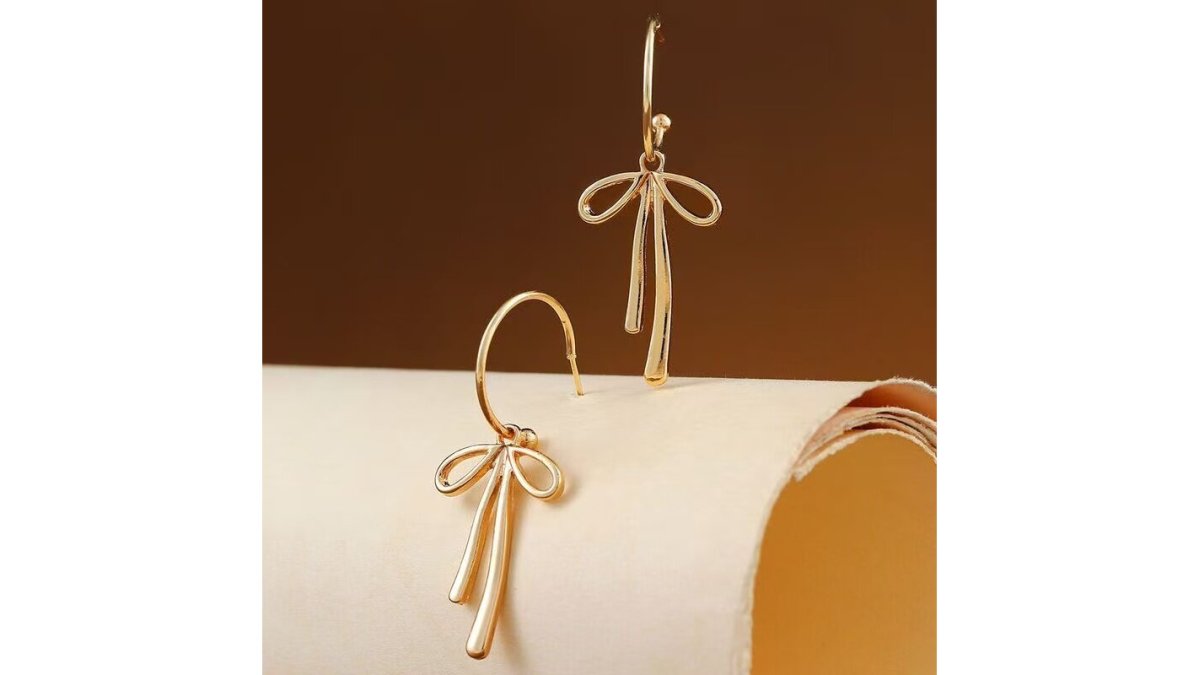
Women's Style Metal Bow Matte Gold Line →
- Pick your statement piece first
- Remove any other large jewelry
- Keep metals consistent across the look
- Match the stone color to one other element
Best Practices for Jewelry Maintenance
Jewelry maintenance is mostly about preventing damage before it happens, but the mistake most guides make is treating every piece the same. Essentials and statement pieces fail in different ways, so they need different routines.
How Essentials Fail
Essentials fail from accumulated wear, not from a single event. The failure points are predictable:
- Chain links near the clasp stretch and thin from daily flexing
- Stud posts bend from being pulled on and off
- Ring bands wear thin at the base where they contact surfaces
- Bracelet clasps loosen from repeated opening and closing
How Statement Pieces Fail
Statement pieces fail from single events and storage, not from wear. The common causes:
- A stone chips against a hard surface during a one-time knock
- A cuff bends out of shape from being pulled on rather than rolled on
- Two pieces stored together scratch each other
- Adhesive or prong settings loosen from temperature swings
The Seasonal Maintenance Calendar
This is the part almost no guide covers, and it matters because the ratio of essentials to statement pieces you wear shifts with the seasons, and so does the maintenance load.
- Spring: Inspect everything that sat in storage over the cooler months. Check for tarnish and loose settings before the first wear.
- Summer: This is the highest-risk season for both categories. Sunscreen, chlorine, salt water, and sweat all accelerate tarnish and can dull or discolor stones. Rinse and dry pieces the same day they are exposed.
- Fall: Transition pieces come out of storage. Re-inspect clasps and posts on essentials that will now be worn daily again.
- Winter: Dry indoor air and heavy layers mean more friction against cuffs and chains. Check for bent links and stretched chains more often.
The Rules That Apply to Everything
- Put jewelry on last, after lotion and perfume have dried
- Remove pieces before showering, swimming, or cleaning
- Store each piece separately to avoid scratches
- Wipe stones with a soft dry cloth after wearing
- Keep cuffs and bracelets away from direct sunlight for long periods
The Federal Trade Commission's guidance on jewelry advertising sets out how metal and gemstone claims must be described, which is a useful reference when you are comparing listings and trying to tell a plated piece from a solid one, a distinction that directly affects how much maintenance a piece will need over its life.
The 80/20 Rule and Cost-Per-Wear for Jewelry
The 80/20 rule for jewelry says roughly 80% of your wears should come from 20% of your pieces. If that ratio is off, you own too many statement pieces and not enough essentials.
Conclusion
Building a jewelry collection that actually works takes a clear-eyed look at what you reach for and what you save for special days. Most people find they need more essentials than they own and fewer statement pieces than they've collected.
Frequently Asked Questions
What is considered a statement piece in jewelry?
A statement piece in jewelry is any accessory designed to draw attention through size, color, or unusual design. Examples include oversized cuff bracelets, bold gemstone pendants, and chunky layered necklaces. Unlike everyday fashion essentials, which blend quietly with an outfit, statement pieces act as the focal point. A handcrafted cuff with a large turquoise stone, for instance, can carry a simple look on its own.
How do you balance everyday jewelry with bold statement accessories?
The easiest method is to let one piece lead. If you wear a bold cuff bracelet, keep earrings and necklaces small, like simple studs. If a large pendant is the focus, skip the chunky bracelet. This balance keeps your look intentional rather than cluttered. Many stylists suggest choosing no more than one or two statement items per outfit and letting minimalist jewelry essentials fill the rest.
Are crystal necklaces considered statement pieces?
It depends on size and setting. A small crystal pendant on a fine chain works as an everyday piece, while a large raw crystal or a multi-stone design reads as a statement. Crystal jewelry sits in both categories, which makes it versatile. You can wear a delicate crystal necklace daily and save a bold crystal cuff for evenings or events.
How many everyday jewelry essentials do you really need?
Most people find that five to seven pieces cover daily needs: one pair of stud earrings, one simple necklace, one ring, one bracelet, and one watch or additional band. From there, add two or three statement pieces for variety. This small core keeps getting dressed fast while still allowing room for self-expression through bolder accessories when the occasion calls for it.
Can a statement piece be worn for everyday occasions?
Yes, if you style it with restraint. A bold cuff bracelet worn with a plain top and minimal earrings looks intentional, not overdressed. The key is contrast: let the statement piece stand alone against a simple base. Choosing pieces in neutral tones or with a single strong color makes them easier to wear on ordinary days without feeling out of place.