 review
Is Crystal Healing Worth It for Anxiety? A Fair Look
Quick Summary
Crystal healing is not an evidence-based treatment for anxiety. A 2025 study found healing crystals did not reduce anxiety beyond placebo, though the calm some people feel can still come from the ritual and pause. A calming stone can serve as a grounding reminder, but it should never replace professional care.
- A 2025 study found healing crystals did not reduce anxiety beyond placebo.
- Christopher French says there is no convincing evidence crystals have healing properties.
- Run a two-week trial, rating anxiety from 1 to 10 before and after each use.
- Free options like slow breathing and a five-minute walk give the same pause at no cost.
- Seek a licensed mental health professional if anxiety affects work, relationships or sleep.
Table of Contents
- Is Crystal Healing Worth It for Anxiety? The Short Answer
- What the Research Says About Crystals and Anxiety
- Why People Feel Better: Placebo, Expectation and Ritual
- Best Crystals for Anxiety and Stress: What Each Is Used For
- Crystals for Anxiety and Overthinking: Using a Stone as a Grounding Reminder
- Crystals for Anxiety and Sleep, and an Anxiety Crystal Bracelet Compared
- Pros, Cons and Low-Cost Alternatives Worth Comparing
- Deciding Whether Crystals Are Right for You, and Where to Shop CSShop's Calming Stones
- Frequently Asked Questions
Is Crystal Healing Worth It for Anxiety? A Fair Look
Last Updated: November 13, 2026
Is Crystal Healing Worth It for Anxiety? The Short Answer
At CSShop | Jewelry & Crystals, we get asked this question often. The short answer: crystal healing is not an evidence-based treatment for anxiety, but it can be a pleasant ritual and a useful reminder to pause. A 2025 study indexed by Placebo effects in alternative medical treatments for anxiety concluded that healing crystals did not reduce anxiety beyond placebo.
That finding matters, and it is worth understanding before you spend money. A stone can still feel calming in your hand. The question is what is producing that feeling.
What the Research Says About Crystals and Anxiety
The most recent study we found examined the claim directly. Its authors reported that healing crystals did not demonstrate anxiety-reducing effects beyond placebo. Symptom change was linked to expectancy and conditioning rather than to the stone itself (Placebo effects in alternative medical treatments for anxiety).
Christopher French, a psychology professor who studies pseudoscience, put it plainly to WHYY: "There is no convincing evidence that crystals actually have any kind of healing properties."
This does not mean people who feel calmer are imagining it. It means the calm likely comes from the surrounding experience: the pause, the attention, the expectation of relief.
Why People Feel Better: Placebo, Expectation and Ritual
Placebo effects are real, even when the object is inert. When someone believes a ritual will help, they often report feeling better, and their attention shifts toward calming signals.
Ritual also does useful work. Holding a smooth stone, taking a slow breath and setting an intention can interrupt a spiral of worry. A common mistake is to credit the stone for that pause. The pause is what helps, and you can create one without buying anything.
Be honest with yourself about this. If a crystal makes you stop and breathe, that is worth something. If you believe it is treating an anxiety disorder, that belief can delay real care.
Best Crystals for Anxiety and Stress: What Each Is Used For
Crystal traditions associate several stones with calm. Here is what each is commonly used for, with no claim that it works medically.
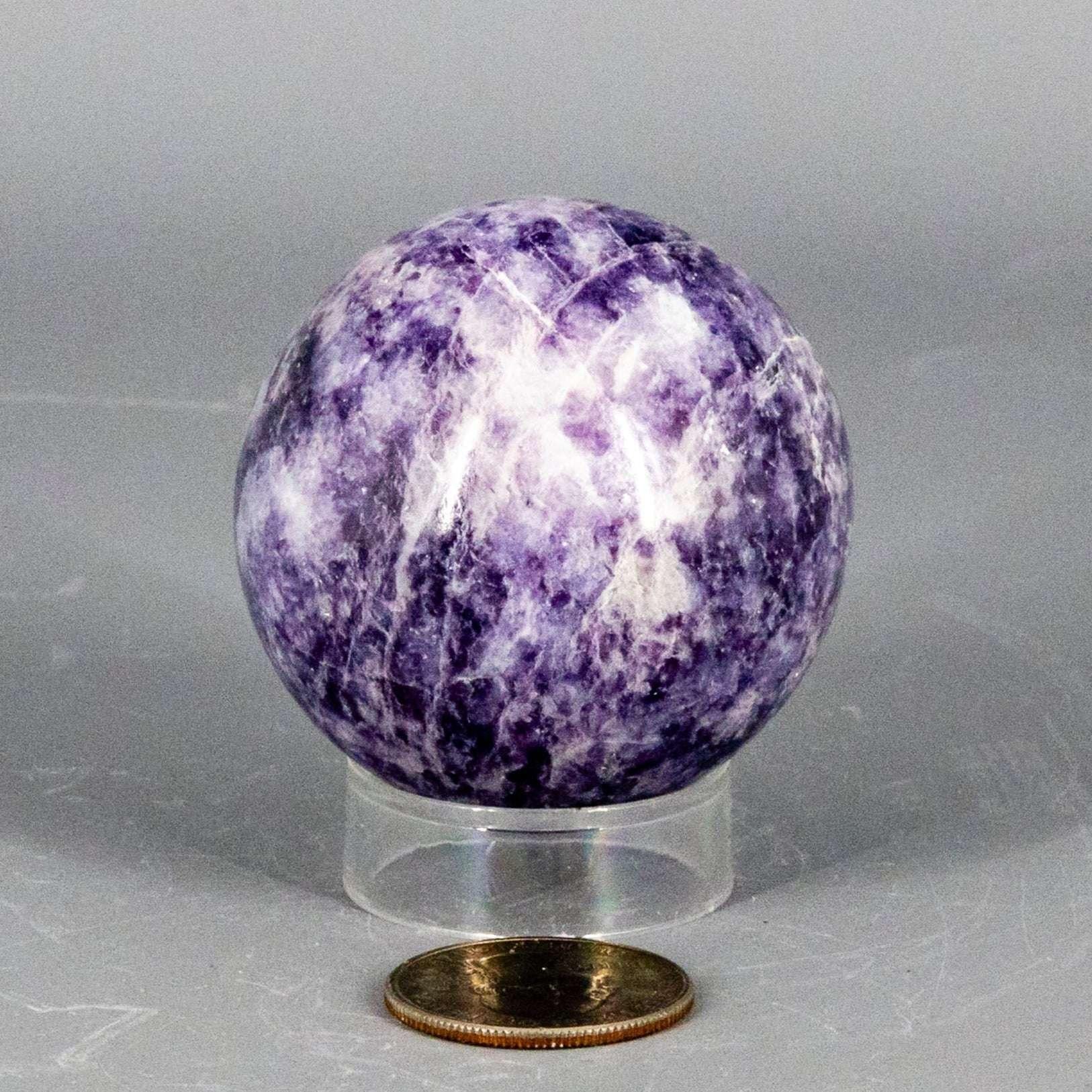
Lepidolite is the one we would start with if you want a stone for emotional calm. It is a lithium-bearing mica with a soft lavender color. Our lepidolite calming sphere is a 51mm piece, priced at $44.99. Handle it with care, since its Mohs hardness is only 2.5 to 3.
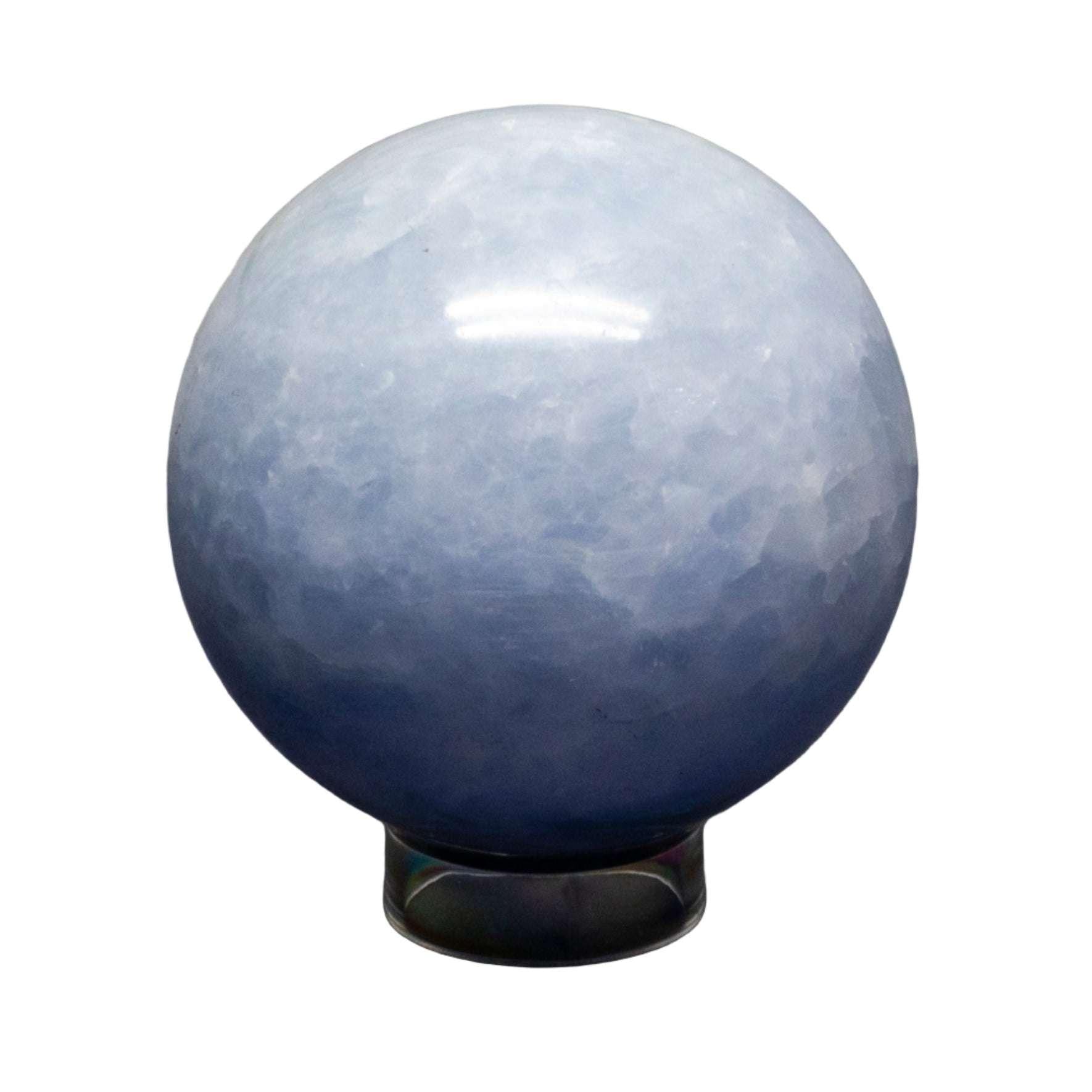
Blue calcite is associated with calm communication and a soothing presence. Our blue calcite sphere is available from $42.99 in several sizes.
Smoky quartz is often used as a grounding stone. Our smoky quartz sphere is a 60mm piece at $25.00.
Here is a quick comparison of the stones mentioned above, with the price and size the article gives for each.
| Stone | Commonly used for | Size and price in this article |
|---|---|---|
| Lepidolite | Emotional calm | 51mm sphere, $44.99 |
| Blue calcite | Calm communication and a soothing presence | Sphere from $42.99, several sizes |
| Smoky quartz | Grounding | 60mm sphere, $25.00 |
Crystals for Anxiety and Overthinking: Using a Stone as a Grounding Reminder
A stone works well as a physical cue. When your thoughts race, you can hold it, notice its weight and temperature, and return to the present moment. You can look at a lepidolite calming sphere to use as a grounding reminder. Many people find this simple act useful.
Use it as a reminder, not a cure. Pair it with breathing, a short walk or a conversation with someone you trust. If you enjoy keeping small stones close at hand, our Jewelry Mystery Boxes are another way to bring a little surprise and a tactile object into your day.
Crystals for Anxiety and Sleep, and an Anxiety Crystal Bracelet Compared
**** Keeping a calming stone on the nightstand and holding it for a few minutes before bed is a reasonable wind-down cue, and it pairs naturally with the two-week trial above. For practical home-use guidance on amethyst, read how to use amethyst at home for better sleep. But it is a cue, not a sleep treatment.
Watch out: do not let a bedtime ritual become the reason you delay that conversation. "I'll try the stone for another month" is the most common way a treatable sleep problem quietly becomes a chronic one.
Sphere versus bracelet is a question of where the reminder lives. A sphere sits on a shelf or nightstand and works as a fixed environmental cue, you see it at the same time each day, which is what makes a habit stick. A bracelet travels with you and works as a tactile cue in the middle of a stressful day: you feel it against your wrist, and that sensation is the prompt to take one slow breath. To compare more options, see best crystal bracelets for stress relief.
When anxiety warrants professional care. Crystal use is compatible with treatment, but it is not a substitute for it. Consider speaking with a licensed mental health professional if any of the following is true: anxiety interferes with work, school, or relationships; you are avoiding places or situations you used to handle; you have panic attacks that leave you afraid of the next one; your sleep or appetite has changed for weeks; you are relying on alcohol or other substances to take the edge off; or you have thoughts of harming yourself.
What good care looks like, for comparison. Evidence-based anxiety care typically involves cognitive behavioral therapy, sometimes medication, and always a real assessment of what is driving the symptoms. Crystals have not shown effects beyond placebo in the research reviewed. That does not make the stone worthless as a comfort object, it makes it a supplement to care, never a replacement for it.
Accessibility and cost, honestly. Therapy and medication can be expensive and hard to schedule, which is part of why people reach for low-cost rituals first. If cost is the barrier, community mental health centers, employee assistance programs, and sliding-scale training clinics are worth asking about before you spend on stones. A calming object is a small pleasure; it should never be the most expensive thing you try.
If you decide to try one, browse our Lepidolite Crystal Sphere, Blue Calcite Crystal Sphere and Smoky Quartz Sphere. Visit CSShop at csshop.shop and search for the stone that feels right to you.
Pros, Cons and Low-Cost Alternatives Worth Comparing
Pros of crystal healing:
- Creates a calm, deliberate pause
- Offers a tactile focus for mindfulness
- Pleasant to own and display
Cons:
- No evidence it treats anxiety beyond placebo
- Can cost more than free alternatives
- May delay professional help if relied on too heavily
Low-cost alternatives often deliver the same pause for little or nothing: slow breathing, a five-minute walk, a grounding exercise like naming five things you can see, or a journal entry. These cost nothing and carry no risk of substituting for care.
Deciding Whether Crystals Are Right for You, and Where to Shop CSShop's Calming Stones
Most articles on this topic end with "trust your intuition." That is not a decision framework. Here is a plain one you can actually run.
Separate the three questions. People usually bundle them: Does this stone have healing energy? Does this ritual calm me? Should I spend money on it? They have different answers. The first has no supporting evidence. The second is genuinely testable on yourself. The third is a budget question, not a health question.
Run a two-week trial and write it down. Pick one stone and one fixed moment, say, the last ten minutes before bed. Use it the same way each time: hold it, take a few slow breaths, set one intention. Rate your anxiety from 1 to 10 before and after, on paper or in a notes app. Do this for fourteen days. A common pattern is that people remember the good nights and forget the flat ones, which is why the written record matters more than the feeling.
Watch out: if your ratings improve only on days when you also slept well, exercised, or talked to a friend, the stone is not what moved the number. That is correlation, and it is the single most common way people talk themselves into believing a ritual is a treatment.
Set a spending ceiling before you browse. Decide in advance what a calming object is worth to you as a decorative, tactile pleasure, the same way you would price a candle or a houseplant, and stop there. A reasonable rule is that a stone should cost no more than you would spend on a purely aesthetic object of the same size.
Check the framing fits you. Crystal use is often wrapped in spiritual language. If that framing irritates you rather than settles you, the ritual will not do its job, and that is a fine reason to skip it. You can also use a stone purely as a sensory object with no metaphysical story attached, the pause does not require the belief.
Know the handling basics. Soft stones scratch and chip; lepidolite at Mohs 2.5 to 3 should be kept away from harder stones. Small tumbled stones are a choking hazard around young children and pets, and some stones are sold with polished coatings or dyes, so buy from a seller who will tell you what a piece is and how it was finished.
A fair comparison. Set crystals beside the free options honestly. Slow breathing, a five-minute walk, the five-things grounding exercise, and a short journal entry all produce the same deliberate pause, cost nothing, and carry no risk of being mistaken for treatment. If you are ready to try one, you can browse blue calcite spheres from the calming stone range.
If you have run the trial, kept the record, and the answer is still "I enjoy this and I understand what it is," then a calming stone is a reasonable small addition to your routine. If anxiety is affecting your work, relationships, or sleep, the next section matters more than any purchase.
If you decide to try one, browse our Lepidolite Crystal Sphere, Blue Calcite Crystal Sphere and Smoky Quartz Sphere. Visit CSShop at csshop.shop and search for the stone that feels right to you.
Frequently Asked Questions
Do crystals actually help with anxiety?
A 2025 study found that healing crystals did not reduce anxiety beyond placebo. The researchers attributed any symptom change to expectancy and conditioning rather than to the stone itself. Crystals may still feel calming as a personal ritual, and some people enjoy holding one during a stressful moment. But the evidence does not support crystals as an anxiety treatment, so they should not replace professional care or evidence-based therapy.
Which crystal is best for anxiety?
There is no crystal with proven anxiety benefits, so the best choice is the one you find pleasant to use. Lepidolite, Blue Calcite and Smoky Quartz are among the stones people commonly choose for calm and grounding. Pick based on color, shape and how it feels in your hand, and treat it as a comforting reminder rather than a remedy.
Are crystals a substitute for professional anxiety treatment?
No. Crystals are not a substitute for professional anxiety treatment. Persistent anxiety that affects work, sleep, relationships or daily activities deserves an evaluation from a doctor, therapist or other licensed mental health professional. Crystals can sit alongside that care as a personal ritual, but they should not delay or replace it.
Can crystals help with anxiety and overthinking?
Crystals cannot change how your mind works, but some people use one as a grounding cue. Holding a smooth stone or setting a sphere on your desk can serve as a prompt to pause, breathe and notice your thoughts. The benefit usually comes from the pause itself, which breathing exercises and mindfulness practices also provide at no cost.