 How-to
How to Use Amethyst for Better Sleep at Home
Table of Contents
- What Research Says About Amethyst and Sleep
- Choosing an Amethyst Piece for Your Bedroom
- Where to Place Amethyst in the Bedroom
- Sleeping With Amethyst Under Your Pillow
- Building an Amethyst Bedtime Routine
- How to Cleanse Amethyst Step by Step
- Troubleshooting When Amethyst Does Not Seem to Help
- Start Your Amethyst Sleep Routine Tonight
- Frequently Asked Questions
Last Updated: November 11, 2026
What Research Says About Amethyst and Sleep
Many people keep amethyst by the bed hoping it will help them sleep, and some search for how to use amethyst for better sleep before they buy one.
A useful way to think about it: a crystal can act as a cue. When you set a small purple stone on the nightstand and start the same wind-down routine each night, your brain starts to link that routine with rest.
For a broader look at what the evidence says about sleep aids, the National Center for Complementary and Integrative Health fact sheet on complementary approaches for sleep reviews the effectiveness and safety of these approaches.
Choosing an Amethyst Piece for Your Bedroom
The right amethyst depends on how you plan to use it, especially if your goal is learning how to use amethyst for better sleep at home. Size, shape and finish all matter more than most people expect.
- Small palm stones fit in a pocket or on a bedside tray.
- Spheres sit well on a nightstand or dresser and catch light nicely.
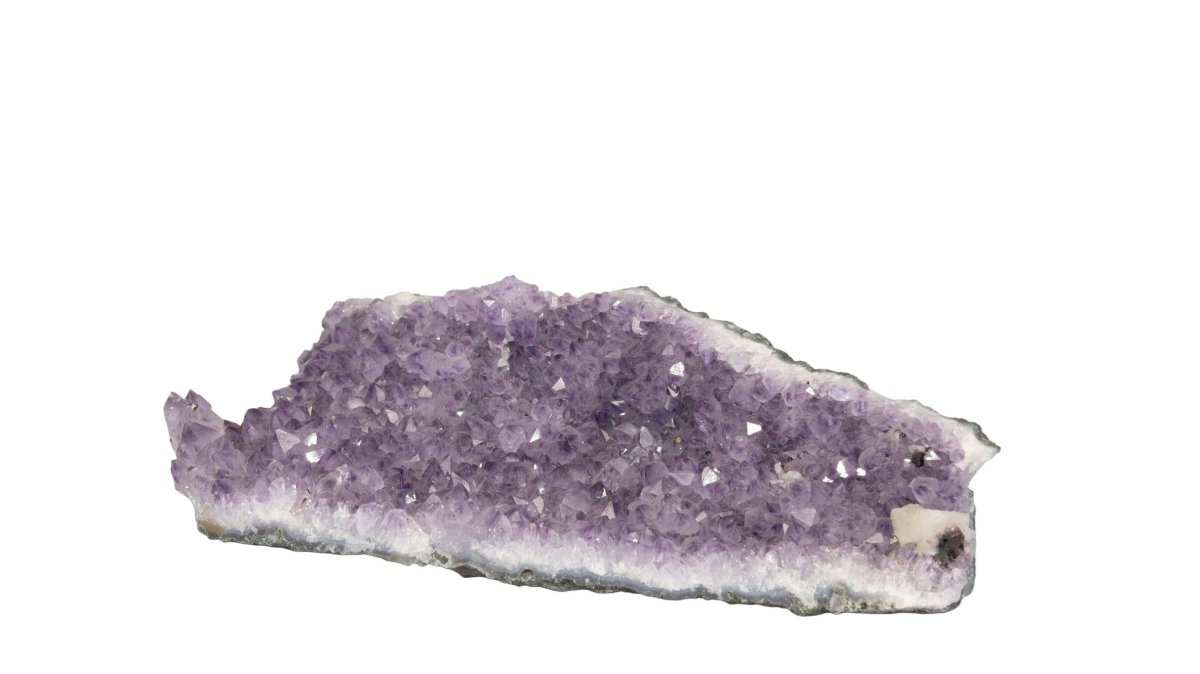
- Clusters make a strong display piece for a larger room.
A polished palm-shaped stone is a practical starting point. The Amethyst Puffy Heart 1 Piece 1 To 1 5 Inches Polished Gemstone Palm Shape is one option to consider.
Look for natural color, smooth polish and a size that feels comfortable in your hand. Avoid pieces with sharp chips, since they can be uncomfortable to touch in bed.
Here is how the main amethyst options compare for a bedroom setup.
| Option | Best for | Key difference |
|---|---|---|
| Small palm stones | Pocket or bedside tray | Fits in the hand and is easy to carry |
| Spheres | Nightstand or dresser | Catches light nicely and has visual weight |
| Clusters | Larger room display | Makes a strong display piece |
Where to Place Amethyst in the Bedroom
Placement is mostly about keeping the stone where you will notice it. A stone you never see does little for your routine.
A calm bedroom nightstand works well. Set the stone beside a lamp or a book so it becomes part of your evening habit.
Larger pieces can go on a dresser or shelf across the room. If you want a bigger presence, a sphere like the Pink Amethyst Sphere 700 1000g 1 Piece has enough visual weight to anchor a bedroom corner.
Keep crystals away from direct, strong sunlight for long periods. Amethyst's purple color can fade over time when exposed to intense light, so a shaded windowsill or nightstand is the safer choice.
Sleeping With Amethyst Under Your Pillow
Some people like to tuck a small stone under the pillow. This is a personal choice, not a proven method. If you try it, keep the piece smooth and small so it does not press on your head or cause discomfort.
Check the stone each morning. Make sure it has not shifted onto a hard edge or into your bedding where it could scratch skin. If the stone keeps waking you up, move it to the nightstand instead.
Many people find the habit more useful than the placement. The act of placing the stone and saying a quiet goodnight can mark the end of the day.
Building an Amethyst Bedtime Routine
A routine turns a crystal into a signal. The stone itself is not doing the work; the repeated sequence around it is. The ritual is often what gives a routine its effect, so build the routine first and let the amethyst anchor it.
Here is a simple version you can adjust:
- Dim the lights about 30 minutes before bed.
- Place your amethyst on the nightstand.
- Hold the stone in your hand and take five slow breaths.
- Set a one-sentence intention for the night, spoken quietly or thought clearly.
- Put the stone down and turn off the lamp.
Set an intention, not a wish
Setting an intention is the step most people skip, and it is the one that gives the routine its shape. An intention is a short, present-tense statement about how you want to feel, not a demand for an outcome.
If you want a more formal version, hold the stone in both hands, state the intention three times, and then place it down. Some people prefer to write the intention on a small card and keep it under the stone. Either way, the goal is the same: pair the object with a clear, repeatable message.
Program the stone once, then leave it alone
Programming is a one-time step, not a nightly one. Hold the amethyst, state what you want it to support (calm, wind-down, a consistent bedtime), and then set it on the nightstand. Re-programming every night adds friction and undercuts the cue. If you change your intention, cleanse the stone first (see the cleansing section below), then program it again.
For a more focal object, a tower-style carving such as the Banded Amethyst Crystal Point Tower Carving gives your eyes something steady to rest on while you wind down.

Keep the timing consistent
Consistency is what turns the ritual into a habit your body recognizes. Pick a start time and keep it within about 15 minutes each night. A routine that runs at 9:30 one night and 11:45 the next does not build the same association. If you miss a night, restart the next night at the usual time rather than doubling up.
Watch out: if the routine starts to feel like a chore you dread, shorten it. A two-minute version you actually do beats a ten-minute version you skip.
Pair the routine with the room
The routine works best when the room supports it. Lower the lights, silence notifications, and keep the stone where you can see it from the bed. The amethyst is the visual cue; the dim light and quiet are the conditions that let the cue take hold. If you want to track whether it is working, note your bedtime and how long you take to fall asleep for two weeks. That gives you something concrete to compare instead of a vague sense of whether it helped.
How to Cleanse Amethyst Step by Step
Many crystal owners cleanse their stones regularly, especially after handling. Here is a gentle process:
- Rinse the stone briefly under cool running water, avoiding hot water.
- Pat it dry with a soft cloth.
- Let it sit in fresh air or natural light for a short time.
- Store it in a dry place away from the sun.
Avoid soaking amethyst for long periods, and do not use harsh cleaners. Gentle care keeps the polish and color looking their best. For more background on handling and caring for stones at home, see this guide to crystal care and handling from a respected gemological resource.
Troubleshooting When Amethyst Does Not Seem to Help
Most guides stop at "be patient." That leaves you without a next step if you have used amethyst for a month and feel nothing. Here is a structured way to diagnose what is actually happening, in the order worth checking.
First, separate the stone from the routine
The amethyst is one part of a larger habit. Before you blame the stone, check whether the routine around it is consistent. If you place the stone some nights and not others, or change the intention every week, you have not given the cue a chance to form. Run the same routine at the same time for 14 nights before drawing any conclusion.
The 30-day check
A common pattern is to feel nothing in the first week, a slight sense of calm in weeks two and three, and a clearer association by week four. If you are past 30 days of consistent use and notice no change at all, work through these checks:
- Is the stone where you actually look? A stone in a drawer does not function as a cue. Move it into your line of sight from the bed.
- Is the intention specific enough? "Sleep better" is too broad to anchor to. Narrow it to one feeling or one behavior.
- Is something else overriding the routine? Screens, late caffeine, an inconsistent bedtime, or a bright room will drown out a subtle cue. Fix the loudest problem first.
- Is the piece comfortable to handle? A sharp or oversized stone you avoid touching will not become part of the habit. Swap to a smooth palm stone.
- Are you expecting the wrong thing? Amethyst is not a sedative. The realistic benefit is a calmer wind-down, not a faster knockout.
Try a different role for the stone
If the nightstand placement is not landing, change the role rather than the stone. Some people respond better to holding the amethyst during a breathing exercise than to seeing it on a shelf. Others prefer it under the pillow, or in a pocket during the last hour before bed. The goal is to find the one touchpoint you will repeat without thinking.
When to stop and when to escalate
If 30 days of consistent use produces nothing, it is reasonable to set the amethyst aside and keep the routine. The wind-down sequence is the part with the clearest benefit, and it works without the stone. Persistent trouble sleeping, especially if it lasts more than a few weeks or affects daytime function, deserves a conversation with a doctor rather than another crystal experiment.
Watch out: do not keep adding stones to fix a routine that is not working. More objects usually means more clutter and less consistency, not more calm.
A note on the placebo effect
Feeling calmer after a ritual can be a genuine benefit, even if the crystal itself is not the active ingredient. That is not a reason to dismiss the practice; it is a reason to be honest about what you are measuring. If the stone helps you relax, keep it. If it does not, keep the routine and drop the stone.
Start Your Amethyst Sleep Routine Tonight
Begin small. Pick one piece, place it where you will see it, and add a short routine before bed. A mixed lot such as the Amethyst Druzy W Cut Base And Polished Edges Mixed Sizes 5 Kilo Lot lets you try several placements and see what feels right. If you are looking for something to wear alongside your ritual, our Jewelry Mystery Boxes offer a surprise selection of pieces to explore.
Our collection at CSShop | Jewelry & Crystals includes spheres, clusters, tooth points and tower carvings, so you can build a bedside set that suits your space. Browse the full range at csshop.shop and find a piece that feels right for your nightly ritual.
Frequently Asked Questions
Where should you place amethyst for sleep?
Most people keep amethyst on a nightstand, dresser or windowsill within arm's reach of the bed. Placement is a matter of personal preference and routine, not a requirement. Keep it where you will see it at bedtime, away from water and direct heat, and avoid placing it where it might fall onto the floor. Many people find that a consistent spot helps them link the stone to their wind-down time. Scientific research has not established that the stone itself improves sleep, so treat placement as a ritual cue rather than a proven effect.
Can you sleep with amethyst under your pillow?
You can, provided the stone is smooth, clean and small enough to be comfortable. Tooth points and clusters with sharp edges are better kept on a nightstand. Some people prefer a small polished piece under the pillow because it is always within reach. Check the stone for chips before placing it under your head, and keep it out of bed if you have young children or pets who might pick it up. The practice rests on personal comfort and habit.
How do you use amethyst in a bedtime routine?
Pick a repeatable sequence, such as dimming the lights, putting your phone away, holding the amethyst for a minute while you breathe slowly, then setting it in its spot. The stone works as a physical signal that the day is ending. Keep the routine short, roughly 10 to 15 minutes, and repeat it nightly so the habit becomes automatic. Pairing the ritual with reading or a warm drink can make it easier to follow.
How do you cleanse amethyst?
Rinse the stone under lukewarm running water and dry it with a soft cloth. You can also place it in the open air or on a windowsill in indirect light for a few hours. Avoid harsh chemicals, and be cautious with heat, since prolonged direct sun can fade some amethyst over time. Cleanse your piece when it looks dusty or when it has been handled by many people. Cleaning also keeps the surface clear and pleasant to hold during your routine.