 How-to
How to Store Crystal Towers Safely at Home?
Last Updated: November 16, 2026
Quick Summary
To store crystal towers safely at home, choose a cool, dry, flat and sturdy spot away from direct sunlight and foot traffic. Clean and inspect each piece, wrap it in soft cotton, silk or velvet, and set it on a stable base with space between pieces.
- Pick a flat, level, sturdy surface away from windows, humidity and foot traffic.
- Clean each tower with a soft, dry cloth and never scrub.
- Wrap each tower separately in soft cotton, silk or velvet, never plastic.
- Place wrapped towers on a stable base and never stack them on each other.
- Keep at least an inch of space between pieces in drawers and boxes.
Table of Contents
- Why Crystal Towers Need Careful Storage
- Choosing the Right Spot for Your Crystal Towers
- Step-by-Step: How to Store Crystal Towers Safely
- Best Material to Store Crystals In
- How to Store Crystal Towers Safely in a Drawer
- How to Store Crystals When Not in Use
- Protecting Tall or Heavy Towers During Storage and Moves
- Pick the Storage Setup That Fits Your Collection
- Frequently Asked Questions
Why Crystal Towers Need Careful Storage
Crystal towers are tall, slender pieces, and that shape makes them easy to damage. A tower that tips over or knocks against a shelf can chip at the tip or crack along a natural fracture line. Good storage prevents most of that damage before it starts.
Storing a crystal tower safely comes down to three things: a stable spot, protection from scratches and moisture, and enough room that pieces never bump each other. This guide walks through each one, so you can put your towers away with confidence.
Choosing the Right Spot for Your Crystal Towers
Pick a spot that is cool, dry, and out of direct sunlight. Strong sun can fade some stones over time, and humidity can harm water-sensitive varieties.
Look for a surface that is flat, level, and sturdy. A wobbly shelf is the most common cause of tipped towers. Keep storage away from high-traffic areas, where a bumped elbow or a pet's tail could send a piece to the floor.
Here is a quick checklist for a good spot:
- Flat, level, and sturdy surface
- Away from windows and direct sunlight
- Low humidity, away from bathrooms and kitchens
- Clear of foot traffic and pets
- Room to keep pieces separated
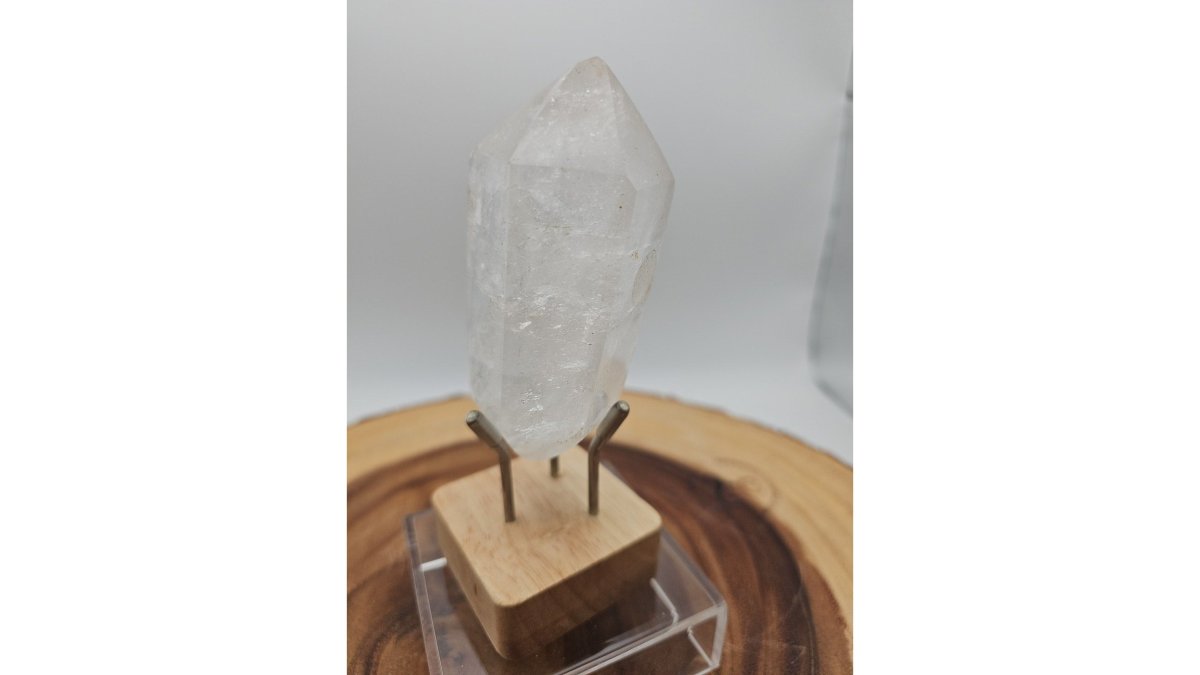
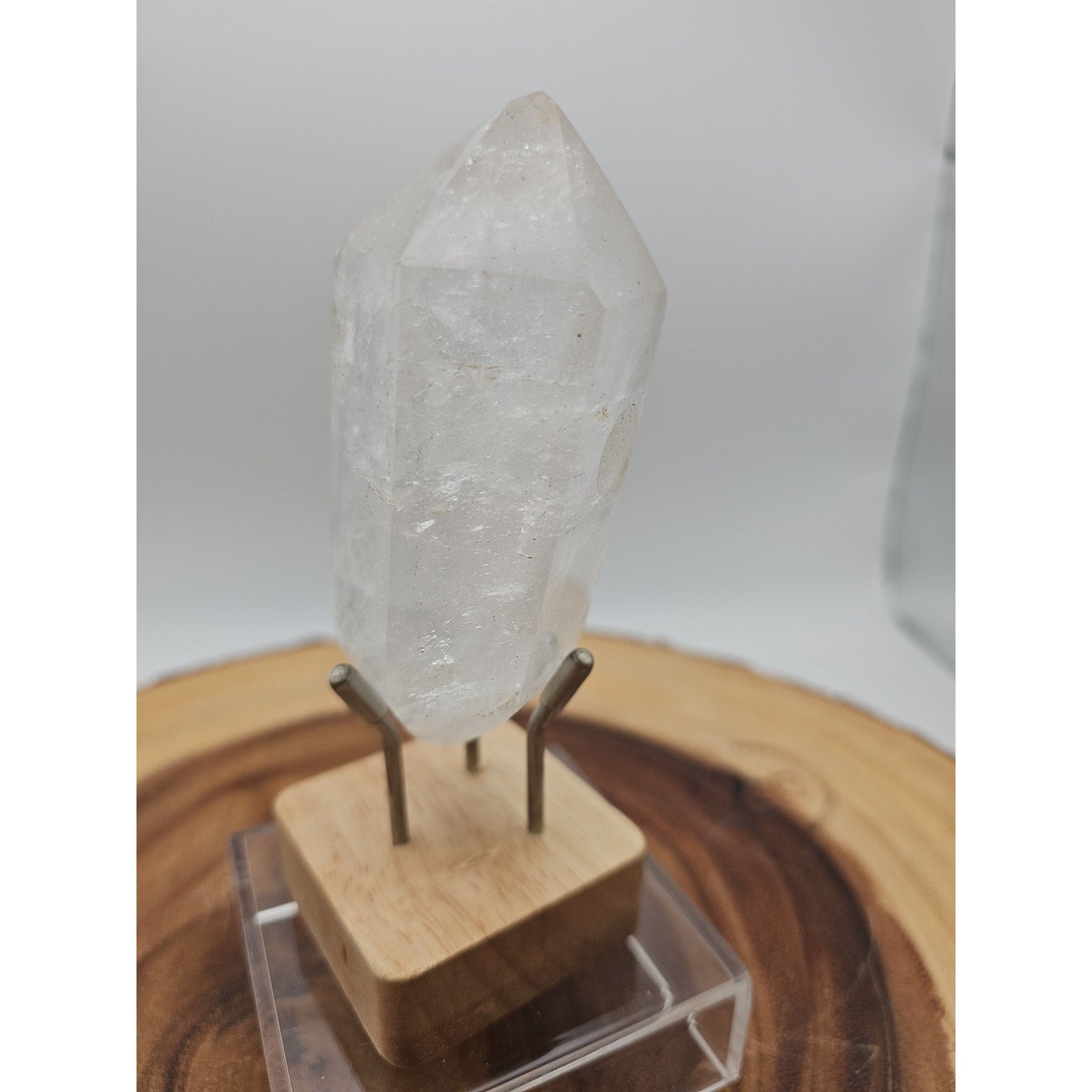
If you are looking for a tower to display in a good spot, our Quartz Crystal Point .49lb With Stand comes with a stand for display.
Step-by-Step: How to Store Crystal Towers Safely
Follow these steps in order. Each one builds on the last.
Step 1: Clean and Inspect Before Storing
Start by checking each tower for dust, oil, and loose grit. Wipe it gently with a soft, dry cloth. Fluorite and other softer stones can scratch easily, so avoid rough cloths and never scrub.
Look closely at the tip and base for cracks or chips. Store a damaged piece separately so it does not rub against others.
Some crystals do not do well with water. Check before you rinse anything. Our guide on 9 Crystals That Can't Handle Salt Water Cleansing lists the stones to keep away from water.
Step 2: Wrap Each Tower in Soft Material
Wrap each tower on its own. Use a soft cotton cloth, a silk scarf, or a piece of velvet. These materials cushion the stone and keep scratches off the surface.
Wrap snugly, but do not squeeze. Fold the fabric so the tip is covered, then secure it with a loose tie or tuck the ends under. Never wrap a tower in plastic that traps moisture.
Watch out: Do not use newspaper or rough paper. The ink can transfer to the stone and the fibers can scratch softer pieces.
Step 3: Set Each Tower on a Stable Base
Place each wrapped tower on a flat base, such as a felt-lined tray or a small wooden stand. A stable base keeps the piece from rolling or tipping.
Keep the base in the spot you chose earlier. Do not stack towers on top of each other. Stacking adds weight and pressure that can crack the tips.
Best Material to Store Crystals In
The right material depends on how you plan to store your pieces, how often you handle them, and how vulnerable the stone is.
- Cotton: Breathable and gentle, with low abrasion. Good for everyday storage and for pieces you unwrap often. It offers modest cushioning, so double it for tall towers.
- Silk: Smooth and soft with very low abrasion. Works well for polished faces and pieces you handle often, but it is thin, so it cushions poorly on its own.
- Velvet: Plush pile that absorbs knocks and holds a tower in place. A good choice for tall or heavy towers and for pieces with delicate tips. Velvet can shed fibers, so shake it out before wrapping.
- Felt: Dense and low-shed, and the standard liner for trays and drawer bottoms. It grips well and resists sliding, which matters for upright towers.
- Felt-lined boxes and divided trays: Keep pieces in place and separate from each other. Dividers do more for chip prevention than any single fabric, because they stop pieces from contacting each other at all.
- Foam (closed-cell): Good cushioning for moving and for boxing tall towers. Closed-cell foam does not hold water the way open-cell foam can, so it is the safer choice in humid rooms.
Avoid plastic bags and sealed containers that trap moisture. Also avoid rough or abrasive materials, such as burlap, which can scratch the surface.
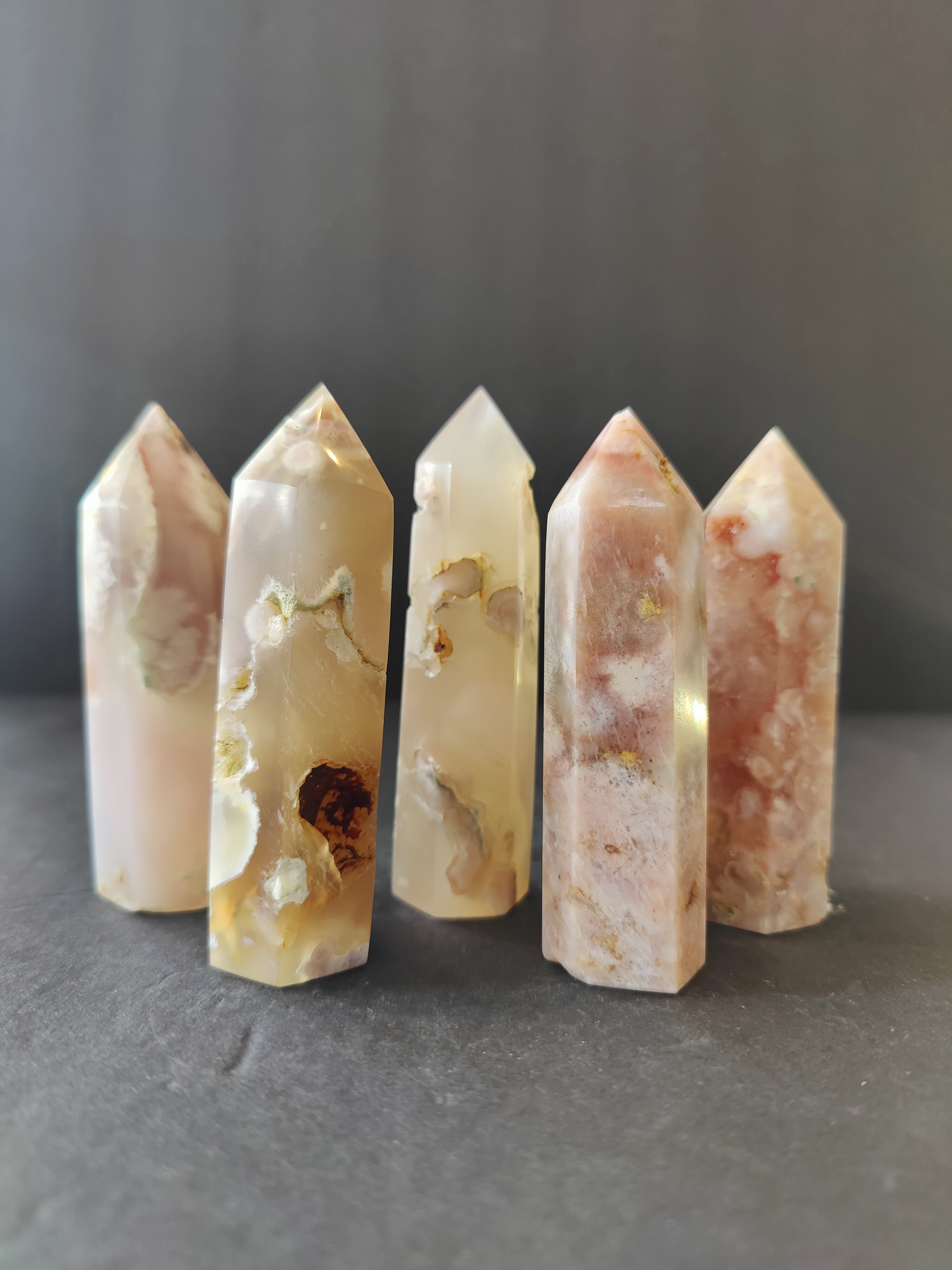
A common pattern is to pair a breathable wrap (cotton or silk) with a structured container (felt-lined box or divided tray). A Flower Agate Tower is one example that sits well in a padded box because its shape rests flat on a base.
Watch out: never store a tower in a sealed plastic bag for months.
The right material depends on how you plan to store your pieces, how often you handle them, and how vulnerable the stone is. Here is how the common options compare.
| Material | Best for | Key difference |
|---|---|---|
| Cotton | Everyday storage, pieces you unwrap often | Breathable and gentle; double it for tall towers |
| Silk | Polished faces, frequent handling | Very low abrasion; cushions poorly on its own |
| Velvet | Tall or heavy towers, delicate tips | Absorbs knocks; shake out fibers before wrapping |
| Felt | Trays and drawer bottoms | Dense, low-shed, resists sliding |
| Felt-lined boxes and divided trays | Keeping pieces separate | Dividers do more for chip prevention than fabric |
| Closed-cell foam | Moving and boxing tall towers | Does not hold water; safer in humid rooms |
How to Store Crystal Towers Safely in a Drawer
A drawer works well if you prepare it first. Line the bottom with a soft cloth or thin foam.
Leave space between pieces. A gap of an inch or more keeps them from rubbing together. If your drawer is shallow, store one or two towers at a time. Heavier pieces should always sit on the bottom.
Keep a drawer away from heat sources, such as a radiator or a sunny window. Check the drawer every few months for moisture or dust.
How to Store Crystals When Not in Use
Crystals you are not using still need care. Keep them in a cool, dry place, wrapped or in a closed box. Store them away from sunlight, which can fade some colors over time.
Separate pieces by hardness where you can. Softer stones should not sit against harder ones, since the harder stone can scratch the softer one. Label your boxes so you know what is inside without unwrapping everything.
Check stored crystals every few months. Look for dust, moisture, and any new chips. Catching a problem early makes it much easier to fix.
Protecting Tall or Heavy Towers During Storage and Moves
Tall and heavy towers need extra care, especially when you move them. Their height raises the center of gravity, so a small bump at the top produces a large tipping force at the base.
Stability on a shelf or in a case
- Set the tower on a flat, level surface with the full base in contact. A base that overhangs an edge is already halfway to falling.
- Use a stand or a fitted base ring for upright display. A stand widens the effective footprint and resists sideways nudges.
- Anchor the shelf or case if it is tall or top-heavy. A shelf that shifts when a door closes can walk a tower toward the edge over time.
- Keep clearance above the tip. Leave at least a couple of inches so nothing brushes the point when you reach past it.
- Keep heavy pieces on lower shelves. The higher the shelf, the more damage a fall causes and the harder the piece is to reach safely.
- Move towers away from door swings, pet traffic, and anything that vibrates, such as a speaker or an appliance.
Packing a tall or heavy tower for a move
- Clean and inspect first. Wipe off grit and check the tip and base for existing chips or hairline cracks. Photograph the piece before packing so you have a record of its condition.
- Wrap the tip separately. Pad the point with a small piece of closed-cell foam or a folded cloth before the main wrap, so the most fragile part gets the most cushioning.
- Wrap the body in soft fabric, snug but not tight. Secure the wrap with tape on the fabric, never on the stone.
- Cushion the base. A heavy base needs padding underneath so its own weight does not press it against the box floor.
- Box it upright if the box allows, or lay it flat with padding on all sides. Fill every empty space with soft material so the piece cannot shift. A tower that can move inside a box will hit the wall of the box on every bump.
- Label the box as fragile and mark which side is up. Carry it upright and support the bottom with both hands.
Watch out: do not pack two heavy towers in the same box without a rigid divider between them. Soft padding compresses under weight, and two heavy pieces can end up touching through the cushioning during transit.
For display and storage, a stand keeps a piece upright. Our Quartz Crystal Point .49lb With Stand comes with a stand for display.
Pick the Storage Setup That Fits Your Collection
Your best setup depends on how many pieces you own and how often you handle them. A small collection may only need a drawer and a few soft wraps.
Start with the basics: a stable spot, soft wrapping, and space between pieces. Add stands and boxes as your collection grows.
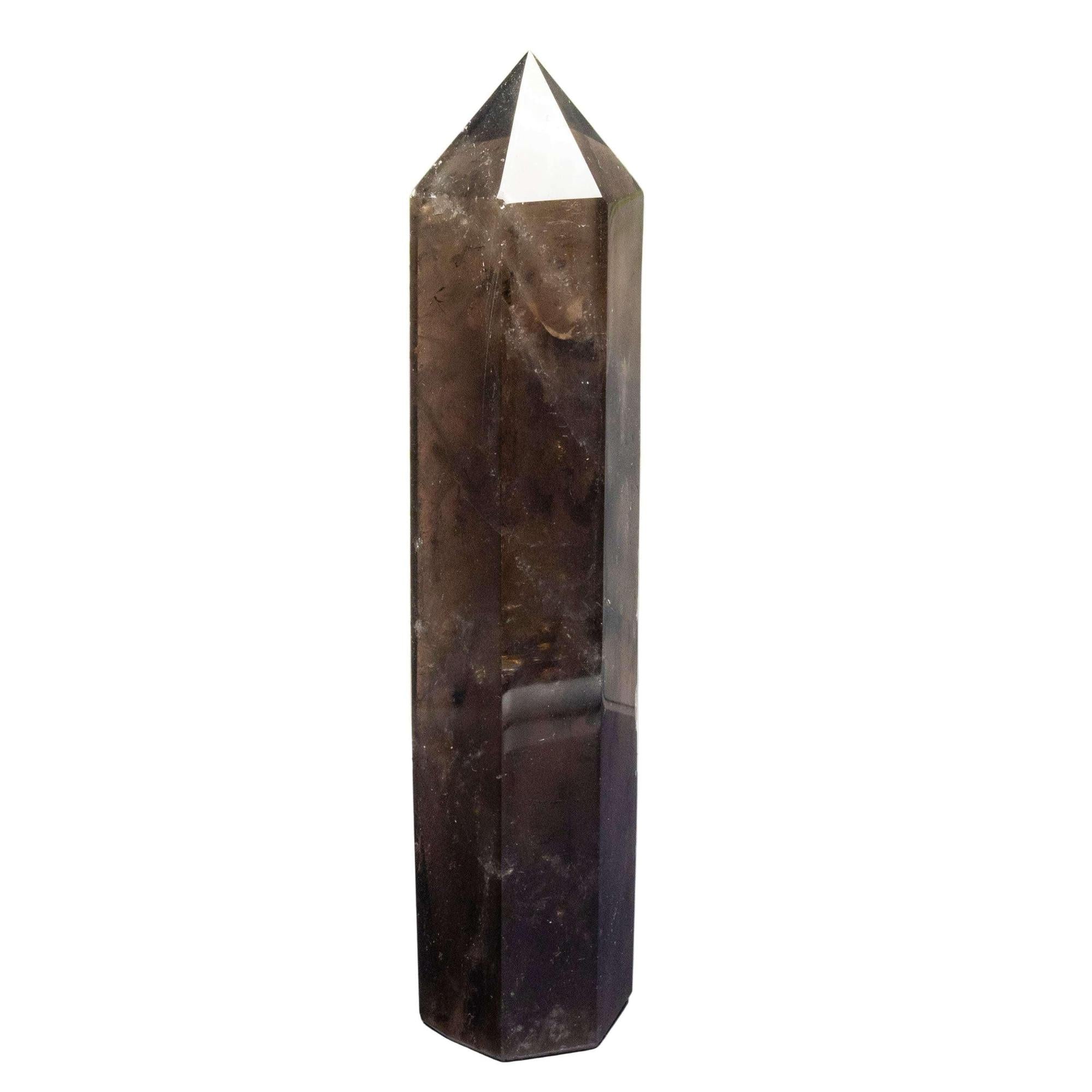
For more pieces to add to a well-organized collection, browse our Smoky Quartz Crystal Tall Tower Dark Collector Specimen. Find more crystal towers and specimens at CSShop, at csshop.shop.
Frequently Asked Questions
What is the safest way to store crystal towers?
Store each crystal tower upright on a stable, level base, wrapped in a soft cotton or felt cloth, and kept in a box or case with dividers so pieces do not knock together. Keep the storage spot away from direct sunlight, which can fade some stones, and away from humidity, which can damage water-sensitive minerals. Check the base before every storage session, since a loose or narrow base is the most common reason towers tip over.
How can I keep a crystal tower from tipping over?
Choose a base that is wider than the tower's footprint, and make sure the tower sits flat without rocking. If the tower is tall or top-heavy, place a small piece of non-slip felt or rubber pad under the base and keep it in a shallow tray with raised edges. Avoid placing towers on shelves that vibrate or near the edge of a surface. For drawers or moving boxes, lay towers flat on padding only if the base is wide and the tower is short, and secure them with a snug wrap so they cannot roll.
Can I store crystal towers in a drawer?
Yes, you can store crystal towers in a drawer if you take a few precautions. Use a drawer with a lined bottom, place each tower in its own soft wrap, and separate pieces with padded dividers so they do not touch. Keep heavier, harder stones at the bottom and softer or more fragile towers on top with extra padding. Do not stack towers on each other, and leave some space at the front and back so the drawer can open and close without pushing pieces together.
What is the best material to store crystals in?
Soft, non-abrasive materials work best. Cotton, felt, and soft microfiber cloth protect polished surfaces from scratches, and small padded pouches keep individual pieces apart. Avoid rough fabrics, newspaper, or loose packing material that can leave grit or chip edges. For display or long-term storage, a lidded box lined with felt or a clear case with a stable base gives good protection. Choose containers that are dry and clean, because trapped moisture can affect certain stones.