 How-to
How to Pick the Right Crystal Tower for Your Space
Table of Contents
- Start With the Space, Not the Stone
- Crystal Tower Meaning: What Each Stone Brings to a Room
- A Crystal Tower Size Guide for Real Rooms
- Crystal Tower Placement, Room by Room
- Point Direction, Shape, and Shelf Material
- How to Buy Crystals Online Without Getting Burned
- Care and Safety by Material
- Frequently Asked Questions
Last Updated: October 18, 2026
Start With the Space, Not the Stone
Most people buy a crystal tower because it looks beautiful online, then discover it's too tall for the shelf or too heavy for the table.
A crystal tower is a polished, pointed crystal cut into a tall, tapered column. The shape draws the eye upward and, in crystal practice, is said to direct energy through the point.
Here's the good news: a few simple measurements and one honest look at your room will narrow your options fast.
Measure the surface before you shop
Grab a tape measure and check three things:
- Height clearance: the distance from your shelf or table to the ceiling, or to the shelf above
- Width and depth: how much flat space you actually have free
- Weight limit: what your shelf, mantel, or table can safely hold
Write these numbers down. A tower that's 152mm tall needs a shelf with at least that much clearance, plus a little breathing room. A 1140g specimen needs a sturdy surface, not a floating glass shelf.
Match the tower to the room's job
Every room has a different job, and that job should shape your choice. A living room wants a piece that anchors conversation. A bedroom wants calm. A desk wants focus.
Ask yourself one question: what do I want this room to feel like? Then pick a stone and size that support that feeling, and a footprint that fits the space.
Crystal Tower Meaning: What Each Stone Brings to a Room
Crystal tower meaning comes down to two things: the stone's traditional properties and the tower's pointed form. The tower shape is said to focus and direct energy upward, while the stone itself carries its own character.
- Labradorite: known as the stone of transformation, tied to intuition and clear communication. Its iridescent flash shifts with the light, so it suits a room where you want movement and a little mystery.
- Green Fluorite: associated with mental clarity and emotional balance. A good pick for a desk or study where you need to think straight.
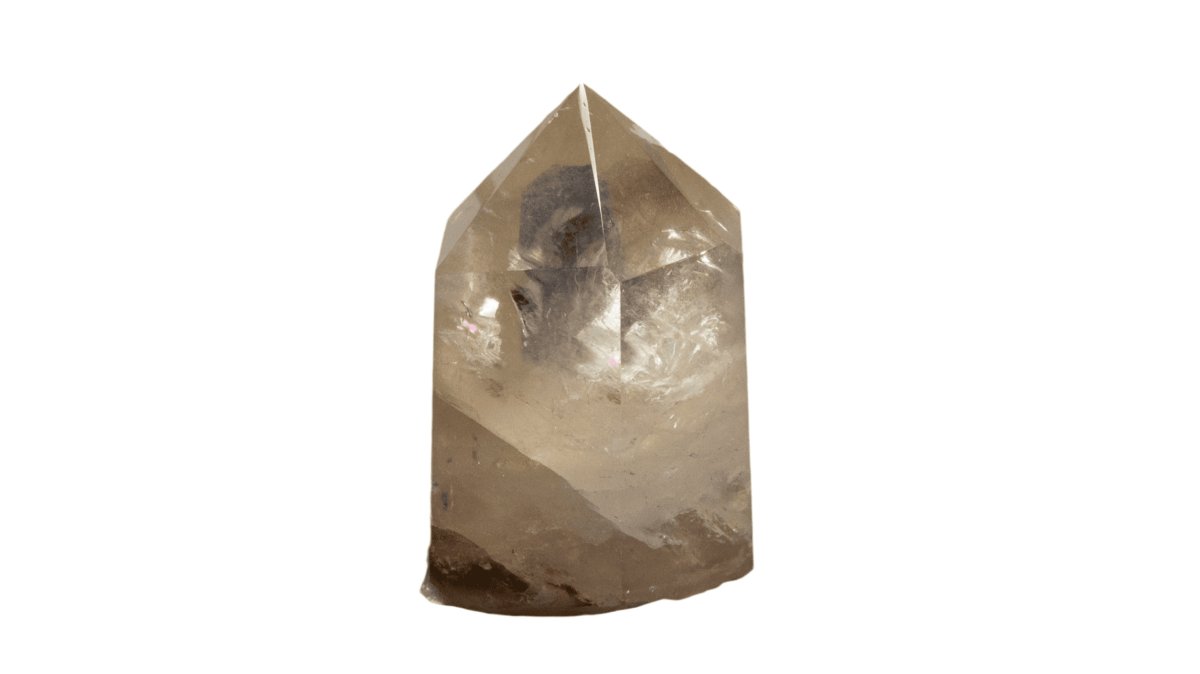
- Smoky Quartz: a grounding stone, traditionally used to settle heavy or stressful energy. Ideal for busy living areas.
What most guides miss is that the stone's color matters as much as its meaning. A pale blue calcite tower in a bright room reads as calm. The same stone in a dark corner disappears.

A Crystal Tower Size Guide for Real Rooms
Most size advice stops at a table. The useful version starts with your measurements and works backward to a tower height, because the same 180mm tower that anchors a deep console looks oversized on a 250mm floating shelf. Use the table below as a starting point, then run the three checks that follow it.
| Room | Suggested Height | Suggested Weight | Best For |
|---|---|---|---|
| Small desk or nightstand | Under 110mm | Under 500g | Focus, calm |
| Living room shelf | 150-180mm | 800-1200g | Centerpiece |
| Mantel or console | 150-180mm | 1000g+ | Anchor piece |
| Meditation corner | 100-160mm | 500-1000g | Intention work |
The one-third rule for shelf proportion
A tower reads as balanced when its height is roughly one-third of the visible vertical space it sits in, the gap from the shelf surface to the shelf above, or to the ceiling if it's open.
Measure the clearance, divide by three, and treat that number as your target height. Then check the width: leave at least one hand's width (about 75-100mm) of empty surface on each side of the base so the tower doesn't read as clutter.
Sightlines: seated eye level is the reference
A tower should sit below eye level when you're seated near it. Seated eye height for most adults is roughly 1,100-1,200mm from the floor, so a coffee table at 400mm plus a 150mm tower puts the point around 550mm, comfortably below the sightline, which is why low centerpieces feel calm rather than looming.
Decide which relationship you want before you buy. If the tower is meant to be looked at during meditation or desk work, keep the point at or just below seated eye level. If it's meant to be admired from across the room, above eye level is fine.
Weight, surface, and stability
Weight matters less for the stone than for what holds it. A 1,140g tower on a wooden shelf rated for 20kg is a non-issue; the same tower on a thin glass shelf or a floating bracket is a risk, because point loads concentrate at the base. Three practical checks:
- Shelf rating: most manufactured shelving states a per-shelf weight limit, stay well under it, and remember the limit assumes even distribution, not a single heavy object.
- Base contact: a flat, polished base sits more stably than a rough-cut one. If the base rocks, a small museum putty pad fixes it.
- Height-to-base ratio: tall, slim towers tip more easily than shorter, wider-based ones. On a high shelf or in a room with pets, favor a wider base or a lower placement.
Height, width, and sightlines
A tall, slim tower suits a narrow shelf because it uses vertical space without spreading sideways. A wider base suits a deep console where the tower has room to anchor. Match the silhouette to the surface, not to a trend: a chunky tower on a shallow shelf overhangs, and an overhanging base is the most common cause of a tipped stone.
Leave at least a hand's width of empty space around the base. Crowding a tower against books or other objects kills its visual impact and makes dusting risky.
Crystal Tower Placement, Room by Room
Good crystal tower placement starts with the room's function, not a fixed rule. These room-by-room ideas give you a practical starting point.
Living room and coffee table
The living room is where a tower earns its keep as decor. Place it on a shelf where light hits the point, or on a coffee table as a low centerpiece.
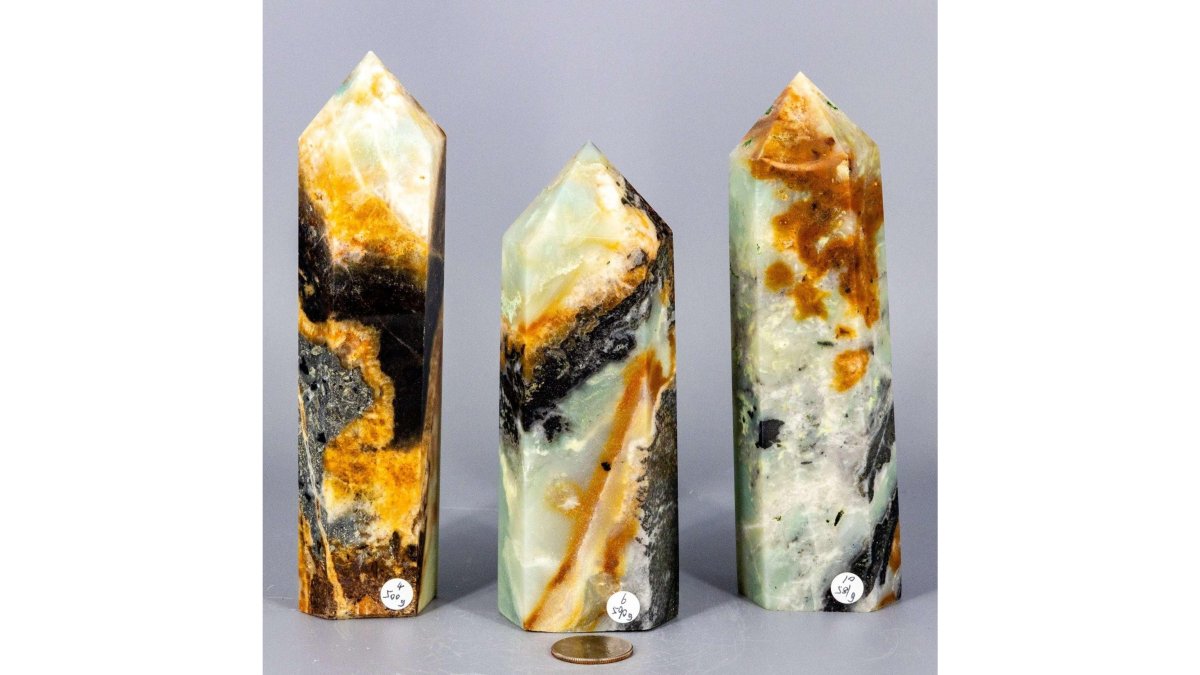
Caribbean Calcite Tower XXL | Polished Crystal Tower →
- Keep it out of the direct path of foot traffic
- Pair it with one or two smaller stones, not a crowd
- Rotate it now and then so the light catches new faces
Bedroom, desk, and meditation corner
In the bedroom, a smaller tower on a nightstand supports a calm wind-down. On a desk, a tower near your line of sight can serve as a focus cue.
Set an intention for the stone before you place it. Hold it, decide what you want the space to support, and put it down with that thought in mind. It sounds simple, and it is.
Point Direction, Shape, and Shelf Material
Point direction is where most guides get vague, so it helps to separate three things that get blended together: what different traditions say, what actually affects how the piece looks, and what affects whether it stays upright.
What the traditions say about point direction
There's no single authority, and practices differ:
- Point up: the most common convention in modern crystal practice, based on the idea that the tapered form draws energy upward and outward into the room. It's also the orientation most people find visually natural, since the eye follows the taper.
- Point toward the room's center or a specific area: some practitioners angle the point to direct energy toward a focal point, a seating area, a doorway, a workspace. This is common in feng shui-adjacent placement, where the tower is oriented relative to the room rather than the shelf.
- Point down or horizontal: less common, and usually reserved for specific intention work rather than display.
A practical approach: pick one convention, apply it consistently, and don't treat it as a rule you can fail. The orientation is a cue for your own attention as much as anything else. What matters more is that the tower is stable and that you can see the point from where you sit.
Shape and silhouette
Tower shapes vary more than the name suggests:
- Standard tapered tower: a flat base, straight sides, and a single point. The most stable and the easiest to place.
- Slim or elongated tower: more height per gram, which suits narrow shelves but tips more easily. Favor a lower shelf or a putty pad.
- Wide-based or obelisk-style tower: a broader footprint that resists tipping and reads as an anchor piece on a deep console.
Shelf material: a stability question, not just a style one
Shelf material changes both the look and the risk:
- Wood: warm, forgiving, and holds weight well. The safest default for heavier towers.
- Acrylic: modern and light, but scratches easily and can flex under a heavy point load on long spans.
- Metal: sleek, but hard surfaces can chip a soft stone if the tower is set down carelessly.
A quick orientation checklist
Before you commit to a spot, confirm:
- The point is visible from where you'll sit or stand most often
- The base sits flat with no rocking
- The tower is clear of foot traffic, doors, and pet paths
How to Buy Crystals Online Without Getting Burned
Buying crystals online comes down to checking three things: real photos, honest listings, and clear return terms. A trustworthy seller shows the exact piece you'll receive, not a stock image.
Here's a quick checklist before you check out:
- Does the listing show the exact specimen, with weight and dimensions?
- Are treatments or enhancements disclosed?
- Is the return policy clear and reasonable?
Look for natural variation in the photos. Real stones have small flaws, and a listing that shows them is usually more honest than one with perfect, identical images. The Federal Trade Commission's guidance on online shopping is a useful reference for your rights as a buyer.
Care and Safety by Material
Care depends on the stone's hardness, and soft stones need gentler handling than hard ones. Dust with a dry, soft cloth. Keep towers out of direct sun for long stretches, since some stones fade. Avoid harsh cleaners and ultrasonic devices.
- Soft stones (calcite): dust only, keep away from water and harder stones
- Quartz family: a slightly damp cloth is fine, dry fully after
- Fluorite: handle gently, it chips easily
Place towers where kids and pets can't knock them over. A small museum putty pad under the base adds stability on smooth surfaces.
If you love the idea of discovering new stones without committing to a single piece, our Jewelry Mystery Boxes are a fun way to explore crystals and jewelry together. For those looking for a substantial centerpiece, consider our Caribbean Calcite Tower XXL, a unique specimen at $179.99, or the Green Fluorite Crystal Tower Heart Chakra Clarity Stone for $94.99. Browse the full range at CSShop.

Frequently Asked Questions
How do I choose a crystal tower for a small space?
Measure the surface first, then pick a tower that leaves at least a few inches of clearance on every side so it doesn't look crowded. A 100-150mm tower suits most nightstands, desks, and narrow shelves, while anything taller belongs on a dedicated display shelf. Weight matters too: a 500g tower is easy to move, but a 1kg specimen needs a sturdy surface. Lighter-colored stones like Caribbean Calcite also make a small room feel bigger than dark, dense specimens.
How tall should a crystal tower be?
Match height to the surface and the sightline. On a coffee table, a 100-150mm tower sits comfortably below eye level when seated. On a display shelf, 150-180mm gives real presence without dominating the room. For an altar or floor-standing display, 200mm and up works. A good rule: the tower should be no more than one-third the height of the shelf opening above it, so it reads as a focal point rather than a obstruction.
How can I tell if a crystal tower is natural?
Look for variation. Natural towers show uneven banding, internal fractures, phantom formations, or color shifts that no two specimens share. Photos should show the exact piece you'll receive, not a stock image. Ask whether the listing is one of a kind and whether the seller names treatments like dyeing or heat. A tower with perfectly uniform color and no internal detail is often treated or synthetic, so read the description carefully before buying.
Where should I place a crystal tower in my home?
Place it where you'll actually see it and where its job fits the room. A grounding stone like Smoky Quartz works near an entryway or home office, while a clarity stone like Green Fluorite suits a desk. Keep towers out of direct, hot sunlight if the stone is soft, and away from high-traffic edges where they could tip. Rotate the tower occasionally so light hits different faces and the flash or banding stays visible.
Picking the right crystal tower is really about matching stone, size, and setting to the room you already have. When you're ready to choose, explore the crystal towers at CSShop and find a one-of-a-kind piece that fits your space. Every specimen is photographed exactly as it ships, so what you see is what arrives. Start with your measurements, follow the size guide, and let the stone do the rest.