 How-to
Crystal Jewelry Care: Keep Stones Looking New
Last Updated: November 2, 2026
Quick Summary
Crystal jewelry care comes down to three habits: keep pieces dry, wipe them gently with a soft cloth, and store them away from light and moisture. Porous, soft, or treated stones stay dry, while quartz-family stones in sealed settings take a damp wipe. Always dry fully before storing.
- Wipe each piece with a dry lint-free cloth after wear, about 30 seconds daily.
- Skip ultrasonic and steam cleaners; use mild dish soap only when needed.
- Store pieces separately in lined pouches or compartments, away from direct sun.
- Jewelry goes on last after perfume dries and comes off first before cleaning.
- Stop wearing a piece if a stone wiggles or a prong catches on cloth.
Table of Contents
- Why Crystal Jewelry Care Comes Down to Three Habits
- Can Crystal Jewelry Get Wet? Water Exposure by Stone
- How to Clean Crystal Jewelry Without Damaging It
- The Crystal Jewelry Cleaning Cloth: What It Does and Doesn't
- How to Store Crystal Jewelry Between Wears
- Harsh Chemicals, Heat, and Sunlight: The Daily Threats
- Tarnish, Discoloration, and Signs of Damage to Watch For
- Build Your Crystal Jewelry Care Routine
- Frequently Asked Questions
Why Crystal Jewelry Care Comes Down to Three Habits
Crystal jewelry care is simpler than most guides make it sound.
A common worry for first-time buyers is whether a stone piece will dull or turn green after a few weeks.
The Gemological Institute of America's jewelry care guidance points out that light, heat, and treatments all affect how a stone should be handled.
We group crystal jewelry care into three habits:
- Dry first: wipe before storing, never after
- Gentle always: soft cloth, mild soap, no machines
- Separate storage: each piece in its own pouch or compartment
If you are weighing how often to actually wear a piece, this guide on simple crystal jewelry for daily wear covers what holds up to everyday use.
Can Crystal Jewelry Get Wet? Water Exposure by Stone
Some crystal jewelry can get wet, but not all of it. Quartz-family stones handle a quick wipe with a damp cloth. Softer, porous, or treated stones should stay dry. The stone decides the rule, not the setting.
Water causes two problems: it seeps into cracks and loosens glue in settings, and it reaches porous stones and leaves mineral marks. A third is easy to miss: water trapped under a prong or inside a bead hole keeps working on the metal long after the surface looks dry.
Stone-by-Stone Water and Cleaning Chart
Use this as a quick reference. "Dry only" means a dry soft cloth and nothing wetter. "Damp wipe" means a barely damp cloth, then immediate drying. "Short rinse" means a few seconds under running water with mild soap, then thorough drying.
| Stone | Water exposure | Safe cleaning | Main risk |
|---|---|---|---|
| Quartz (clear, rose, smoky) | Damp wipe | Soft cloth, mild soap | Trapped moisture under prongs |
| Amethyst | Damp wipe | Soft cloth, mild soap | Heat and prolonged sun fade color |
| Citrine | Damp wipe | Soft cloth, mild soap | Heat can dull or crack it |
| Selenite | Dry only | Dry soft cloth | Water-soluble; dulls and pits |
| Pyrite | Dry only | Dry soft cloth | Moisture causes rusty surface film |
| Opal | Dry only | Dry soft cloth | Absorbs water; can craze or crack |
| Pearl | Dry only | Dry soft cloth | Porous; acids and perfume dull nacre |
| Turquoise | Dry only | Dry soft cloth | Porous; absorbs oils and water |
| Lapis lazuli | Dry only | Dry soft cloth | Porous; water and cleaners seep in |
| Malachite | Dry only | Dry soft cloth | Porous; water damages the surface |
| Moonstone | Damp wipe | Soft cloth, mild soap | Cracks along cleavage with heat or impact |
| Labradorite | Damp wipe | Soft cloth, mild soap | Surface scratches easily |
| Hematite | Damp wipe | Soft cloth, dry fully | Rusts if stored damp |
| Fluorite | Dry only | Dry soft cloth | Soft; water and heat both damage it |
| Tiger's eye | Damp wipe | Soft cloth, mild soap | Heat and chemicals dull the sheen |
| Treated or dyed stones | Dry only | Dry soft cloth | Water can lift dye or coating |
Two rules cover most of the chart: porous, soft, or treated stones stay dry; quartz-family stones in well-sealed settings take a damp wipe.
Which Stones Should Stay Dry
Selenite is the classic example. It is soft and water-soluble, so even a damp cloth can dull the surface.
For anything on the dry list: wipe with a dry soft cloth only, never soak or use an ultrasonic cleaner, and keep it away from the bathroom counter.
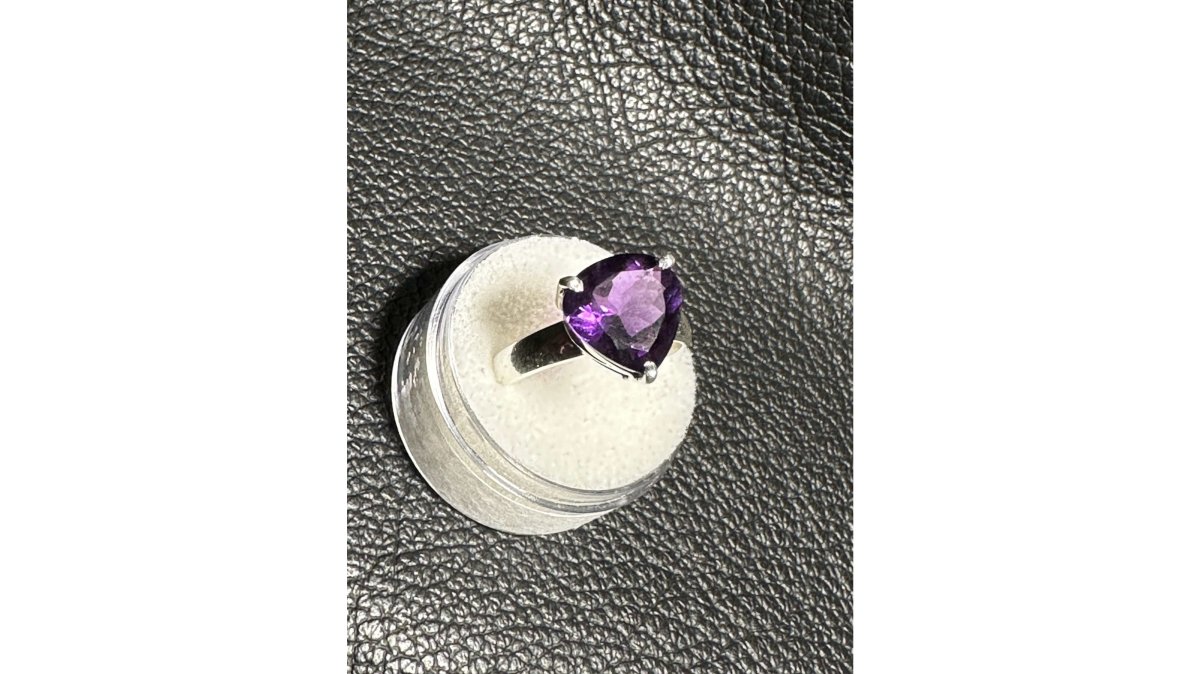
Stones like amethyst sit at the friendlier end. A piece such as our amethyst ring still deserves a dry wipe after wear, but a brief touch of water will not ruin it.

Watch out: a "dry only" stone set beside a water-friendly one makes the whole piece dry only, because water wicks along the setting and reaches the sensitive stone first.
What to Do After Water or Chemical Exposure
- Blot, do not rub, with a dry cloth to lift moisture.
- Dry the setting, not just the stone, water hides under prongs and inside bead holes.
- Let it air dry fully before storing.
- For chemical contact, rinse with a barely damp cloth, then dry at once.
- For a porous stone that soaked through, set it on a dry cloth in a warm, airy room for a day before wearing it again.
Watch out: storing a piece while it is still damp is the most common cause of cloudy film and metal discoloration.
How to Clean Crystal Jewelry Without Damaging It
Cleaning crystal jewelry safely takes about two minutes: wipe with a soft cloth, use mild dish soap only when needed, and dry completely before storing. Skip the ultrasonic machine and the steam cleaner.
- Lay the piece on a soft towel.
- Wipe the stone and setting with a dry, lint-free cloth.
- For buildup, dip a soft brush in warm water with a drop of mild soap.
- Brush gently around the setting, not across the stone face.
- Wipe away soap with a barely damp cloth.
- Dry fully. Wait before storing.
Cleaning by Setting and Construction
The setting matters as much as the stone. Glued settings hate water. Prong settings trap dust under the claws. Bezel settings are the easiest to keep clean.
- Glued or adhesive-set stones: dry cloth only
- Prong settings: soft brush to lift dust from the claws
- Bezel settings: wipe the metal rim, then the stone
For metal-heavy pieces, our step-by-step guide on how to clean and care for gold-filled jewelry walks through the metal side in more detail.
The Crystal Jewelry Cleaning Cloth: What It Does and Doesn't
A crystal jewelry cleaning cloth is a lint-free microfiber square that lifts oils and dust without scratching. It is the single most useful tool you can own. It is also not a cleaner.
What it does:
- Removes skin oils and fingerprints
- Polishes metal without abrasive
- Reaches into prong gaps
What it does not do:
Amethyst Ring Size 8 - "Royal Queen" →
- Dissolve built-up soap residue
- Fix scratches or cloudiness
- Replace a proper wash when needed
Keep one cloth per metal type, since a cloth used on silver carries tarnish residue onto gold tones. Wash cloths by hand, skip fabric softener, and air dry.
How to Store Crystal Jewelry Between Wears
Store crystal jewelry dry, dark, and separate. Moisture, light, and contact with other pieces cause most storage damage. A lined box in a drawer beats a pretty tray on a windowsill every time.
- Use a lined jewelry box or individual pouches
- Keep pieces apart so stones do not scratch each other
- Add a silica packet in humid rooms
For travel, use a hard case with dividers. Wrap each piece in a soft pouch, and never pack jewelry loose in a toiletry bag.
Harsh Chemicals, Heat, and Sunlight: The Daily Threats
Daily products do more damage than any cleaning mistake: perfume, hairspray, lotion, and household cleaners leave residue that dulls stones and speeds tarnish.
The fix is order of operations:
- Jewelry goes on last, after perfume and lotion dry
- Jewelry comes off first, before cleaning or dishes
- Remove before showering, bathing, swimming, or exercise
Heat and prolonged sunlight can fade some stones and dry out settings. A windowsill display looks lovely but can gradually do damage.
Tarnish, Discoloration, and Signs of Damage to Watch For
Tarnish and discoloration are early warnings, not emergencies. Catch them early and most pieces recover with a gentle wipe; ignore them and the damage moves into the stone or setting, where a cloth can no longer fix it.
A Monthly Five-Point Check
Run this check under bright light, ideally near a window during the day. It takes about a minute per piece.
- A yellow, gray, or black film on metal
- Cloudiness or a dull patch under the stone
- A stone that wiggles or spins in its setting
Match the Symptom to the Response
| What you see | Likely cause | What to do | When to escalate |
|---|---|---|---|
| Yellow or gray film on silver | Normal tarnish | Dry wipe; mild soap for heavier film | Film returns within days of every cleaning |
| Green residue on skin or metal | Copper in the alloy reacting to moisture | Dry the piece fully after wear; keep it dry | Residue appears without any moisture exposure |
| Cloudy film under the stone | Soap or moisture trapped in the setting | Dry fully; gentle brush at the setting edge | Cloudiness stays after two cleanings |
| Dull or faded stone color | Sun, heat, or chemical exposure | Move storage out of light; stop chemical contact | Color change is sudden or uneven |
| Wiggling or spinning stone | Loose prong or failed adhesive | Stop wearing it | Always, a jeweler should retighten or reset it |
| Dark lines at prong base | Corrosion or dirt buildup | Gentle brush and dry | Metal looks pitted or thin |
| Scratch or chip on the stone face | Impact or contact with another piece | Separate storage; keep wearing if the edge is smooth | Chip has a sharp edge or sits near a prong |
What You Can Fix at Home
Surface tarnish, fingerprints, and light dust are home fixes. A dry lint-free cloth handles most of it, and a soft brush with a drop of mild soap handles buildup around prongs and bezels.
What home cleaning cannot fix: scratches in the stone, a chipped edge, a loose stone, corrosion that has thinned the metal, or color that has faded through the stone.
When to Stop Wearing a Piece
Stop wearing a piece when a stone moves in its setting, a prong feels sharp or catches on cloth, a chip has a sharp edge, or a clasp opens on its own.
A piece like our tanzanite and sterling silver ring shows why metal care matters: sterling silver tarnishes naturally, and a dry wipe after each wear keeps it bright.
When to See a Jeweler
A professional check every six to twelve months is a reasonable guideline for pieces worn often. Book sooner if a stone is loose, a prong is worn thin, a chip sits near a setting, or tarnish keeps returning after cleaning.
Watch out: never test a loose stone by pressing on it. Pressure can crack a stone or bend a prong further, and it turns a cheap retightening into a reset.
Build Your Crystal Jewelry Care Routine
A workable routine fits in under five minutes a week, tie each step to something you already do.
| Frequency | Task | Time |
|---|---|---|
| Daily | Wipe with dry cloth after wear | 30 seconds |
| Weekly | Check settings and clasps | 2 minutes |
| Monthly | Deep clean with mild soap | 5 minutes |
| Seasonally | Review storage and silica packs | 5 minutes |
| As needed | Inspect for tarnish or cloudiness | 1 minute |
Start with one piece you wear most. Once the dry-wipe habit sticks, add the weekly check. If you want a set to practice on, our crystal bridal jewelry set gives you several pieces to build the habit around. And if you would rather let us choose your next piece to care for, our Jewelry Mystery Boxes are a fun way to add a surprise crystal to your collection, just start it off right with a dry wipe and its own pouch.
Frequently Asked Questions
How do you clean crystal jewelry safely?
Most colored gemstones can be cleaned with warm water, a drop of mild dish soap, and a soft brush, according to the Gemological Institute of America. Wipe the stone gently rather than scrubbing. Skip soaking and ultrasonic or steam cleaners on soft, porous, treated, or fragile stones, which Alan Miller Jewelers advises wiping gently instead. Dry the piece completely with a soft cloth before storing it so moisture does not sit against the metal.
Can water damage crystal jewelry?
It can, depending on the stone. Soft, porous, and treated gemstones can absorb water or lose their finish, and prolonged soaking weakens the glue and settings holding a stone in place. Selenite and pyrite are especially water-sensitive. Remove rings and bracelets before showering, bathing, swimming, or washing dishes, and if a piece does get wet, pat it dry right away instead of letting it air dry on the counter.
How should you store crystal jewelry?
Store each piece separately in a soft pouch or a lined compartment so stones do not scratch each other. Keep the box away from direct sunlight, radiators, and humid bathrooms. For water-sensitive stones like selenite, an opaque container with a lid keeps light and moisture out. Fasten chains before storing to prevent tangles, and lay flat pieces that could bend.
How often should you clean crystal jewelry?
Wipe pieces with a soft dry cloth after every wear to remove skin oils and dust. Do a deeper clean with mild soap and water every few weeks for durable stones, and more often in summer when sweat and sunscreen build up. Check settings monthly for loose stones, and take a ring off before exercise or sleep so the prongs are not bent out of shape.
Crystal jewelry care rewards consistency more than effort. A dry cloth, a lined box, and a habit of taking pieces off before water and perfume will keep stones looking new far longer than any product. At CSShop, we curate crystal jewelry and giftable finds with exactly that in mind, and our jewelry mystery boxes are an easy way to start a collection you will actually care for. Browse the collection and find a piece worth the thirty seconds a day.