
 how-to
Tips for Choosing Durable Wedding Jewelry
Table of Contents
- Understand Gemstone Durability and the Mohs Hardness Scale
- Best Metals for Wedding Jewelry
- Match Jewelry to Your Wedding Dress Neckline
- Choose Setting Types That Protect Stones
- Jewelry Maintenance Tips for Brides
- How to Store Wedding Jewelry
- Coordinate with Your Wedding Band and Consider Repurposing
- Conclusion
Last Updated: August 30, 2026
Understand Gemstone Durability and the Mohs Hardness Scale
Your wedding jewelry faces real-world wear through daily activities like washing hands, gardening, and exercise. Understanding gemstone durability starts with the Mohs hardness scale, which measures resistance to scratching on a scale from 1 (softest) to 10 (hardest).
For wedding jewelry worn daily, choose stones rated 8 or higher on the Mohs scale. Diamonds rank at 10, moissanite at 9.25, and sapphires and rubies at 9, all excellent for everyday wear. Softer stones like emeralds (7.5-8) and opals (5-6) require careful handling and work better for special occasions or protective settings that shield them from direct impact.
Best Metals for Wedding Jewelry 💍
The metal setting matters as much as the stone itself. Your choice affects durability, maintenance, and long-term appearance.
Platinum: The Premium Choice
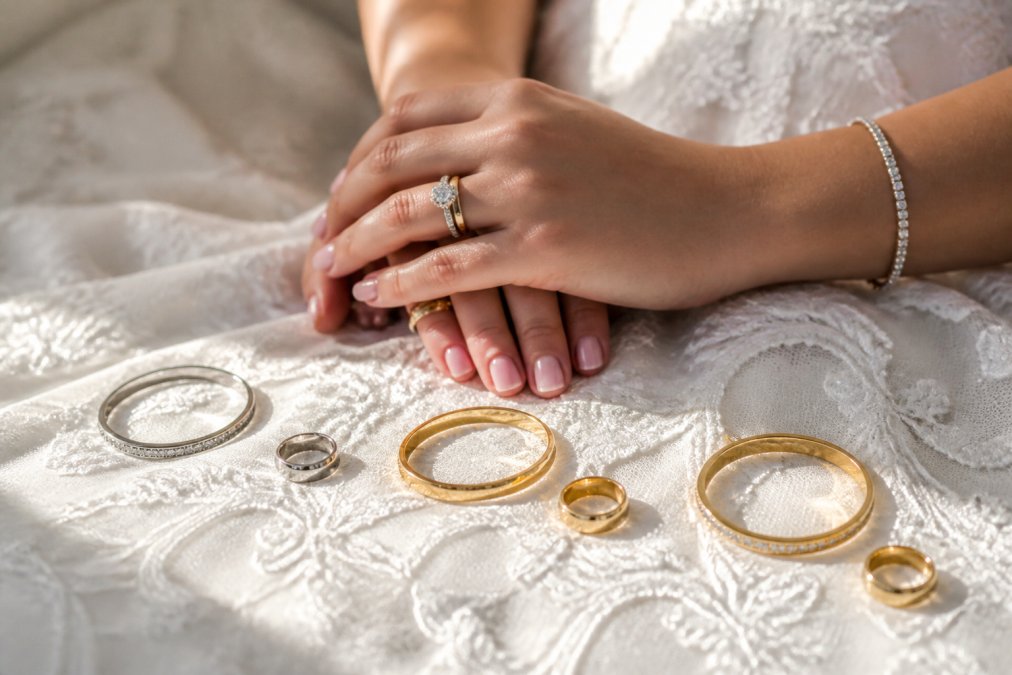
Platinum is the most durable precious metal available. It's naturally white, hypoallergenic, and won't fade, tarnish, or require replating over time. Its density makes it scratch-resistant, scratches displace metal rather than remove it, preserving structural integrity. The trade-off is cost; platinum prices run higher than gold due to rarity and specialized craftsmanship. For brides prioritizing durability and minimal maintenance, platinum eliminates future concerns about replating or degradation.
Gold Options: 14K vs. 18K
14K gold contains 58.3% pure gold mixed with alloy metals, making it harder and more scratch-resistant than 18K. It's the practical choice for wedding bands that take daily contact with rings, keys, and countertops. It resists denting and maintains its shape through years of wear while remaining more affordable than 18K.
18K gold contains 75% pure gold, offering richer color saturation but greater softness and proneness to scratching. Expect more visible wear over time compared to 14K, though some brides prefer the higher gold purity.
Both can tarnish if exposed to certain chemicals or moisture. Sterling silver tarnishes more readily and requires regular polishing.
Sterling Silver with Protective Plating
Sterling silver (92.5% pure silver) offers affordability and a bright appearance but tarnishes relatively quickly. Many pieces come rhodium-plated to resist tarnishing, though this plating eventually wears away with daily wear. Expect to refinish sterling silver jewelry every 6-12 months if worn constantly. Sterling silver works best for occasional wear pieces.
Match Jewelry to Your Wedding Dress Neckline 👗
Your jewelry must harmonize with your dress's neckline for aesthetic cohesion.
Strapless or sweetheart necklines draw attention to shoulders and collarbones. Opt for statement necklaces or layered delicate chains that frame the collarbone without overwhelming it. Drop earrings work beautifully here.
High necklines already frame your face and neck, so minimal necklace jewelry works best. Let your earrings do the talking with statement studs or chandelier styles.
Halter necklines expose your back and sides. Pair with chandelier earrings and a statement bracelet. Skip heavy necklaces that compete with the halter strap's visual line.
Off-shoulder or bardot necklines create a horizontal line across your shoulders. Delicate layered necklaces or a single pendant complements this style. Keep earrings moderate in size.
Match metal tone to your dress's undertones: gold metals complement warm-toned fabrics like ivory, champagne, or blush. Platinum and white gold work beautifully with cool-toned whites and silvers.
Choose Setting Types That Protect Stones 💎
The setting directly impacts durability and how well your stone survives daily wear.
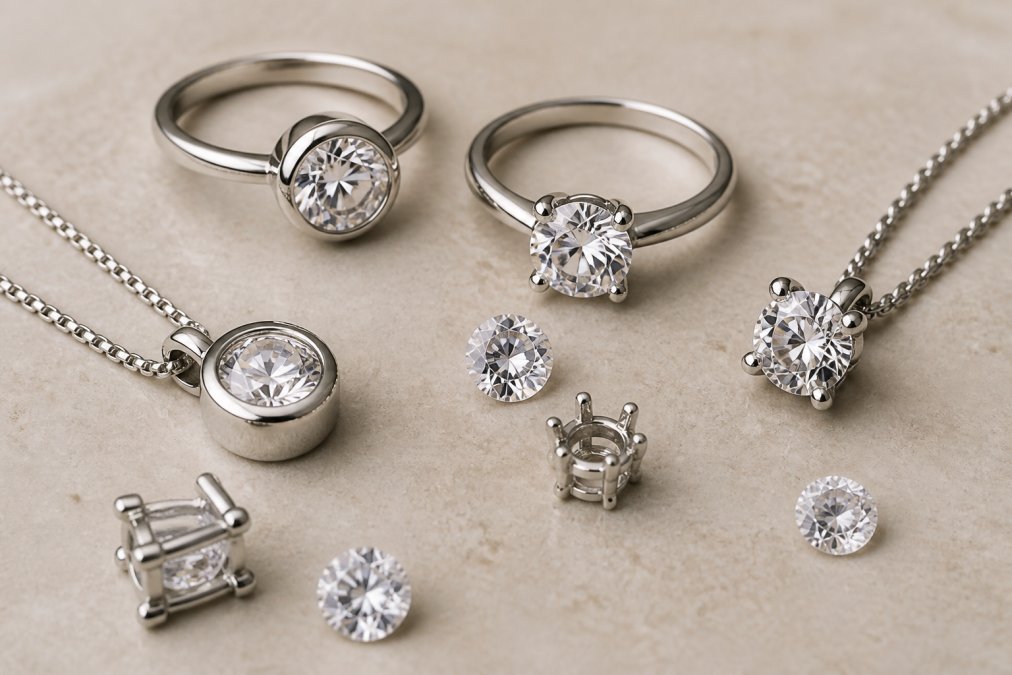
Bezel settings surround the stone's edge with metal, creating a protective rim that shields the stone from impact and reduces chip or crack risk. The trade-off is that bezel settings show less of the stone's surface, making it appear slightly smaller.
Prong settings use thin metal claws to hold the stone, leaving the sides exposed. This maximizes light entry and brilliance but leaves prongs vulnerable to bending or breaking. Prongs require periodic checking to ensure they still grip the stone securely.
Tension settings grip the stone between two metal pieces, creating the illusion that it floats. They're stunning visually but require precise engineering and work best for engagement rings you'll remove before high-impact activities.
For wedding jewelry worn daily, prioritize settings that protect your stone. A bezel or semi-bezel setting offers the best balance of protection and visual appeal.
Jewelry Maintenance Tips for Brides 🧼
Regular care prevents tarnishing, loosening, and premature wear.
Clean regularly. Use warm soapy water and a soft brush for most pieces. For delicate stones like emeralds or opals, skip the brush and gently wipe with a soft cloth. Avoid ultrasonic and steam cleaners for softer stones. Professional cleaning once or twice yearly keeps pieces sparkling.
Remove during risky activities. Take off rings before gardening, exercising, swimming, or doing dishes. Chlorine and harsh soaps accelerate tarnishing and weaken settings.
Check settings periodically. Gently wiggle each stone to ensure it's secure. If a stone feels loose, stop wearing the piece and visit a jeweler immediately.
Store properly. Keep pieces in a cool, dry place away from direct sunlight. Use a jewelry box with compartments to prevent scratching. For sterling silver, store in airtight bags to slow tarnishing.
Polish metal periodically. Silver requires polishing every few months. Use a silver polishing cloth gently; consistent care works better than occasional heavy polishing.
How to Store Wedding Jewelry 🔒
Proper storage protects your pieces from damage, theft, and loss.
Daily-wear jewelry can stay in a bedside jewelry box or dresser drawer with separated compartments. Keep your storage location cool and dry.
Special-occasion jewelry deserves more secure storage. A safe deposit box at your bank offers climate control and security, ideal for pieces worn infrequently.
Valuable pieces should be stored in a home safe or safe deposit box. Document each piece with photos and descriptions for insurance purposes. Keep receipts and certificates in a separate secure location.
Travel storage requires extra care. Keep jewelry in a padded case in your carry-on rather than checked luggage. Never leave jewelry unattended in a hotel room.
Coordinate with Your Wedding Band and Consider Repurposing 💍
Your engagement ring and wedding band work together as a set.
Metal matching is essential. If your engagement ring is platinum, your wedding band should be platinum. Mixing metals creates visual discord and uneven wear where they touch.
Width and height coordination matter for comfort and appearance. A delicate engagement ring looks odd next to a chunky band. Visit a jeweler to try different combinations with your engagement ring.
Spacing and fit affect how pieces wear. A jeweler can custom-fit your band to sit perfectly against your engagement ring, preventing shifting or rotation.
Post-wedding repurposing extends your jewelry's life. An engagement ring can become a right-hand ring or necklace pendant. A wedding band can be worn alone or incorporated into a different design. Some brides reset wedding stones into earrings, bracelets, or pendants, creating fresh jewelry from sentimental pieces.
Conclusion
Choosing durable wedding jewelry comes down to understanding materials, selecting appropriate settings, and committing to maintenance. Prioritize gemstone hardness (8+ on the Mohs scale), choose metals that resist tarnishing (platinum, 14K gold, or rhodium-plated sterling silver), and select settings that protect your stones. Match your jewelry to your dress's neckline for cohesive style, and establish a cleaning and storage routine from day one.
Your wedding jewelry will become part of your daily life for years to come. The small effort you invest now in choosing durable pieces pays dividends through decades of wear.
At CSShop, we specialize in carefully curated bridal jewelry designed for lasting beauty and affordability. Our collection features durable pieces that balance style with everyday wearability. Explore our selection of moissanite engagement rings, sterling silver bridal accessories, and timeless wedding jewelry at csshop.shop.
For brides seeking quality pieces, consider our 0.5-2 Carat 8.0mm D Color Moissanite 100% 925 Sterling Silver Stud Earrings, a stunning option featuring moissanite's superior durability. Our D VVS1 Moissanite Ring 925 Sterling Silver With GRA Certificate combines the durability of moissanite with professional certification for peace of mind. For those preferring traditional designs, the IGOTOS 1CT Oval Cut Moissanite Engagement Ring offers exceptional value without compromising on durability standards.


Visit CSShop today to find the durable, elegant bridal jewelry that will become part of your story for decades to come.
Frequently Asked Questions
What metals are best for durable wedding jewelry?
Platinum, 14K or 18K gold, and 925 sterling silver with rhodium plating are the top choices for durability. Platinum is the most durable but expensive. 14K gold offers excellent durability and value. Sterling silver works well when plated with rhodium to resist tarnish and oxidization. Avoid low-karat gold, cheap alloys, and unplated silver for pieces you'll wear daily or for years after your wedding.
How do I ensure my bridal jewelry won't tarnish over time?
Choose metals with tarnish-resistant properties: platinum naturally resists tarnish, 14K and 18K gold are more resistant than lower karats, and sterling silver should be rhodium-plated. Store jewelry in a dry place away from moisture and humidity. Clean regularly with a soft cloth and avoid exposure to chemicals, perfume, and sweat. CSShop's moissanite rings with 925 sterling silver plated with platinum offer excellent tarnish resistance at an affordable price point.
What's the difference between gold-plated and solid gold jewelry for weddings?
Solid gold (14K or 18K) contains a high percentage of pure gold throughout the entire piece and lasts for decades with proper care. Gold-plated jewelry has a thin layer of gold over a base metal, which can wear away within months or a few years, especially with daily wear. For wedding jewelry you'll wear long-term, solid gold is worth the investment. If budget is tight, consider moissanite stones in solid sterling silver instead of diamonds in gold-plated settings.
How should I store my wedding jewelry to keep it in pristine condition?
Store jewelry in a cool, dry place away from direct sunlight, humidity, and temperature fluctuations. Use individual soft pouches or a jewelry box with compartments to prevent pieces from scratching each other. Keep jewelry away from moisture, chemicals, and extreme heat. Store engagement rings separately from daily jewelry if you remove them. Consider a safe or safe deposit box for heirloom-quality pieces. Proper storage extends the life of your jewelry and keeps settings and gemstones secure.
This article was written using GrandRanker