
 how-to
How to Display Crystal Geodes and Clusters at Home
Table of Contents
- Choosing the Right Location to Display Crystal Geodes and Clusters
- Crystal Display Shelf Ideas and Arrangement Techniques
- Lighting for Crystal Displays: Techniques That Maximize Sparkle
- How to Clean Crystal Geodes and Maintain Your Display
- Safety and Stability for Heavy Geodes
- Styling Large Clusters as Statement Pieces
- Budget-Friendly Display Hacks for Crystal Collectors
- Frequently Asked Questions
Last Updated: October 1, 2026
Choosing the Right Location to Display Crystal Geodes and Clusters
Location determines how your display crystal geodes clusters look and how well they're preserved. Position displays in indirect natural light, direct sunlight fades delicate specimens like celestite. Place geodes where you can see them from your main seating area.

Creating a focal point in your room
Choose one area as your "gallery" rather than scattering pieces everywhere. Place a large geode at eye level on a shelf, mantel, or console table, surrounded by negative space so the specimen stands out.
Considering stability and traffic patterns
Heavy geodes need solid, stable surfaces. Test the surface before placing your specimen there. Keep large clusters away from high-traffic areas where kids and pets might bump into them.
Crystal Display Shelf Ideas and Arrangement Techniques
Shelves are ideal for displaying crystal geodes clusters with intention. The key is arranging them with intention.
Layering crystals with complementary decor
Mix crystal specimens with books, plants, or wooden elements to create depth. Use the rule of odd numbers, group 3 or 5 items together rather than 2 or 4 for a more natural, visually pleasing arrangement.
Grouping specimens by size and color
Organize clusters by size to create visual rhythm, or group by color (amethyst together, quartz geodes in another area) for a cohesive, curated look.
Lighting for Crystal Displays: Techniques That Maximize Sparkle
Lighting transforms how crystals look. The right light makes them glow. Poor lighting makes even beautiful specimens look dull.
Natural light is ideal, position displays near windows with filtered or indirect light. Avoid harsh direct sunlight that fades specimens over time.
Choosing the right light color temperature
Cool white light (4000K-5000K) works best for displays, it highlights crystal structure and sparkle. LED lights are energy-efficient and won't heat specimens; avoid incandescent bulbs that fade crystals.
Positioning lights to enhance light refraction
Position lights to the side at roughly 45 degrees from the specimen to catch crystal faces and create sparkle and rainbow effects.
How to Clean Crystal Geodes and Maintain Your Display
Clean crystals look vibrant and catch light beautifully, but cleaning delicate specimens requires care, the wrong method can damage your collection.
Understanding crystal-specific cleaning needs
Before cleaning any specimen, identify what you have, different minerals have different hardness levels, porosity, and chemical sensitivities.
Water-safe crystals (quartz, amethyst, citrine, clear quartz, rose quartz) tolerate gentle water cleaning. These are relatively hard (7-7.5 on the Mohs scale) and non-porous.
Water-sensitive crystals should be dusted only, never wet-cleaned. Celestite, selenite, halite, and some calcite varieties absorb water and can lose color, develop white spots, or become brittle. Malachite and azurite can be damaged by water exposure. Lepidolite and other lithium-rich minerals may fade if exposed to moisture.
Delicate or friable specimens (like some geodes with loose internal crystals, or specimens with a dusty coating) should only be dry-dusted. Never use water or brushes on these pieces.
When in doubt, dry-dust only. This is the safest approach for any specimen you're unsure about.
Dust removal with soft materials
Use a soft, dry microfiber cloth, wiping gently in the direction of crystal points. For deep cavities, use a soft-bristled brush to reach dust in crevices. Avoid paper towels and cotton cloths, which can scratch surfaces.
Wet cleaning for water-safe crystals
For quartz-family crystals and other water-safe specimens, gentle wet cleaning restores brilliance.
Use warm distilled water (not tap water) with a soft brush, using light pressure. Pat completely dry immediately after rinsing with a lint-free cloth to prevent mineral spots. For deep cavities, dry thoroughly to prevent mold.
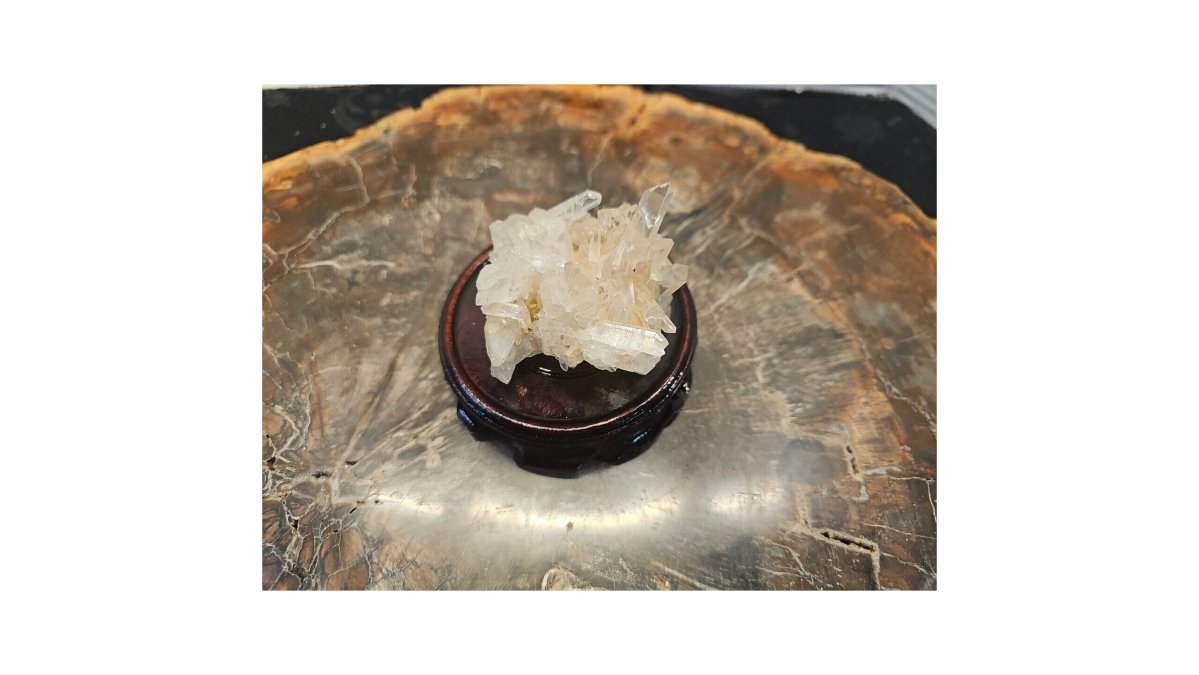
Natural Quartz Crystal Cluster with Stand – 133g →
Avoiding damage from harsh chemicals
Never use vinegar, alcohol, commercial cleaners, or acetone on crystals, these etch surfaces, strip coatings, and fade colors. Stick to distilled water and soft materials only.
Protecting specimens from environmental damage
UV light fades colors over time; keep specimens away from direct sunlight or use UV-filtering window film. Maintain a cool, stable environment (65-75°F, 30-50% humidity) away from heating vents and humidifiers. Always support specimens from the base, never by individual points.
Maintenance schedule for displays
Dust displays every 2-4 weeks depending on your environment. Homes with pets, fireplaces, or high dust levels need more frequent dusting. Dry-dust most specimens; wet-clean water-safe crystals once or twice per year or as needed.
Inspect specimens monthly for damage, loose pieces, or color changes. Early detection of problems prevents further deterioration. If you notice cracks, loose internal crystals, or fading, move the specimen to a safer location or consider professional conservation.
Safety and Stability for Heavy Geodes
Large geodes can weigh 10 to 50+ pounds depending on size and mineral density. A 12-inch amethyst geode typically weighs 15-25 pounds; celestite and other delicate specimens are often lighter but more fragile. This weight creates real structural and safety concerns that go beyond aesthetics.
Understanding shelf load-bearing capacity
Before placing any heavy specimen, verify your shelf can support it. Standard floating shelves rated for "light to medium" use typically hold 15-25 pounds total per shelf. Heavy-duty shelves support 50+ pounds. Check your shelf's manufacturer specifications or product manual, this information is usually printed on the packaging or available online.
For wall-mounted shelves, the load depends on wall type and anchor quality. Drywall alone cannot support heavy geodes; you need anchors that reach studs or use heavy-duty toggle bolts rated for at least 50 pounds. If your wall is plaster or older construction, consult a hardware specialist before installation.
Bookcases and furniture pieces have weight limits too. A typical wooden bookcase is rated for 50-100 pounds per shelf. Placing a 30-pound geode on one shelf is safe, but stacking multiple heavy pieces concentrates weight in one area and risks tipping. Distribute weight evenly across the shelf length.
Positioning for stability and center of gravity
Place heavy geodes toward the back and center of shelves, never near edges. This positioning lowers the display's center of gravity and prevents tipping if someone bumps the shelf. A geode positioned 6 inches from a shelf edge is far more stable than one positioned 2 inches from the edge.
On pedestals or stands, ensure the base is wider than the specimen's widest point.
Securing specimens to prevent accidents
For extra-heavy pieces or homes with children and pets, use museum-quality adhesive putty (also called museum wax or quake putty). This removable putty holds geodes in place without damaging them. It's strong enough to prevent tipping but won't leave permanent marks or residue on most crystal surfaces.
Child and pet safety considerations
Crystal points are sharp and can cause injury if a geode falls or if a child or pet contacts a point directly. Keep large, heavy specimens out of reach of children under 8 years old. Display them on high shelves (above 5 feet) or in locked cabinets.
Styling Large Clusters as Statement Pieces
A large geode becomes a conversation starter. It anchors a room's energy and draws attention.
Using glass cloches and display boxes
Glass cloches protect delicate specimens while keeping them visible. They're perfect for pale or fragile crystals. The dome shape creates a museum-quality presentation.
Creating visual balance with negative space
Negative space is empty room around your display. It prevents clutter and lets your crystals shine. A crowded shelf overwhelms the eye.
Budget-Friendly Display Hacks for Crystal Collectors
You don't need expensive furniture to display crystals beautifully. Simple solutions work just as well.
Frequently Asked Questions
What are the best surfaces for displaying heavy crystal geodes?
Heavy geodes require sturdy, level surfaces that can support significant weight. Solid wood shelves, display pedestals, and sturdy furniture are ideal. Avoid glass shelves unless rated for the geode's weight. Use display stands or tri-peg holders designed for mineral specimens to distribute weight evenly and prevent tipping. For very large pieces like the 13.6 lb celestite geode, a dedicated pedestal or low table ensures stability and protects both the specimen and your home.
How do you arrange crystal clusters for maximum visual impact?
Position your largest or most visually striking cluster as the focal point, then layer smaller specimens around it at varying heights. Group crystals by color family or mineral type to create visual cohesion, or mix contrasting colors for dynamic interest. Leave negative space around each piece so light can highlight individual clusters without crowding. Odd-numbered groupings (three, five, or seven pieces) feel more balanced than even arrangements. Rotate pieces seasonally to refresh the display's visual weight and aesthetic.
How to clean crystal geodes without damaging them?
Use a soft, dry cloth to gently wipe dust from crystal surfaces and crevices. For stubborn dust, a soft-bristled brush works well on druzy clusters. Avoid water unless the mineral listing specifically permits it, as some crystals like celestite are sensitive to moisture. Never use harsh chemicals or abrasive materials. For delicate points or terminations, handle with care during cleaning. Store geodes away from direct sunlight when not displaying to preserve color and prevent fading, especially light-sensitive specimens like celestite.
What lighting techniques highlight the sparkle of crystal geodes?
Position warm or cool LED spotlights (depending on your crystal's color) at an angle to the specimen so light passes through and refracts off internal surfaces. Backlighting creates dramatic light refraction and emphasizes transparency. Avoid direct overhead light, which can wash out color and sparkle. Use dimmable lighting to adjust intensity based on natural daylight and time of day. Warm white light (2700K) suits golden or amber crystals, while cool white (4000K) enhances blue and purple specimens. Experiment with placement to find the angle that maximizes the crystal's natural glow.