
 how-to
How to Clean Non-Tarnishing Stainless Steel Jewelry
Table of Contents
- The 5-Minute Routine for Cleaning Non-Tarnishing Stainless Steel Jewelry
- How to Clean a Stainless Steel Necklace Step by Step
- How to Clean Stainless Steel Jewelry Without Scratching
- The Best Cleaner for Stainless Steel Jewelry (and What to Avoid)
- How Often to Clean Stainless Steel Jewelry
- What Non-Tarnishing Really Means, and When Cleaning Won't Fix It
- Preventing Discoloration and Buildup Between Cleanings
- Conclusion
- Frequently Asked Questions
Last Updated: October 6, 2026
The 5-Minute Routine for Cleaning Non-Tarnishing Stainless Steel Jewelry
Stainless steel jewelry is one of the easiest metals to keep looking new, and learning how to clean non-tarnishing stainless steel jewelry takes about five minutes with items you already own. At CSShop, we hear from customers who wear their steel pieces daily and want them to stay bright. The good news: warm water, a drop of mild dish soap, and a soft cloth handle almost everything.

What You'll Need
Gather these before you start:
- A small bowl of warm water
- One drop of mild dish soap or neutral soap
- A soft cloth or microfiber towel
- A soft-bristle toothbrush
- A dry towel for finishing
Skip paper towels. They can leave lint in small crevices.
How to Clean a Stainless Steel Necklace Step by Step
Cleaning a stainless steel necklace is simple: soak it briefly, brush the crevices, rinse, and dry it completely. Here is the full method, step by step.


- Fill a small bowl with warm water and add one drop of mild dish soap.
- Place the necklace in the soap solution and let it soak for one to two minutes.
- Lift it out and gently rub the surface with a soft cloth.
- Rinse under warm running water until no residue remains.
- Dry thoroughly with a clean towel before wearing or storing.
Cleaning Chain Links and Small Crevices
Chain links trap skin oils, lotion, and dust where a cloth cannot reach. Use a soft-bristle toothbrush to work the soapy water into those gaps.
Brush gently in small circles. Do not scrub hard or bend the links. Once the water runs clear, pat the chain dry and let it air out for a few minutes before you put it away.
How to Clean Stainless Steel Jewelry Without Scratching
The best way to avoid scratches is to skip abrasive materials entirely. Steel is durable, but it still shows scuffs from rough handling.
Follow these habits:
- Use only soft cloths and soft-bristle brushes
- Never use steel wool, scouring pads, or gritty powders
- Avoid harsh chemicals like bleach or ammonia
- Keep pieces separate in a soft pouch or lined box
A common mistake is rubbing a dry cloth over a dusty piece. That grinds grit across the surface. Rinse first, then wipe.
The Best Cleaner for Stainless Steel Jewelry (and What to Avoid)
The best cleaner for stainless steel jewelry is warm water with a drop of mild dish soap. It lifts everyday dirt and oil without harming the metal, and it rinses clean. You do not need a special polish, in fact, some products do more harm than good.
What separates a safe cleaner from a risky one is how it interacts with the chromium oxide layer that gives stainless steel its corrosion resistance.
Safe and Unsafe Cleaning Products
| Product | Safe for Stainless Steel? | How to Use It | Why |
|---|---|---|---|
| Warm water + mild dish soap | Yes | 1 drop soap per 1 cup warm water; soak 1-2 minutes | Lifts oils and film without touching the passive layer |
| Soft-bristle toothbrush | Yes | Small circles, light pressure | Reaches chain links and settings without scratching |
| Microfiber or soft cotton cloth | Yes | Wipe, then buff dry | Removes residue without lint or grit |
| Baking soda paste | Use with care | 3 parts water to 1 part baking soda; spot-test first; rinse thoroughly | Mildly abrasive, can dull a mirror polish over time |
| White vinegar | Use with care | Dilute 1:1 with water; 1-2 minute max; rinse immediately | Acidic; prolonged contact can pit plated finishes |
| Isopropyl alcohol (70%) | Spot use only | Dab on a cloth, wipe the spot, rinse and dry | Cuts stubborn oils but can dry out glued settings |
| Bleach or chlorine | No | , | Breaks down the passive layer and corrodes plated pieces |
| Ammonia-based glass cleaners | No | , | Attacks coatings and can discolor gold plating |
| Steel wool or scouring pads | No | , | Leaves visible scratches that trap dirt |
| Ultrasonic cleaners | Use with care | Only on solid steel with no glued stones or plating | Vibration can loosen settings and chip soft stones |
Matching the Cleaner to the Piece
Not every stainless steel piece can take the same treatment. Check the piece before you clean it:
- Solid stainless steel (no plating, no stones): the full soap-and-toothbrush routine is fine.
- Gold-plated or PVD-coated steel: skip the toothbrush and any acidic cleaner. Use a soft cloth with soapy water, then dry immediately. Plating is measured in microns and wears away with friction and acid exposure.
- Gemstone-set pieces: avoid soaking. Glued settings can loosen in water, and porous stones (opal, turquoise, pearl) absorb liquids. Wipe with a barely damp cloth instead.
- Magnetic clasps and hinges: dry these thoroughly, trapped moisture is the most common cause of spring failure.
When in doubt, start with the gentlest option, warm water and a soft cloth, and only escalate to soap, then a toothbrush, then a spot treatment. Most dullness is film, not damage, and film comes off with the mildest method.
How Often to Clean Stainless Steel Jewelry
Clean your stainless steel jewelry every one to two weeks with the soap method. Wipe it down after each wear if you wear it daily.
Here is a simple schedule:
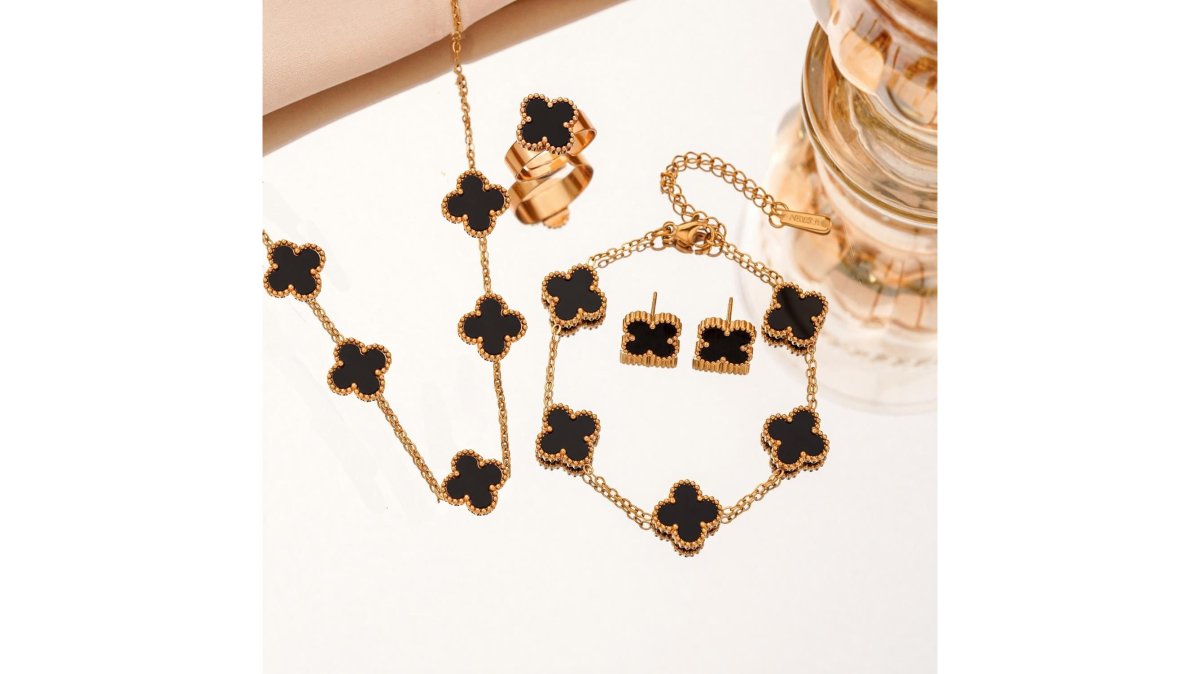
Women's Titanium Steel No Fading Double-sided Four-leaf Flower Fashion Jewelry →
- Daily wear pieces: quick wipe after each wear
- Regular rotation: full soap wash every two weeks
- Occasional pieces: clean before and after each wearing
- After sweat, swimming, or lotion: clean right away
Sweat, sunscreen, and perfume all leave a film. That film is what makes steel look dull.
What Non-Tarnishing Really Means, and When Cleaning Won't Fix It
"Non-tarnishing" is a marketing term, not a metallurgical one. It means the piece resists the surface discoloration that plagues silver and brass, not that it can never change appearance. Understanding why helps you know when a cleaning will work and when it will not.
The Mechanism Behind the Claim
Stainless steel contains chromium, typically at least 10.5% by weight in the alloys used for jewelry. When chromium meets oxygen, it forms a microscopic chromium oxide layer on the surface, often called the passive layer.
What the passive layer does not do is repel dirt, oils, lotion, sunscreen, or soap scum. Those sit on top of the metal and look dull, gray, or yellowish, which is exactly what people mistake for tarnish. In almost every case, it is buildup, and cleaning removes it.
Residue vs. Damage: How to Tell Them Apart
Before you scrub, identify what you are looking at:
- Buildup (removable): a uniform dullness, a gray film, or a yellowish tinge that wipes away partially with a soft cloth. Often concentrated in crevices and the underside of links.
- Soap scum (removable): a chalky white haze that appears after washing. Caused by insufficient rinsing, rinse again under warm running water and dry fully.
- Plating wear (not removable): a patchy color change on gold-plated or coated pieces, often at high-contact points like the clasp, the inner curve of a ring, or the edge of a pendant. The base steel shows through as a silver-gray tone.
- Corrosion (not removable at home): pitting, dark speckles, or a rough texture that does not lift with soap. Rare on quality stainless steel, but possible after prolonged chlorine or saltwater exposure.
- Physical damage (not removable): deep scratches, dents, or bent links. Polishing can soften light scuffs but cannot restore metal that has been removed.
Troubleshooting Persistent Spots, Scratches, and Color Changes
If the soap method does not fix it, work through this order:
- Re-rinse and re-dry. A surprising number of "spots" are dried soap residue. Rinse under warm running water for a full 15 seconds, then dry with a clean cloth.
- Try a baking soda paste. Mix 3 parts water to 1 part baking soda, apply with a fingertip, work gently for 30 seconds, then rinse thoroughly. Do not use on plated pieces.
- Spot-treat with 70% isopropyl alcohol. Dab onto a cloth, never pour directly on the jewelry, and wipe the affected area. Rinse and dry.
- Stop after two gentle attempts. If the mark is still there, it is almost certainly coating wear, corrosion, or physical damage. More scrubbing will make it worse, not better.
When Cleaning Will Not Help
Three situations fall outside what home cleaning can fix:
- Worn plating. Once the gold or PVD layer is gone, no cleaner brings it back. A jeweler can sometimes re-plate the piece, but the cost often exceeds the value of the item.
- Deep scratches. Surface scuffs can be softened with a jeweler's polish, but scratches that catch a fingernail are permanent without professional refinishing.
- Corrosion pitting. If the passive layer has been breached repeatedly, usually by chlorine, saltwater, or bleach, the surface texture itself has changed. Cleaning removes dirt, not metal loss.
Most "tarnish" on stainless steel is trapped oil, lotion, and dirt sitting on top of the passive layer. A two-minute soap soak fixes it. Real damage, worn plating, deep scratches, or corrosion pitting, is the only thing cleaning cannot undo, and knowing the difference saves you from scrubbing a piece into worse shape.
Preventing Discoloration and Buildup Between Cleanings
Prevention comes down to three habits: keep steel dry, keep it clean, and keep it stored well.
- Put jewelry on last, after lotion and perfume dry
- Take pieces off before swimming, showering, or the gym
- Wipe with a dry soft cloth after wear
- Store each piece in its own soft pouch
- Keep jewelry away from humid bathroom counters
These small steps cut down how often you need a full cleaning.
Most "tarnish" on stainless steel is just trapped oil and dirt. A two-minute soap soak fixes it. Real damage, like deep scratches or worn plating, is the only thing cleaning cannot undo.
Conclusion
Keeping steel bright is less about effort and more about routine. Our Women's Titanium Steel No Fading Double-sided Four-leaf Flower Fashion Jewelry Set and Women's Oil Dripping Petals Stainless Steel Gold Plating Elegant Jewelry Set both clean up in minutes. If you would rather let us surprise you, our Jewelry Mystery Boxes are a fun way to add a few new steel pieces to your rotation. Explore the full collection at csshop.shop and find a piece you will love wearing every day.

Frequently Asked Questions
Can you use dish soap to clean stainless steel jewelry?
Yes. A few drops of mild dish soap in warm water is the safest everyday cleaner for stainless steel jewelry. Swirl the piece for one to two minutes, work a soft-bristle toothbrush into small crevices, then rinse and dry thoroughly with a soft cloth. Skip dish soaps with bleach, citrus acids, or abrasive scrubbing particles, since those can dull the surface or strip plated finishes.
Does toothpaste remove tarnish from stainless steel jewelry?
Toothpaste is abrasive and is not the best cleaner for stainless steel jewelry. It can dull polished surfaces and leave fine scratches on plated or coated pieces. If your stainless steel piece has lost its shine, warm water with mild dish soap and a soft cloth is safer. For genuine discoloration, an isopropyl alcohol wipe followed by a thorough dry is a gentler first step than toothpaste.
How often should you clean stainless steel jewelry?
For pieces you wear daily, a quick wipe with a soft cloth after each wear and a full soap-and-water wash every one to two weeks keeps dirt, oils, and residue from building up. Jewelry you wear occasionally needs cleaning every one to two months. If you notice dullness or buildup around small details, clean it right away rather than waiting for a scheduled session.
How do you dry stainless steel jewelry without leaving water spots?
Pat the piece dry with a soft, lint-free cloth immediately after rinsing, then let it air dry completely on a towel before storing it. Do not leave stainless steel jewelry to drip dry over a sink, since standing water leaves mineral spots and can seep into small crevices. If spots appear, a quick buff with a dry soft cloth usually removes them without scratching the surface.