 How-to
Guide to Buying Raw Crystals & Mineral Specimens
Table of Contents
- Why Raw Crystals and Mineral Specimens Are Worth Collecting
- How to Identify Real Crystals Before You Buy
- Mineral Specimen Quality Evaluation: What Actually Matters
- Where to Buy Mineral Specimens Online Safely
- Pre-Purchase Inspection Checklist for Raw Crystals
- Shipping, Packaging, Insurance, and Returns
- Budgeting and Total Cost of Ownership for Your Mineral Collection
- Frequently Asked Questions
Last Updated: October 13, 2026
Why Raw Crystals and Mineral Specimens Are Worth Collecting
A guide to buying raw crystals and mineral specimens starts with a simple truth: no two pieces are ever the same. Each formed over thousands or millions of years and carries the story of where it came from.
At CSShop, we curate natural specimens because raw stone shows what polished pieces hide: the growth pattern, the matrix, the terminations, and the flaws.
Raw crystals are worth collecting for three reasons:
- They are one of a kind. A natural crystal cluster cannot be replicated. Once it sells, it's gone.
- They hold their appeal over time. Unlike trendy decor, a good specimen stays interesting for decades.
- They connect you to geology. Every piece is a record of pressure, heat, and time.
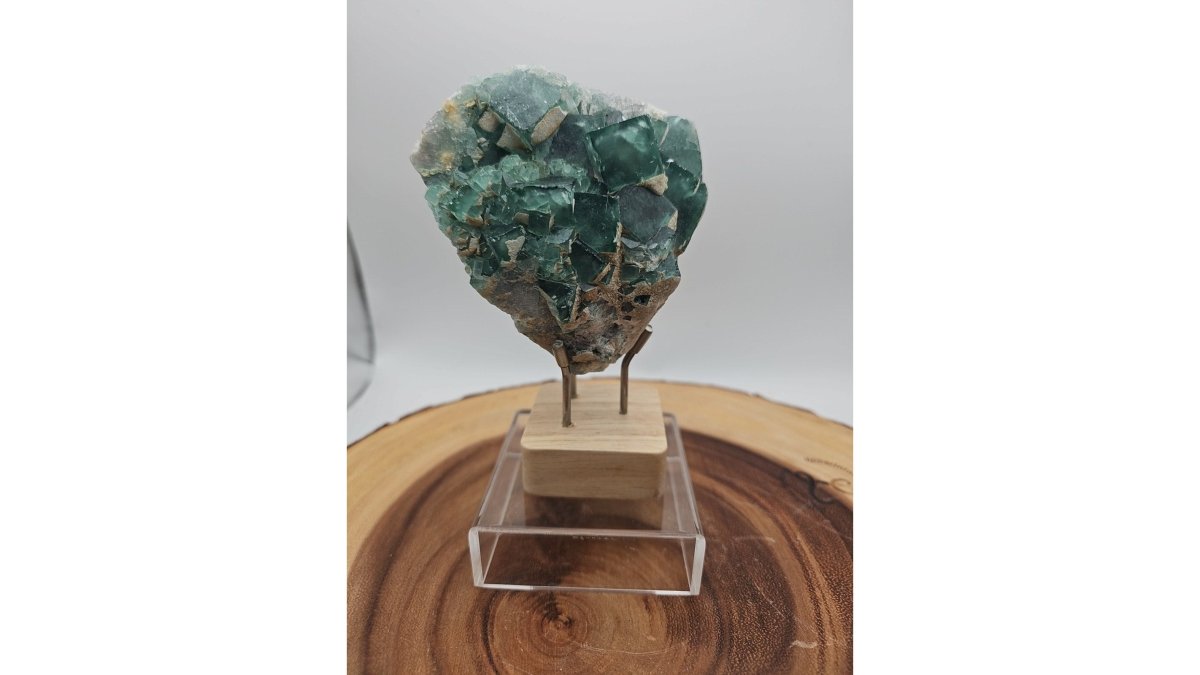
If you're new to collecting, start small: one raw chunk with visible crystal structure teaches you more than ten polished tumble stones. For a display-ready piece, our Raw Chunk Fluorite 1.27lb With Stand shows natural cleavage faces and color banding exactly as they formed.

How to Identify Real Crystals Before You Buy
Learning how to identify real crystals comes down to observation, not lab equipment. A few simple checks catch most fakes and mislabels.
Start with these basics:
- Look at the crystal habit. Natural crystals grow in specific shapes. Quartz forms six-sided prisms. Fluorite forms cubes. Pyrite forms cubes too.
- Check the luster. Real minerals have a natural shine, either glassy, waxy, or metallic.
- Look for inclusions and flaws. Perfect clarity at a low price is a red flag. Nature rarely makes flawless pieces.
The Mineralogical Society of America publishes reference material on mineral properties that helps you check what a species should look like.
A common mistake is trusting a photo alone, since lighting changes color dramatically. Ask for daylight photos and a short video from several angles.
Spotting Treatments, Repairs, and Composites
Treatments exist in almost every corner of the mineral market, and honest sellers disclose them.
Watch for these signs:
- Color that pools in cracks. Dye settles in fractures. Real color sits inside the crystal.
- Straight glue lines. A repaired specimen often has a clean seam that doesn't match the natural grain.
- Composites. Some pieces are resin with stone chips pressed in. These feel light and look too uniform.
Ask directly: "Is this specimen natural, treated, or repaired?" A good seller answers without hesitation; if they dodge, walk away.
Mineral Specimen Quality Evaluation: What Actually Matters
Mineral specimen quality evaluation comes down to a short list of factors, and most buyers consider only one or two.
Here is what actually moves the needle:
| Factor | What to Check | Why It Matters |
|---|---|---|
| Crystal form | Sharp, complete terminations | Defines visual appeal |
| Luster | Glassy, metallic, or waxy shine | Signals freshness and health |
| Color | Even, saturated, natural | Drives demand |
| Matrix | Attached host rock | Adds context and story |
| Damage | Chips, dings, cracks | Cuts value sharply |
| Size | Height and weight | Bigger pieces stand out |
What most guides miss is that damage matters more than size: a large cluster with a broken main point is worth less than a smaller, intact piece.
Crystal Condition, Damage, and Rarity
Crystal condition is the biggest driver of value after species rarity. A flawless small piece often beats a large damaged one.
Check these points before you commit:
- Terminations. Are the tips complete or chipped?
- Base. Is the matrix stable, or does it crumble?
- Cracks. Internal fractures catch light and reduce clarity.
Rarity works differently. Some species are common in one locality and nearly impossible to find elsewhere. Locality drives price as much as the mineral itself.
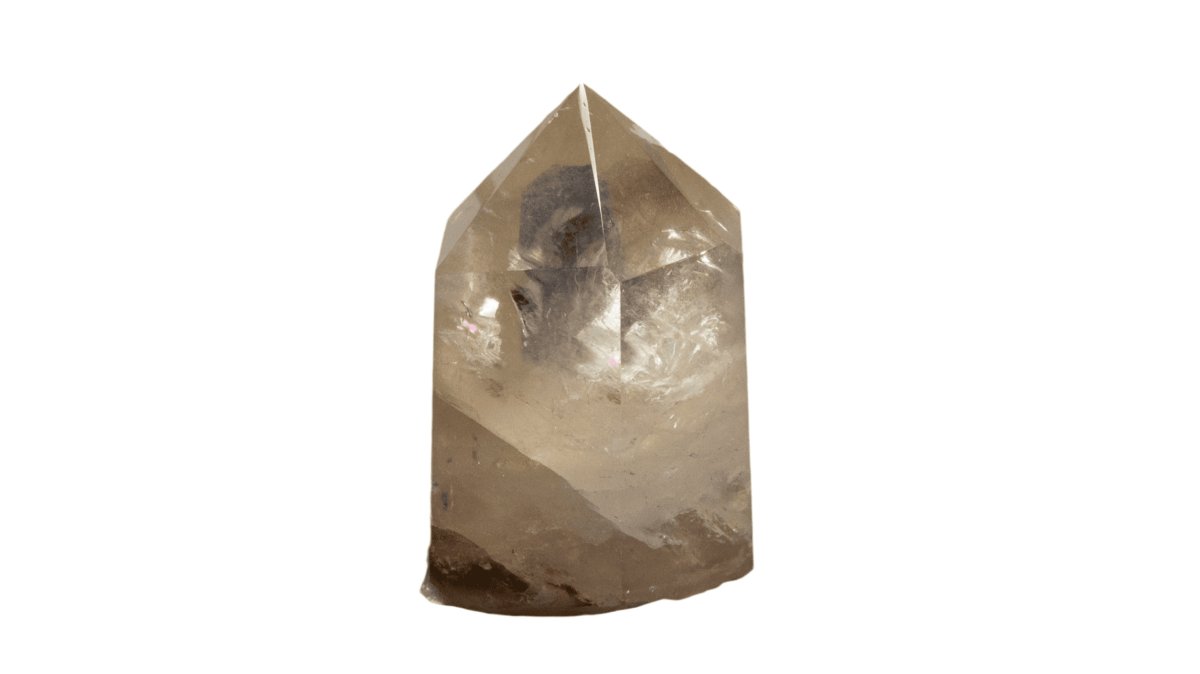
A good example of rarity meeting condition is a gator back smoky quartz cluster. Our Smoky Quartz Crystal Gator Back Cluster Raw Specimen shows that formation at 257mm long and 6426g, with natural color from irradiation during formation rather than heat treatment.

Where to Buy Mineral Specimens Online Safely
Buying mineral specimens online is safe when you vet the seller, not just the stone. The platform matters less than the person behind the listing.
Run every listing through these signals before you commit:
- Clear, multi-angle photos. Not one glossy hero shot. A serious seller shows the piece from at least four sides plus the base.
- Stated locality. "Brazil" is vague. "Minas Gerais, Brazil" tells you something. Locality is part of a specimen's identity, not a marketing line.
- Disclosed treatments. Honest sellers say what was done, dyed, heated, coated, or repaired, before you ask.
What US Disclosure Rules Actually Require
The Federal Trade Commission enforces rules against deceptive advertising, which covers online product listings. A seller who describes a treated or reconstructed specimen as natural is making a false claim, and that is the kind of misrepresentation the FTC acts on.
This matters most for treatments that are hardest to see in a photo. A listing that stays silent on treatment is not the same as one that confirms the piece is untreated. Ask directly, in writing, and keep the answer.
Vet the Seller, Not Just the Stone
A short due-diligence routine catches most problems:
- Search the seller's name plus the word "review" and read the negative ones first. How a seller handles a complaint tells you more than a wall of five-star ratings.
- Compare the listing photo to the seller's other listings. Reused stock photos across many "unique" specimens is a red flag.
- Ask a specific question about the piece, a chip, a repair, the locality, and see how fast and how precisely they answer.
- Confirm the return window in writing before you pay, not after.
- Check whether the seller ships fragile specimens regularly. Ask what their packing method is.
Avoid listings that reuse one stock photo across many pieces; each natural specimen is unique, so each listing should show its own.
Raw Chunk Fluorite 1.27lb With Stand →
A seller who passes all five checks is worth returning to; a trusted source beats a one-time bargain.
Pre-Purchase Inspection Checklist for Raw Crystals
Use this checklist before you pay for any specimen. It takes two minutes and prevents most bad buys.
- Request photos in daylight from at least three angles
- Ask for a short video showing the piece rotated
- Confirm the exact weight and dimensions in writing
The one item most buyers skip is the packing question. Ask it anyway. It tells you whether the seller has shipped fragile specimens before.
Shipping, Packaging, Insurance, and Returns
Shipping is where good specimens get ruined. Minerals are heavy, brittle, and unforgiving of poor packing, so a piece that survives the trip comes from a seller who has done it before.
What Careful Packing Looks Like
A seller who ships specimens regularly will typically:
- Double-box the piece, with the specimen in an inner box cushioned inside an outer box
- Wrap the specimen itself in foam or bubble wrap so it cannot shift
- Separate delicate points so they don't knock together in transit
Ask before you buy what the packing method is. A seller who describes it in detail has shipped fragile pieces before; one who can't is a risk.
Documenting Delivery and Filing a Claim
The most important habit for online buyers is documenting the unboxing. If a piece arrives damaged, your claim depends on evidence.
- Photograph the box before opening it, especially any visible dents or crushing.
- Photograph the packing material as you remove it, before you disturb the specimen.
- Photograph the specimen in place in the box, then on a clean surface.
- Photograph the damage close up from more than one angle.
- Keep the box and all packing material until the claim is resolved. Carriers and sellers often require it.
- Report the damage within the seller's stated window, usually a few days, and in writing.
Most sellers who ship specimens cover damage in transit, but only if you report it with photos inside the stated window. Miss the window and you may have no recourse.
Insurance and Higher-Value Pieces
For a higher-value specimen, ask whether the shipment is insured and for how much. Insurance is only useful if the declared value matches what you paid, so confirm it in writing, and ask whether insurance can be added if the seller ships uninsured by default.
Keep in mind that insurance and the seller's damage policy are two different things. Insurance is a claim against the carrier; the seller's policy is a promise from the seller. Ask about both.
Returns for One-of-a-Kind Pieces
Returns work differently for specimens than for mass-produced goods, because each piece is unique and a seller cannot simply send a replacement. That makes the return window and refund terms more important, not less.
Confirm before you buy:
- The return window in days, and whether it starts on delivery or on shipping
- Who pays return shipping for a piece that arrives not as described
- Whether the refund is full or partial, and whether original shipping is refunded
For heavy pieces, expect higher shipping costs in both directions. A large specimen can weigh several pounds, and that weight shows up in the rate, so budget for it before you buy.
Budgeting and Total Cost of Ownership for Your Mineral Collection
The purchase price is only part of what a specimen costs. Smart collectors budget for the whole picture.
Plan for these costs:
- The specimen itself
- Shipping and insurance
- A display stand or case
Set a per-piece budget and stick to it. Five great pieces beat twenty mediocre ones, and they're easier to store and display.
Care also matters.
If you want a piece that arrives display-ready, our 5.7LB Natural Fluorite Quartz Crystal Sheet comes with a vitreous finish and natural color banding, and it works as a centerpiece without extra mounting.

Building a mineral collection takes patience, but the payoff is a shelf of pieces only you own. Browse our Jewelry Mystery Boxes and crystal collections to find your next piece, with fast delivery.
Frequently Asked Questions
How can you tell if a raw crystal is real?
Check for natural imperfections: inclusions, irregular color zones, and asymmetrical growth patterns. Real raw crystals rarely look uniform. Look at the termination points, cleavage faces, and matrix attachment. Ask the seller for locality, provenance, and whether the specimen has been treated, repaired, or composited. A certificate or detailed product description from a reputable seller adds confidence. If the price seems far below market for the species and size, treat that as a warning sign rather than a bargain.
How do you evaluate the quality of a mineral specimen?
Mineral specimen quality evaluation comes down to five factors: crystal form and habit, color and luster, transparency, condition (chips, cracks, repairs), and how well the piece is displayed on its matrix. A sharp, well-terminated crystal with minimal damage and good aesthetic balance scores higher than a larger but battered piece. Rarity of the species or locality also raises value. Compare similar specimens from the same locality before deciding, and ask the seller for multiple angles and natural-light photographs.
What should you check before buying a mineral specimen online?
Run through a short checklist: verify the seller's reputation and return policy, confirm the specimen's weight and dimensions in the listing, request extra photos under natural light, and ask about treatments, repairs, or composites. Check that shipping includes proper padding and insurance for fragile pieces. Confirm the total cost including shipping and any customs fees. If the seller cannot answer basic provenance questions, move on. A one-of-a-kind specimen should come with a clear, specific description.
Are raw crystals and mineral specimens suitable for beginners?
Yes. Start with affordable, durable species like quartz, fluorite, or calcite, which are widely available and forgiving of handling mistakes. Buy from sellers who provide detailed listings and clear return policies. Learn to recognize common treatments and repairs before spending on higher-priced pieces. Build a small reference collection first so you can compare color, luster, and habit across specimens. As your eye develops, you can move into rarer species and locality-specific pieces with more confidence.