
 ultimate-guide
High-Quality Fashion Pieces That Last: A 2026 Guide
Table of Contents
- Why High-Quality Fashion Saves You Money Over Time
- How to Identify Quality Clothing Before You Buy
- Natural vs. Synthetic Fabrics: What Holds Up Best
- Best Durable Clothing Brands and Where to Find Them
- How to Care for Clothes to Make Them Last
- Building a High-Quality Fashion Capsule Wardrobe on a Budget
- Conclusion
Last Updated: August 13, 2026
Why High-Quality Fashion Saves You Money Over Time
High-quality fashion is one of the smartest financial decisions most people never calculate. A dress that costs three times more but lasts six times longer is not an indulgence, it is a bargain. The math is straightforward: a $30 top that falls apart after ten wears costs more per use than a $90 top that holds its shape for three years of regular rotation.
The fashion industry has trained us to focus on purchase price. The slow fashion movement pushes back against this habit, arguing that garment longevity, ethical manufacturing, and material quality should drive buying decisions. According to the Ellen MacArthur Foundation's research on circular fashion, the average garment is worn far fewer times than it was two decades ago, largely because fast fashion construction cannot withstand extended use.
The Cost-Per-Wear Calculation You Should Be Doing
Cost-per-wear is the actual price of a garment divided by the number of times you wear it before it is retired.
The formula: Cost ÷ Number of Wears = Cost Per Wear
| Garment | Purchase Price | Estimated Wears | Cost Per Wear |
|---|---|---|---|
| Fast fashion blouse | $18 | 8 | $2.25 |
| Mid-range linen dress | $60 | 80 | $0.75 |
| Quality satin midi dress | $90 | 120 | $0.75 |
| Investment denim piece | $100 | 150 | $0.67 |
A cheap blouse worn eight times before pilling costs more per wear than a well-constructed dress worn consistently for two years. Run this calculation before every significant purchase and your buying habits will shift permanently.

How to Identify Quality Clothing Before You Buy
Knowing how to identify quality clothing is the single skill that separates smart shoppers from everyone else. You do not need years of fashion training, just three minutes and a willingness to inspect what you are holding.
Fabric Weight and Fiber Content
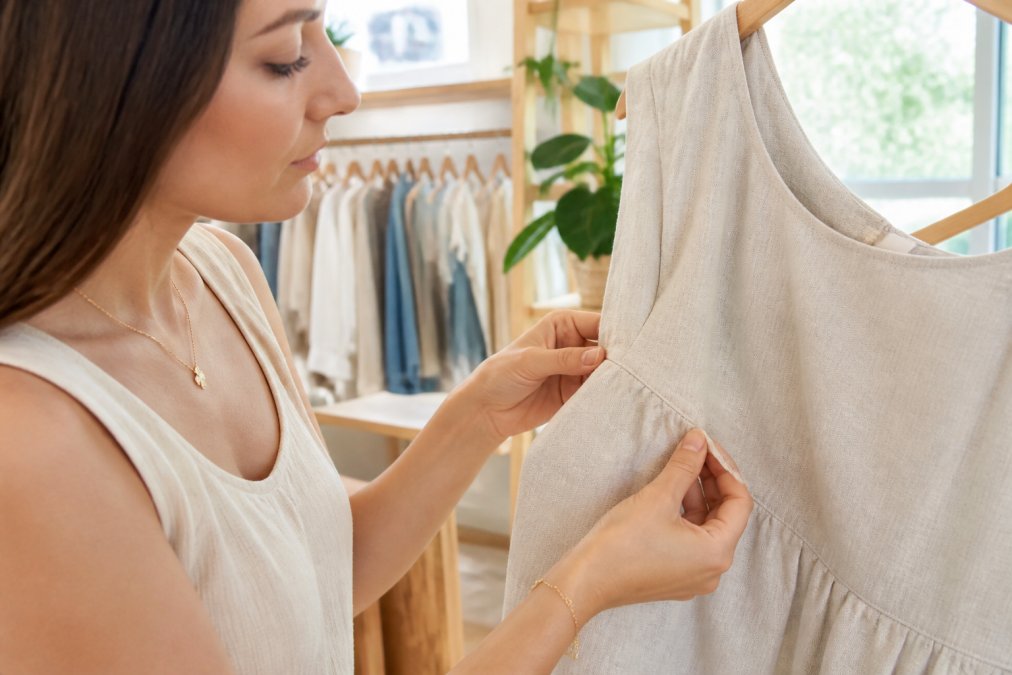
Hold the fabric up to light. A quality piece should not be sheer unless intentionally designed that way. Always check the fiber content label. Natural fibers like linen, cotton, silk, and wool breathe well, age gracefully, and respond better to tailoring. Linen is exceptional for durability, it softens with each wash rather than degrading, making a well-made linen dress a genuine investment piece.
Watch for colorfastness: rub a damp white cloth against dark fabric before buying. Significant dye transfer signals poor quality dyeing that will bleed in the wash. A quality manufacturer pre-shrinks fabric before cutting, which is why checking care instructions matters.
Stitch Density, Seam Allowance, and Construction Details
Run your fingers along the seams. Quality garment construction shows in stitch density: more stitches per centimeter means greater tensile strength and resistance to seam failure. Flip the garment inside out. A generous seam allowance means the garment can be taken in or let out by a tailor, extending its life significantly.
Check these construction details:
- Buttons: Pull gently. They should not move. Check that button threads are secured with a thread shank underneath.
- Zippers: Run the zipper up and down. Quality zippers glide without catching. Metal zippers outlast plastic ones.
- Pattern matching: On patterned fabrics, stripes and prints should align at the seams.
- Lining: Lined garments hold their shape better and feel more comfortable against skin.
Signs of Poor Craftsmanship to Reject Immediately
Reject any garment with puckered seams, loose threads, uneven hemlines, wobbling buttons, pilling already present before the first wash, or fabric that feels scratchy without any softening agent applied.
Natural vs. Synthetic Fabrics: What Holds Up Best
Natural fibers have real advantages for durability over time. Linen grows stronger with washing. Wool resists odor and requires less frequent laundering. Raw denim develops a personalized patina that synthetic fabrics cannot replicate. These materials also respond well to tailoring, which matters enormously for garment longevity.
Synthetic blends resist wrinkles and moisture better in many cases. A polyester-blend dress may hold its color and shape through more wash cycles than a poorly constructed pure cotton alternative. The issue is not the fiber itself but the quality of the textile integrity and construction.
According to the Textile Exchange's fiber market report, consumer demand for natural and recycled fibers continues to grow as shoppers prioritize both durability and environmental impact. For wardrobe staples you plan to wear for years, prioritize natural fibers. For trend pieces you will wear seasonally, a quality synthetic blend is a reasonable compromise.
Best Durable Clothing Brands and Where to Find Them
Finding genuinely durable clothing requires looking beyond marketing claims.
Supply Chain Transparency as a Quality Signal
Supply chain transparency is one of the most reliable quality signals available to shoppers today. Brands that publish detailed information about their manufacturing partners, material sourcing, and production standards are making themselves accountable in a way that fast fashion brands never would.
Look for brands that can answer these questions clearly:
- Where is the fabric sourced, and what certifications does it carry?
- Who manufactures the garments, and what are the working conditions?
- What quality control processes happen before shipment?
The Secondhand and Vintage Market Advantage
The secondhand market is one of the most underrated sources of high-quality fashion. Vintage sourcing gives you access to garments made before fast fashion degraded industry standards, often at favorable prices.
A vintage wool coat that has already survived thirty years will likely survive thirty more with proper care. The fabric weight, stitch density, and seam allowance on older garments frequently exceed what you will find at comparable price points in new retail. As documented in ThredUp's annual resale report, the secondhand clothing market continues to grow rapidly as shoppers recognize both the value and quality advantages.
How to Care for Clothes to Make Them Last
Learning how to care for clothes to make them last is just as important as buying well. The most beautifully constructed garment will fail prematurely if you wash it incorrectly, store it carelessly, or ignore early signs of wear.
Washing, Drying, and Storage Basics
The care label is not a suggestion. It is the manufacturer's specification for maintaining garment integrity. Key principles:
- Cold water washing reduces fiber stress and prevents shrinkage in natural fiber garments
- Mesh laundry bags protect delicate fabrics and embellishments during machine washing
- Air drying preserves fabric weight and prevents heat damage that degrades fibers
- Folding over hanging is better for knits, which stretch under their own weight
- Cedar blocks in storage protect wool and natural fiber garments from moth damage
Avoid over-washing. Many garments, particularly denim and wool, benefit from less frequent laundering. Spot-clean where possible and air garments between wears.
Repair and Tailoring: Extending Garment Life
Repair and tailoring are the two most overlooked tools in a wardrobe strategy. Most people discard garments at the first sign of wear when a simple fix would restore them completely.
Basic repairs worth learning yourself include reattaching buttons, hemming, and seam repair. For more complex work, a local tailor is worth every dollar. Tailoring a quality garment to fit your body precisely increases both how often you wear it and how long it lasts.
According to the American Apparel & Footwear Association's sustainability guidance, extending a garment's active life by even a few months meaningfully reduces its environmental footprint while delivering better value to the wearer.
Building a High-Quality Fashion Capsule Wardrobe on a Budget
A capsule wardrobe built around high-quality fashion pieces does not require an unlimited budget. It requires discipline, a clear sense of your actual lifestyle, and a willingness to buy less but buy better.
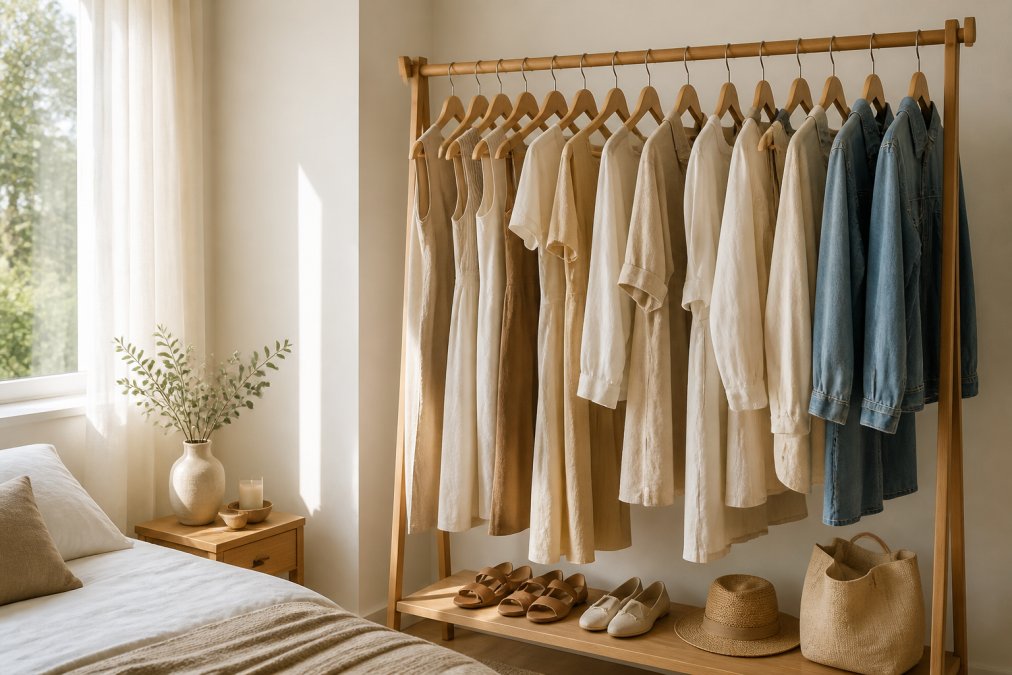
Every piece you own should work with at least three other pieces in your wardrobe. If a garment only works as a standalone statement, it is a costume, not a wardrobe staple.
Here is a practical framework for building your capsule:
Step 1: Audit what you already own. Pull everything out and apply the cost-per-wear lens. Keep only what you actually reach for.
Step 2: Identify your real gaps. Not what you wish you had, but what your actual daily life requires.
Step 3: Prioritize fabric quality over trend. A well-made linen dress in a classic silhouette will serve you for years.
Step 4: Buy one quality piece at a time. One excellent piece per month builds a genuinely strong wardrobe within a year.
Step 5: Use the secondhand market for investment pieces. Vintage and resale markets are excellent sources for higher-quality garments at accessible prices.
| Capsule Piece | Why It Works | Quality Indicator to Check |
|---|---|---|
| Linen midi dress | Breathes, ages well, works year-round | Fiber content label, seam allowance |
| Satin loose-fit dress | Versatile silhouette, elegant drape | Fabric weight, stitch density |
| Denim midi dress | Structured, durable, classic | Stitching consistency, zipper quality |
| Chiffon occasion dress | Elevated look, layering potential | Pattern matching, hem finish |
Finding stylish, high-quality fashion pieces that don't compromise on durability is genuinely achievable once you shift from impulse buying to intentional selection. The tools are simple: the cost-per-wear calculation, a practiced eye for garment construction, and a clear capsule wardrobe framework.
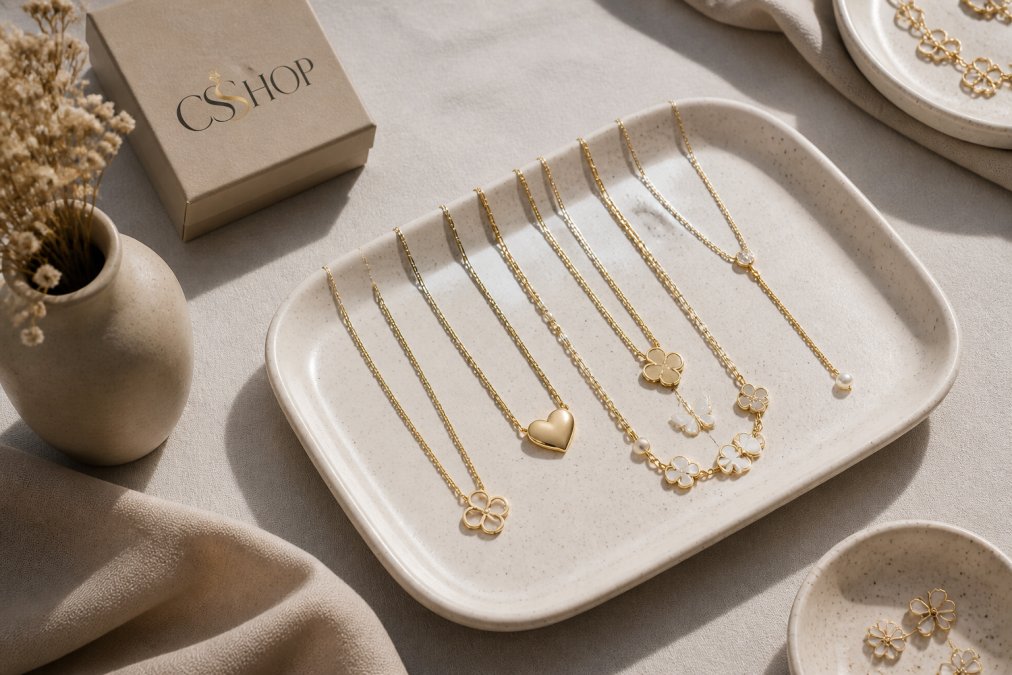
CSShop offers carefully curated clothing and jewelry collections designed around exactly these principles, with pieces selected for lasting value, versatile styling, and quality that shows in the details. The Women's Sleeveless Linen Button-Up Midi Dress, Women's V-Neck Satin Loose-Fit Midi Dress, Women's Sleeveless Denim Collared Midi Dress, and Women's Floral Chiffon V-Neck Ruffle Dress round out a capsule that covers casual, work, and occasion dressing without redundancy. For those who want to explore accessories alongside their wardrobe building, the Jewelry Mystery Boxes offer a curated way to add pieces without the guesswork of individual selection. Browse the full collection at csshop.shop and find pieces built to be worn, not just purchased.


Frequently Asked Questions
How can you tell if a piece of clothing is high quality?
Check the fabric weight first, heavier, denser fabric generally holds its shape better. Flip the garment inside out and inspect the seams: tight, even stitching with a generous seam allowance signals good construction. Look for flat, smooth seams with no loose threads. Check that patterns align at seams and that buttons or zippers sit flush. Natural fibers like linen and satin blends tend to show quality more readily than thin synthetic weaves.
What fabrics are the most durable for everyday wear?
Denim ranks among the most durable everyday fabrics, especially heavier-weight raw denim. Linen is exceptionally strong for its weight and resists pilling well. Tightly woven cotton and satin blends hold up to regular washing without significant shrinkage or colorfastness loss when cared for correctly. Chiffon and lightweight synthetics are less durable under friction but last longer when hand-washed or laundered on a gentle cycle. Fiber content listed on the care label tells you exactly what you are buying.
Are expensive clothes always better quality?
Not automatically. Price does not guarantee quality, it often reflects brand positioning, marketing costs, or retail markup rather than superior garment construction. A $30 linen dress with tight seams and a proper seam allowance can outlast a $200 piece with poor stitching. Focus on construction details and fiber content rather than price tags. Calculating cost-per-wear is more useful: a $30 dress worn 60 times costs $0.50 per wear, which beats a $150 piece worn only 10 times.
What are the best ways to maintain clothing to make it last longer?
Wash garments inside out in cold water to protect surface fibers and reduce colorfastness loss. Air-dry instead of machine-drying whenever possible, heat breaks down elastic fibers and causes shrinkage. Store knitwear folded rather than hung to prevent stretching. Address small repairs immediately: a loose button or minor seam split takes minutes to fix but will worsen quickly if ignored. Follow the care label on every piece, those instructions reflect how the specific fabric was tested by the manufacturer.
This article was written using GrandRanker