
 listicle
Durable Everyday Necklaces for Active Women
Table of Contents
- What Makes Durable Everyday Necklaces for Active Women
- Durable Necklace Chain Types Compared
- Waterproof Jewelry for Active Lifestyles: What the Label Really Means
- How to Clean Jewelry After a Workout
- Gold-Filled vs Gold-Plated vs Sterling Silver vs Titanium
- Cost-Per-Wear: Picking Everyday Necklaces That Last
- Conclusion
- Frequently Asked Questions
Last Updated: October 3, 2026
What Makes Durable Everyday Necklaces for Active Women
Durable everyday necklaces for active women survive sweat, showers, gym sessions, and daily wear without tarnishing, snapping, or losing their finish. At CSShop, we hear the same story constantly: a necklace looked perfect for three weeks, then turned green. The problem is rarely the design, it is almost always the clasp, the chain, or the finish.
Jewelers of America guide to jewelry care and materials
The Three Failure Points: Clasp, Chain, Finish
Clasp. A lobster clasp with a sturdy spring outlasts a thin hook-and-eye every time. If the clasp bends under light pressure, it will fail during a workout.
Chain. Thin cable chains under 1mm snap under tension. A slightly heavier gauge handles pulling and layering.
Finish. Plating wears at contact points first, usually where the pendant rubs or the chain meets your neck. That is where the green marks start.
Durable Necklace Chain Types Compared
Chain construction decides how a necklace handles daily stress. Two chains can look identical on a card and behave completely differently after six months of sweat, showers, and gym bags. What matters is link geometry, wire gauge, and how the links are joined and soldered.
Cable, Box, Satellite and Rope Chains
Cable chain: Interlocking oval links, each twisted 90 degrees from the last. It is the most flexible and easiest to repair, since a jeweler can open a single link, swap it, and close it again.
Box chain: Square links that sit flat against each other, so the chain resists tangling and lies smooth on the neck. Per unit of weight it is stronger than cable because the load spreads across flat faces rather than a single bend.
Satellite chain: A fine base chain, usually cable or box, with evenly spaced beads or stations. The beads are decorative, not structural, so they do not add weak points the way a heavy pendant does.
Rope chain: Two or more strands twisted together so the surface looks like a braided rope. The twist hides minor wear and scratches, and the doubled construction gives it real strength for its diameter.
Figaro and curb chains show up constantly in everyday jewelry. Figaro alternates short links with one longer link; curb uses flattened, closely fitted links. Both are strong, but curb's flattened links can wear against each other over years of daily movement.
| Chain Type | Strength | Tangles Easily? | Best For |
|---|---|---|---|
| Cable | Moderate | Yes, if thin | Simple pendants |
| Box | High | No | Everyday wear |
| Satellite | Moderate | No | Layering |
| Rope | High | Rarely | Statement pieces |
| Figaro | High | No | Everyday wear with visual interest |
| Curb | High | No | Heavier everyday pieces |
How to Test a Chain Before You Commit
Three checks take under a minute:
- Hold it by one end and let it hang. A chain that twists back on itself immediately will tangle in daily wear. A chain that hangs straight and calm will not.
- Run the chain through your fingers and feel for rough spots. Roughness usually means an unsoldered or poorly finished link, the first place a break starts.
- Flex the clasp, not the chain. A lobster clasp should open and close with a firm, springy snap. If it feels mushy or the lever wobbles, the clasp will fail long before the chain does.
Why the Clasp Is the Real Weak Link
Most everyday necklace failures are not chain breaks, they are clasp failures. A lobster clasp relies on a small internal spring; once it weakens, the clasp can pop open during a workout or a hug. Spring-ring clasps are similar, and hook-and-eye closures have no spring at all, making them easy to fasten but easy to lose.
If a necklace matters to you, a jeweler can swap a weak clasp for a heavier lobster or a box clasp. That single repair often doubles the usable life of an otherwise fine chain.
Repair vs. Replace
A broken cable chain can usually be repaired by re-closing or replacing one link. A kinked box chain often cannot, the kink is a permanent bend in the metal. A snapped rope chain usually needs a full re-solder at the break. Knowing which failure you have tells you whether repair is worth it.
Waterproof Jewelry for Active Lifestyles: What the Label Really Means
"Waterproof jewelry for active lifestyles" usually means the piece resists water damage, not that it is indestructible. The label describes the material and finish, not a guarantee.
Solid stainless steel, titanium steel, and 925 sterling silver handle water far better than plated brass. Gold-filled pieces also hold up because the gold layer is bonded, not painted on. Gold-plated jewelry, by contrast, has a thin surface layer that wears away with repeated exposure to sweat and chlorine.
What the label does not tell you: waterproof does not mean scratch-proof, and it does not mean the clasp will last forever. Read the material, not the marketing word.
How to Clean Jewelry After a Workout
Cleaning jewelry after a workout takes under a minute and prevents most tarnish. Wipe the piece with a soft dry cloth before putting it away. Sweat and body oils are the main cause of dullness and discoloration.
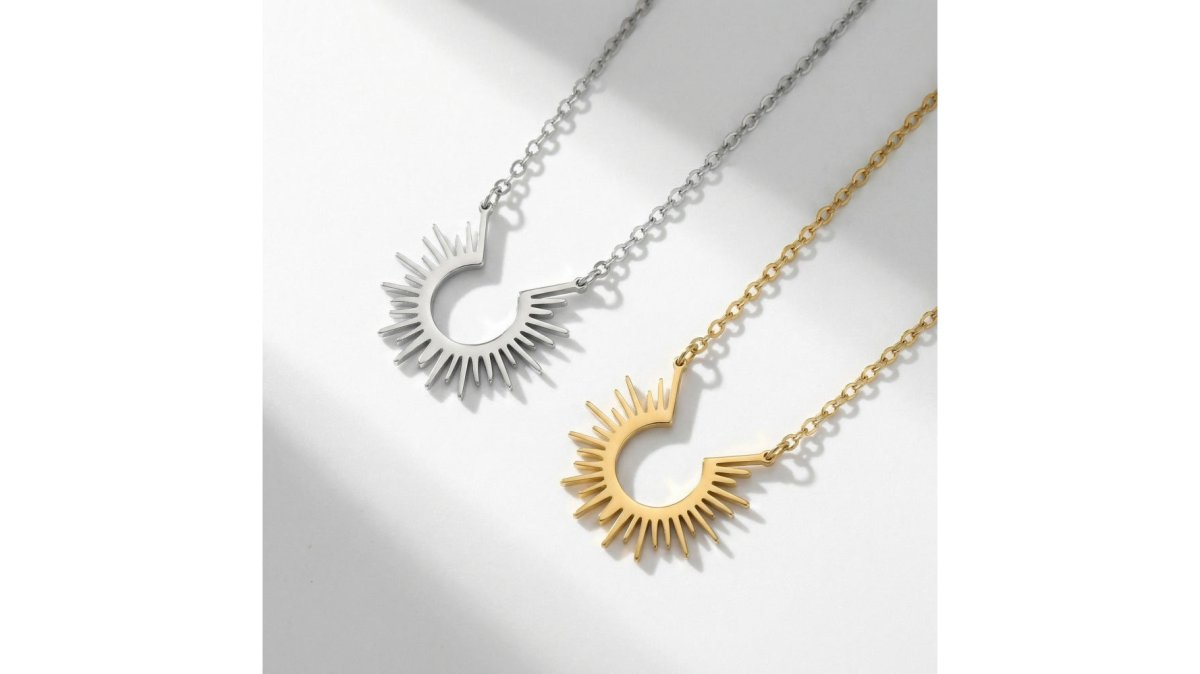
Women's U-shaped Sunflower Stainless Steel Light Luxury Fashion Personality →
For a deeper clean:
- Mix a drop of mild dish soap with warm water
- Dip a soft cloth or soft brush into the solution
- Gently wipe the chain and pendant
- Rinse with clean water and pat dry
- Let the piece air dry fully before storing

Avoid harsh chemicals, abrasive pads, and ultrasonic cleaners on plated or gold-filled pieces. They strip the finish faster than sweat ever would.
Gold-Filled vs Gold-Plated vs Sterling Silver vs Titanium
Most jewelry buying advice stops at the label. The label is where the useful information starts. What separates a piece that survives two years of daily wear from one that greens your neck in three weeks is how the metal was made, not the word printed on the tag.
How Each Material Is Actually Made
Gold-filled is not a coating in the usual sense. A layer of gold, by US trade standards, at least 5% of the item's total weight for "gold-filled" or "rolled gold" labeling, is bonded to a brass or copper core under heat and pressure, creating a mechanical bond rather than a painted-on film.
Gold-plated jewelry has a microscopic layer of gold deposited onto a base metal, often by electroplating. The layer is measured in microns, a fraction of the thickness of gold fill. Plating wears at contact points first: where a pendant rubs, where the chain meets the neck, where a clasp opens and closes.
Sterling silver is a solid alloy, by US convention, 92.5% silver and 7.5% another metal, usually copper. It is not plated, so there is no layer to wear through. The trade-off is tarnish: silver reacts with sulfur compounds in air and on skin and darkens over time.
Titanium steel (often sold as titanium stainless steel) is a solid alloy, not a coating. It is lightweight, strong, and highly resistant to tarnish and corrosion. It is also hypoallergenic for most wearers, which matters if you react to nickel in plated or lower-grade pieces.
What Each Material Does Under Real Conditions
| Material | Durability | Tarnish Risk | Water Tolerance |
|---|---|---|---|
| Gold-filled | High | Low | Good |
| Gold-plated | Low | High | Poor |
| Sterling silver | Moderate | Medium | Moderate |
| Titanium steel | High | Very low | Excellent |
What the table cannot show:
- Sweat is acidic. Repeated exposure to sweat accelerates plating wear far more than plain water does. This is why a plated piece can look fine for months of occasional wear and then fail quickly once it becomes a workout necklace.
- Chlorine is the worst case. Pool chlorine attacks plated finishes and can also dull sterling silver. If you swim regularly, gold-filled and titanium steel are the materials that hold up.
- Salt water is a close second. Ocean swimming has a similar effect over a longer timeline.
- Perfume, sunscreen, and hair products leave residues that trap moisture against the metal. Applying them before the necklace, not after, reduces the exposure.
How to Read a Material Label
A few phrases on a product page tell you most of what you need:
- "14K gold-filled" or "14/20 gold-filled", the "14/20" notation means the gold layer is 14-karat and makes up one-twentieth of the total weight. That is a real, measurable thickness.
- "14K gold-plated" or "gold-tone", plating. Expect wear at contact points over months, not years, with daily use.
- "925" or "sterling", solid silver alloy. Plan to polish it periodically.
- "Titanium steel" or "316L stainless", solid, tarnish-resistant alloys. The most forgiving option for sweat and water.
Matching the Material to the Wearer
For active wear, gold-filled and titanium steel are the strongest choices. Sterling silver works well if you are willing to polish it. Gold-plated is the weakest option for daily sweat exposure, fine for occasional wear, but not the material to build a workout rotation around.

If you have sensitive skin, titanium steel and sterling silver are the safest bets. Gold-filled is usually well tolerated because the gold layer touches the skin; plated pieces are most likely to cause a reaction once the plating wears thin and the base metal is exposed.
Cost-Per-Wear: Picking Everyday Necklaces That Last
Cost-per-wear is the price of a piece divided by how many times you actually wear it. A $6 chain worn 200 times costs three cents per wear. A $40 necklace that tarnishes in a month costs far more per use.
This is why material matters more than price tag. A durable piece at a moderate price point usually beats a cheap piece you replace every season.

- 14k gold filled box chain at $8.00, a clearance-priced layering staple
- gold-filled satellite chain at $5.50, light enough to layer daily
- titanium steel bowknot necklace at $39.05, a tarnish-resistant option for sensitive skin
Conclusion
Building a rotation of durable everyday necklaces for active women comes down to three things: solid hardware, honest materials, and a one-minute cleaning habit. Get those right and your pieces stay bright through every workout, shower, and long day.
At CSShop, we curate jewelry and crystals designed to add sparkle to everyday life without the fast-fashion turnover. Our jewelry mystery boxes let you discover new pieces at a budget-friendly price, and every item is selected for style, quality, and lasting value. Search our collection at csshop.shop and find your next everyday staple.
Frequently Asked Questions
What is the most durable metal for everyday necklaces?
Stainless steel and titanium steel hold up best for daily wear because they resist tarnishing, water and sweat. Gold-filled pieces, like the 18-inch gold-filled satellite chain, bond a thicker layer of gold to brass, so the finish outlasts gold plating. Sterling silver is durable but needs more frequent polishing. If you swim or train often, stainless steel or titanium steel is the lowest-maintenance choice.
How do I keep my necklace from breaking during exercise?
Choose a chain with a secure lobster clasp and a link style that resists pulling, such as a box or satellite chain. Keep the length close to your collarbone so it does not catch on equipment. Remove pendants with thin jump rings before lifting weights. If you wear a chain during workouts, check the clasp monthly and replace any stretched links before they snap.
Is gold-filled or gold-plated better for daily wear?
Gold-filled jewelry lasts longer for daily wear. The gold layer is bonded to a base metal like brass and is much thicker than gold plating, so it resists fading through sweat, lotion and hand washing. Gold plating sits on the surface and wears away faster with friction. For active women, gold-filled chains offer a better balance of price and longevity.
How can I style jewelry for both the gym and the office?
Pick one or two pieces that work in both settings. A simple satellite or box chain in stainless steel or gold-filled reads polished enough for the office and tough enough for the gym. Layer a small pendant over it for meetings, then remove the pendant before training. Sticking to neutral metals and clean shapes keeps the look consistent all day.