
 ultimate-guide
Durable Jewelry for Daily Wear: 2026 Guide
Table of Contents
- What Makes Daily Wear Jewelry Actually Durable
- Best Metals for Daily Wear Jewelry: A Comparison
- Solid Gold vs Gold Filled for Daily Wear
- Durable Gemstone Hardness Scale for Everyday Pieces
- Cost-Per-Wear and Repairability: The Real Value Test
- How to Clean Everyday Jewelry and Prevent Tarnish
- Building Your Daily Jewelry Wardrobe
- Conclusion
Last Updated: August 10, 2026
What Makes Daily Wear Jewelry Actually Durable
Daily wear jewelry is designed to withstand continuous exposure to sweat, water, friction, and skin chemistry without significant degradation. Most buyers discover this distinction the hard way, after a beloved ring turns their finger green or a necklace clasp fails within weeks of purchase.
At CSShop, we hear this concern constantly: "I've bought jewelry online before and it turned green within a few weeks." The answer almost always comes down to metal composition and how well that metal interacts with your specific skin chemistry. The core factors that determine whether a piece survives daily wear are hardness, corrosion resistance, alloy composition, and repairability.
The Mohs Hardness Scale and Why It Matters
The Mohs hardness scale ranks materials 1-to-10 for resistance to surface scratching, where talc sits at 1 and diamond at 10. For daily wear jewelry, this number tells you how well a metal or gemstone holds its finish over time.
Most precious metals fall in a narrow band. Pure gold sits around 2.5, which is why solid gold jewelry is almost always alloyed with harder metals like copper, silver, or palladium. Platinum registers around 4-4.5. Titanium reaches 6, making it one of the hardest wearable metals available. According to the Gemological Institute of America's gem education resources, understanding hardness is foundational to evaluating any jewelry piece for long-term wear.
A softer metal will show wear and tear faster, but that doesn't mean you should avoid it, it means you need to factor in maintenance and eventual refinishing.
How Skin Chemistry Affects Metal Longevity
Human skin pH varies from person to person, and sweat contains salts, acids, and sulfur compounds in different concentrations. These variables accelerate oxidization in some metals and leave others untouched. Sterling silver tarnishes faster on people with higher acidity in their sweat. Base metals like brass and copper react even more aggressively, producing the green discoloration that comes from copper salts forming on the skin.
If you've worn a piece that turned green on your friend but not on you, that's skin chemistry at work, not a defect in the jewelry, but a compatibility issue between the metal's alloy composition and your body's specific chemistry.
When evaluating daily wear jewelry, prioritize metals with high corrosion resistance regardless of your skin type. Solid gold, platinum, and titanium are the most forgiving across the widest range of skin chemistries.
Best Metals for Daily Wear Jewelry: A Comparison
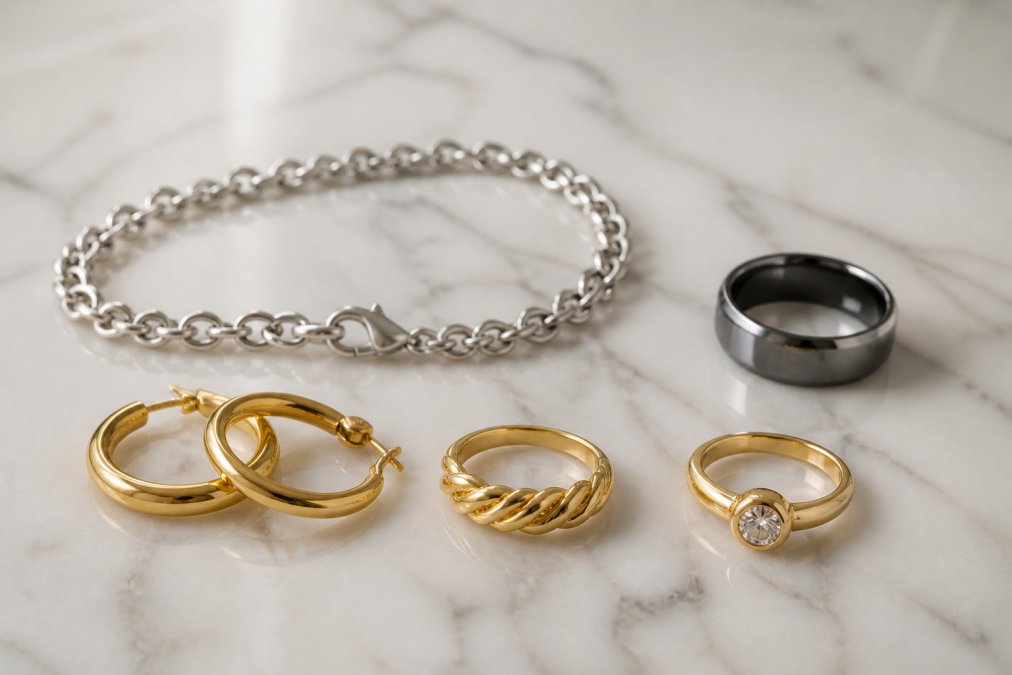
Not all metals are created equal for daily rotation. The right choice depends on your budget, activity level, skin chemistry, and how much maintenance you're willing to do.
| Metal | Mohs Hardness | Tarnish Resistance | Hypoallergenic | Best For |
|---|---|---|---|---|
| 10k Gold | 2.5-3 | High | Generally yes | Budget-conscious daily wear |
| 14k Gold | 2.5-3 | High | Generally yes | Balanced durability and value |
| 18k Gold | 2.5-3 | Very high | Yes | Sensitive skin, investment pieces |
| Sterling Silver | 2.5-3 | Moderate | Not always (may contain nickel) | Occasional wear, regular polishing |
| Platinum | 4-4.5 | Very high | Yes | Long-term investment pieces |
| Titanium | 6 | Very high | Yes | Active lifestyles, allergy-prone skin |
| Gold Vermeil | 2.5-3 (base) | Moderate | Depends on base metal | Fashion pieces with limited daily wear |
Gold Karat Breakdown: 10k, 14k, and 18k
Karatage measures the proportion of pure gold in an alloy. Pure gold is 24 karats, meaning 24 out of 24 parts are gold. The remaining parts are alloy metals that add hardness and affect color.
- 10k gold contains roughly 41.7% pure gold. It's the most durable of the three because the higher alloy content adds tensile strength, making it practical for everyday rings and bracelets that take real abuse.
- 14k gold sits at 58.3% gold and is the most popular choice for daily wear jewelry in the US. It balances durability, color richness, and cost effectively.
- 18k gold contains 75% pure gold. It's softer than 10k or 14k but offers the richest color and highest biocompatibility for people with nickel sensitivity.
If you're wearing rings through workouts, gardening, or manual work, 14k holds its shape better over time than 18k.
Sterling Silver, Platinum, and Titanium
Sterling silver is 92.5% silver alloyed with copper. It's beautiful and affordable, but requires more maintenance than gold. Oxidization happens faster, particularly in humid environments or on skin with higher acidity. Regular polishing with a soft cloth and storage in anti-tarnish pouches extends its life significantly.
Platinum is denser than gold and develops a natural patina over time rather than scratching away. Many wearers prefer this aged look. It's genuinely hypoallergenic and nickel-free, making it the top recommendation for people with metal allergies. The trade-off is cost.
Titanium is the underrated option. At a Mohs hardness of 6, it resists scratching better than any precious metal. It's completely hypoallergenic, sweat-proof, and shower-safe. The limitation is repairability: titanium is difficult to resize and hard to solder.
Solid Gold vs Gold Filled for Daily Wear
Solid gold means the entire piece is made from a gold alloy throughout. Every layer of the metal is the same composition. Solid gold pieces can be resized, repaired, and refinished indefinitely without wearing through.
Gold filled is a legally regulated term in the US, defined by the Federal Trade Commission's jewelry guidelines as a piece that must contain at least 1/20th gold by weight, bonded under heat and pressure to a base metal core. Gold filled is substantially more durable than gold plating and can last years of daily wear before the gold layer shows signs of wear. However, once the gold layer wears through, the base metal is exposed.
Gold vermeil sits below gold filled. It's sterling silver coated with gold plating. Plating durability depends on thickness and the quality of the base sterling silver.
For daily wear jewelry, the hierarchy is clear: solid gold outlasts gold filled, which outlasts gold vermeil. If you're building a wardrobe of pieces you intend to wear every day for years, solid gold is the investment that makes the most sense per wear.
Durable Gemstone Hardness Scale for Everyday Pieces
The durable gemstone hardness scale follows the same Mohs framework used for metals. The higher the number, the better the stone resists scratching from daily contact.
| Gemstone | Mohs Hardness | Daily Wear Suitability |
|---|---|---|
| Diamond | 10 | Excellent |
| Ruby / Sapphire | 9 | Excellent |
| Topaz | 8 | Good |
| Aquamarine / Emerald | 7.5-8 | Good (emerald prone to chipping) |
| Quartz / Amethyst | 7 | Acceptable with care |
| Opal | 5.5-6.5 | Poor for daily wear |
| Pearl | 2.5-4.5 | Poor for daily wear |
Hardness alone doesn't tell the full story. Setting security matters as much as the stone's rating. A high-hardness stone in a poorly constructed prong setting will be lost before a softer stone in a bezel setting. Prongs that extend above the stone's surface catch on clothing and bend over time, loosening the stone's grip. Bezel settings, where metal surrounds the stone's perimeter, offer far better protection for daily wear.
Clasp integrity is similarly important. A well-made lobster clasp on a necklace outlasts a spring ring clasp by years under daily use conditions.
Cost-Per-Wear and Repairability: The Real Value Test
Most jewelry guides stop at material comparisons. The real value test is cost-per-wear analysis combined with a repairability index.
Cost-per-wear is simple: divide the purchase price by the number of times you realistically expect to wear the piece. A solid 14k gold ring worn daily for ten years has a dramatically lower cost-per-wear than a gold-plated piece bought at a fraction of the price but replaced every eighteen months.
The repairability index adds another dimension. Ask these questions before buying:
- Can this piece be resized if my finger size changes?
- Can a broken clasp be replaced without replacing the whole piece?
- Can surface scratches be polished out professionally?
- Is the stone set in a way that allows re-tipping or re-pronging?
Solid gold and platinum score highest on repairability. Both can be worked by a skilled jeweler repeatedly without compromising the metal's integrity. Titanium scores lowest: its hardness makes it extremely difficult to resize or repair. Gold filled sits in the middle; minor repairs are possible, but once the gold layer wears through on a high-contact area, restoration is limited.
Metal fatigue is the third factor. Thin chains and fine wire settings develop micro-fractures over time from repeated bending. Heavier gauge chains and settings with more metal mass simply last longer under daily stress.
How to Clean Everyday Jewelry and Prevent Tarnish
Jewelry maintenance is where most people lose years of a piece's lifespan. Proper care is straightforward and takes minutes.
For solid gold and platinum:
- Mix a few drops of mild dish soap with warm water in a small bowl
- Soak the piece for 10-15 minutes
- Gently scrub with a soft-bristled toothbrush, paying attention to settings and crevices
- Rinse thoroughly under warm running water
- Pat dry with a lint-free cloth and allow to air dry completely before storing
For sterling silver, use the same process but add a polishing step with a dedicated silver polishing cloth to remove tarnish. Store silver in anti-tarnish bags or with a silica gel packet to slow oxidization between wears.
For gold filled and gold vermeil, avoid abrasive cleaners entirely. Use only mild soap and water, and dry immediately to preserve the gold layer.
According to the American Gem Society's jewelry care guidelines, ultrasonic cleaners are safe for solid gold and diamonds but should be avoided for softer stones, pearls, emeralds, and any plated pieces.
Rhodium plating deserves a specific mention. Many white gold pieces are rhodium plated to achieve that bright, mirror-white finish. Rhodium is harder than gold but the plating is thin. Daily wear, particularly on rings, wears through rhodium plating within one to two years. Re-plating is a standard jeweler service, but it's a recurring cost to factor into your total ownership calculation.
Building Your Daily Jewelry Wardrobe
A well-built daily jewelry wardrobe doesn't require many pieces. It requires the right pieces chosen with durability and versatility in mind.
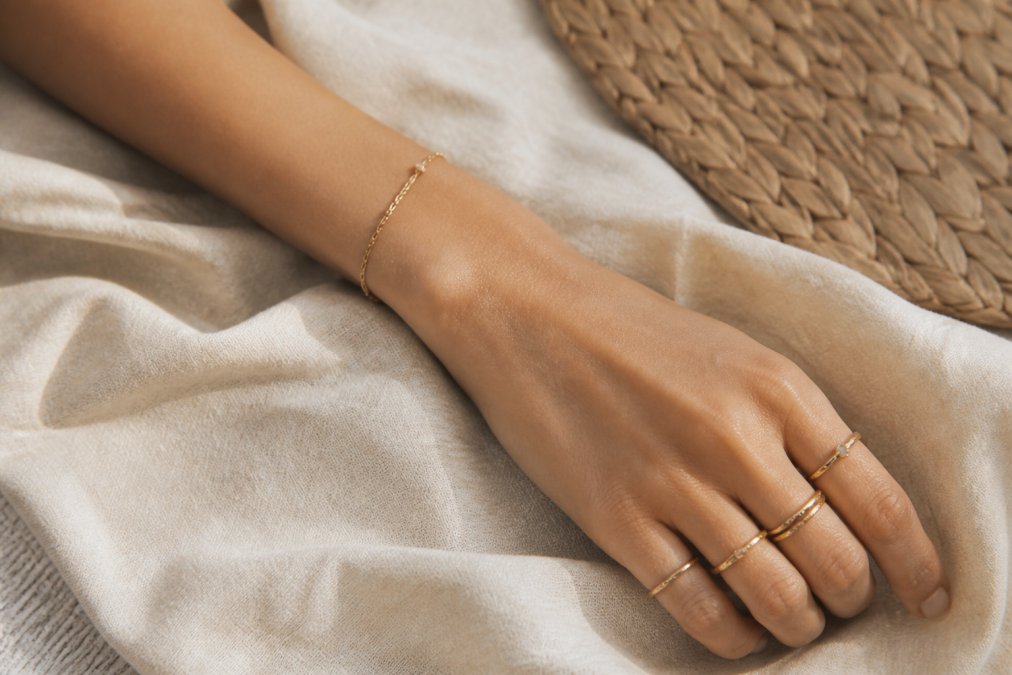
The foundation of a practical daily rotation starts with four categories:
1. The anchor ring. A solid gold band or solitaire in 14k or 18k. This piece goes on in the morning and comes off at night. It needs to survive everything your hands encounter during the day.
2. The everyday necklace. A fine chain in solid gold or platinum with a simple pendant. Lengths between 16 and 18 inches sit at the collarbone and work with most necklines. A box chain or cable chain in at least 1mm gauge handles daily wear better than a finer chain.
3. The stud earring. Titanium or solid gold posts with a secure butterfly or screw back. Studs with hypoallergenic posts eliminate irritation from wearing earrings through long days.
4. The accent bracelet. A thin gold bangle or a chain bracelet with a quality lobster clasp. This is where you can introduce personality without compromising the durability of your core pieces.
If your daily life involves physical work, outdoor activities, or frequent hand-washing, lean toward titanium posts, bezel-set stones, and heavier-gauge chains. If your days are primarily office and social settings, finer pieces in solid gold hold up well.
CSShop's curated jewelry collections are built around exactly this principle: pieces that work across daily wear contexts without requiring you to swap out your whole look. The focus is on quality alloys, secure settings, and designs that remain relevant across seasons.
As the Jewelers of America's consumer education resources notes, building a jewelry wardrobe with longevity in mind means prioritizing fewer, better pieces over a larger collection of lower-quality items. That philosophy aligns with cost-per-wear math and with the practical reality that most people wear the same three or four pieces daily regardless of how large their collection is.
Frequently Asked Questions
What type of jewelry is best for everyday wear?
Solid gold (14k is the sweet spot for most people), platinum, and titanium hold up best to daily wear. They resist scratching, tarnishing, and corrosion better than plated or base-metal options. For gemstones, diamonds, sapphires, and rubies score highest on the Mohs hardness scale, making them reliable choices for rings and bracelets worn every day. Sterling silver is also a solid option as long as you store and clean it properly to slow oxidization.
What is the most durable metal for daily wear jewelry?
Platinum is technically the most durable metal for daily wear jewelry. It has exceptional tensile strength, does not tarnish, and is naturally hypoallergenic and nickel-free. However, 14k solid gold offers a practical balance of durability, scratch resistance, and cost that most people find more accessible. Titanium is another durable option, especially for those with sensitive skin, though it is harder to resize or repair than gold or platinum.
Can you wear gold-plated jewelry every day?
Gold-plated jewelry is not ideal for daily wear. The thin gold layer wears through with regular friction, sweat, and exposure to water, often revealing the base metal underneath within weeks or months. Gold vermeil (a thicker gold layer over sterling silver) lasts longer, and gold-filled pieces last longer still. For true daily wear jewelry, solid gold or gold-filled options give you far better plating durability and long-term value.
How do I keep my everyday jewelry from tarnishing?
Store pieces in airtight pouches or lined jewelry boxes when not wearing them. Remove jewelry before showering, swimming, or applying lotions and perfumes. Clean sterling silver with a soft cloth and mild soap regularly to slow oxidization. For gold pieces, a gentle wipe after each wear removes skin oils and sweat that accelerate tarnish. Rhodium plating on white gold or silver adds an extra tarnish-resistant barrier that extends the life of the finish.
Which gemstones are hard enough for daily wear?
On the Mohs hardness scale, gemstones rated 7 or above are generally safe for daily wear. Diamonds (10), sapphires and rubies (9), and topaz (8) are the most scratch-resistant choices. Moissanite (9.25) is also excellent. Stones like opal (5.5-6.5), pearl (2.5-4.5), and turquoise (5-6) are too soft for rings or bracelets worn every day and are better suited to occasional wear pieces like earrings or pendants.
What is the 2:1:1 rule for jewelry?
The 2:1:1 rule is a simple framework for building a balanced everyday jewelry wardrobe: two everyday staple pieces (like a simple chain necklace and stud earrings), one statement piece for occasions, and one sentimental or investment piece you rotate in. It keeps your daily jewelry wardrobe versatile without becoming overwhelming. The goal is a small set of durable, mix-and-match pieces that work across multiple outfits rather than a large collection you rarely use.
Building a daily jewelry wardrobe that holds up over time comes down to making informed decisions about metal composition, gemstone hardness, setting security, and repairability before you buy. CSShop's carefully curated jewelry collections are selected with exactly these standards in mind, offering solid construction, quality alloys, and timeless designs at accessible price points. Explore the CSShop collection and find pieces built to wear every single day.
This article was written using GrandRanker