 Listicle
Crystal Jewelry Trends 2026: What to Wear This Season
Last Updated: October 29, 2026
Quick Summary
The crystal jewelry trends for 2026 favor layered stone necklaces, bold pendants in amethyst, lapis, and turquoise, colorful drop earrings, and thin stacked rings. Blue and purple lead the season, with green and pink close behind. Pick one saturated stone as your focal point and keep the rest neutral.
- The global crystal jewelry market is projected to reach $2.27 billion in 2026, growing at a 6.5% compound annual growth rate.
- Layer necklaces by mixing a short 16- to 18-inch chain, a mid-length pendant, and a longer drop.
- Turquoise, lapis, and amethyst appear across pendants, drops, and rings this season.
- Quartz-family stones rate about 7 on the Mohs scale and handle everyday wear, including rings.
- Store each crystal piece in its own pouch and wipe it with a dry soft cloth after wearing.
Table of Contents
- Crystal Jewelry Trends 2026: The Season at a Glance
- Trending Crystal Necklaces: Layered Stones and Bold Pendants
- Crystal Earrings Trends: Colorful Drops and Everyday Studs
- Ring Stacks and Bracelets: The Finishing Touches
- Which Crystal Colors Are Leading the Season
- How to Care for Crystal Jewelry So It Lasts
- Shop the Season's Crystal Looks at CSShop
- Frequently Asked Questions
Crystal Jewelry Trends 2026: The Season at a Glance
The global crystal jewelry market is projected to reach $2.27 billion in 2026, according to Business Research Insights' crystal jewelry market forecast, and it's expected to climb to $3.97 billion by 2035 at a 6.5% compound annual growth rate. That growth isn't happening in a vacuum. This season's crystal jewelry trends are louder, more colorful, and easier to wear every day than the delicate minimalism of recent years.
Trending Crystal Necklaces: Layered Stones and Bold Pendants
Trending crystal necklaces this season fall into two camps: stacked, layered chains worn together, and single statement pendants that carry the whole look. Both directions show up in the 2026 trend reporting, and both are easy to build from pieces you may already own.
The Layered Necklace Look
Layered stones and chakra-inspired color stories are among the crystal jewelry directions named in My Zen Temple's 2026 crystal jewelry trend outlook, which also points to everyday wearability as a defining theme. Necklace layering works best when you mix lengths rather than competing pendants: a short 16- to 18-inch chain, a mid-length pendant, and a longer drop. If you'd rather skip the guesswork, a multi-pendant clover necklace gives you the stacked effect in a single clasp.
Statement Pendants in Amethyst, Lapis, and Turquoise
Colorful gemstone accents, including sapphire, emerald, ruby, and tourmaline, are a highlighted 2026 jewelry direction per Who What Wear's 2026 jewelry trend report, and the same appetite for saturated color is pushing amethyst, lapis, and turquoise into statement pendants. For a ready example of the bold pendant direction, this turquoise and coral Y necklace pairs two strong colors in one piece.
Crystal Earrings Trends: Colorful Drops and Everyday Studs
Crystal earrings trends are splitting in two: dramatic colorful drops for evenings and events, and small everyday studs that never leave your ears. A turquoise and agate pair, like these turquoise and agate golden drop earrings, shows the colorful drop trend in a wearable size, and turquoise's natural matrix means no two pairs look exactly alike.

Studs stay simple, but the stone choice still matters. Amethyst, garnet, and clear quartz keep an everyday pair versatile. Watch out: heavy drop earrings pull on the lobe over a long day, so save the boldest pairs for shorter wear and keep the weight in mind when you're shopping.
Ring Stacks and Bracelets: The Finishing Touches
Ring stacks and bracelets finish a crystal look, and this season favors stacking several thin bands rather than one wide ring. A turquoise stacking ring set lets you build that layered look immediately, and mixing metal tones across fingers reads more modern than matching everything. A turquoise statement cuff does that job well, especially against bare skin or a plain sleeve.
Two practical notes. First, stack rings on different fingers rather than piling them onto one, so the stones don't scratch each other. Second, take bracelets off before typing or lifting weights; cuffs and bezel settings hold up, but repeated knocks dull a polished finish faster than daily wear alone.
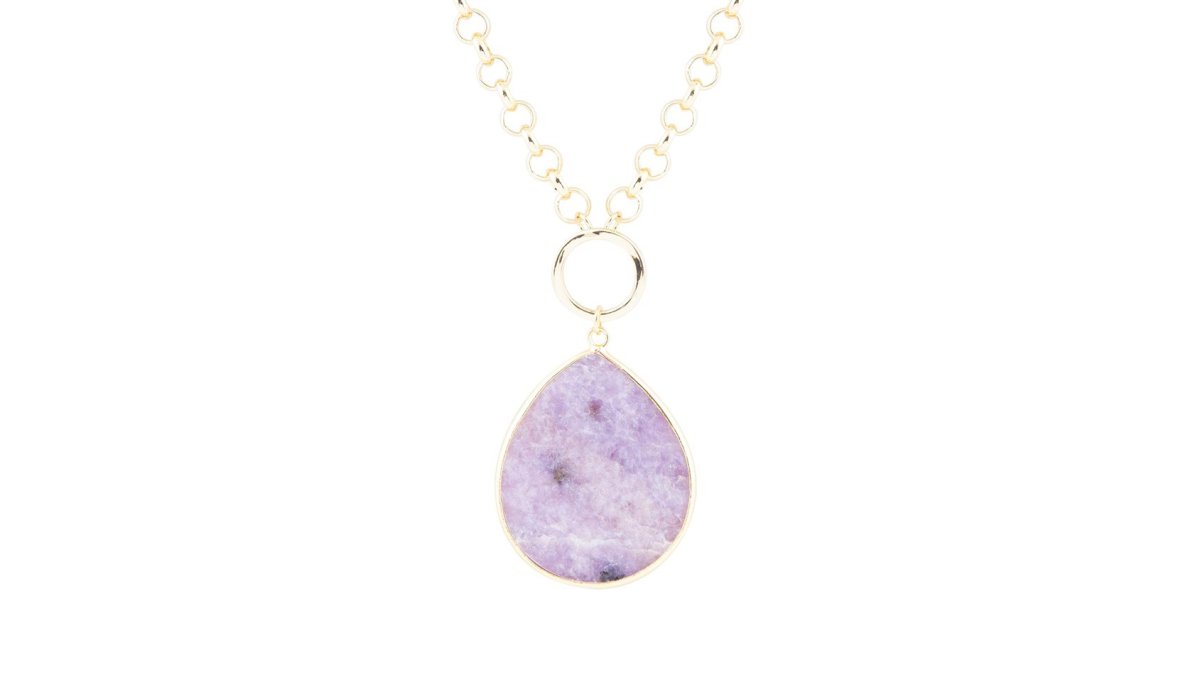
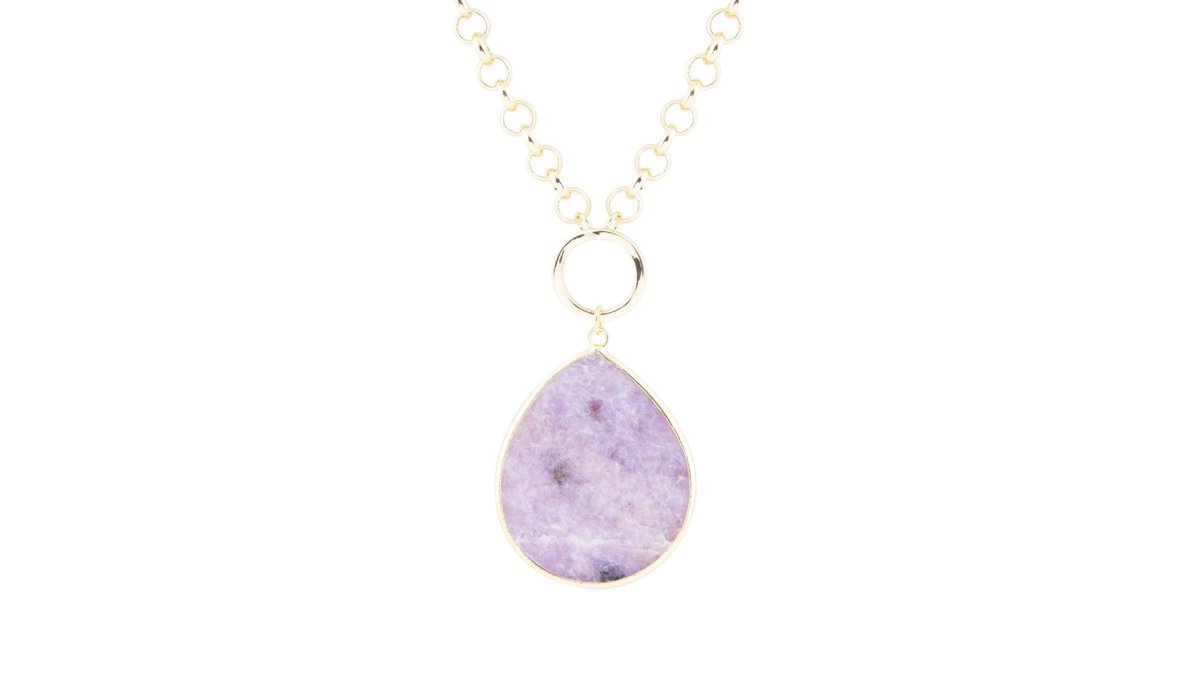
Purple Amethyst Teardrop Golden Chain Necklace →
| Piece | This Season's Direction | Wear It With |
|---|---|---|
| Necklace | Layered chains or one bold pendant | Open necklines, simple tops |
| Earrings | Colorful drops, small studs | Hair up for drops |
| Rings | Thin stacked bands | Mixed metals |
| Bracelets | One statement cuff | Bare wrist or plain sleeve |
Which Crystal Colors Are Leading the Season
Blue and purple lead the season, with turquoise, lapis, and amethyst appearing across pendants, drops, and rings. Green and pink follow close behind. Colorful gemstone accents in unexpected shades are a named 2026 direction, and the practical takeaway is simple: pick one saturated stone as your focal point, then keep the rest of the piece neutral in gold or silver tone.
How to Tell Natural, Treated, and Imitation Stones Apart
Color is the easy part; verifying what you're actually buying is where most shoppers get tripped up. A few practical checks separate genuine material from dyed, heat-treated, or imitation pieces:
- Look for natural variation. Genuine amethyst ranges from pale lavender to deep violet, and turquoise carries its own matrix patterns. Uniform, perfectly even color across every stone in a batch is a common sign of dye or reconstituted material.
- Check the price against the stone. Solid lapis, clean turquoise, and deep amethyst carry real material cost. A large, flawless-looking stone at a very low price is usually dyed howlite, glass, or a composite, not the real thing.
- Ask about treatments. Heat treatment is standard and accepted for many stones; dyeing and stabilization are common for turquoise and are not inherently bad, but they should be disclosed. A seller who can't tell you whether a stone is treated is a seller to skip.
What Drives the Price of a Crystal Piece
Once you know what you're looking at, price makes more sense. Four factors do most of the work:
- Stone quality. Cleaner, more saturated, and larger stones cost more. Opaque or heavily included stones cost less but can be just as attractive in a design.
- Setting and metal. Solid gold and sterling silver cost far more than gold-plated brass or bronze. Plated pieces are fine for occasional wear but will wear through at contact points over time.
- Cut and shape. Faceted and calibrated stones take more labor than tumbled or freeform stones, which shows up in the price.
- Brand and curation. A curated piece carries a markup for selection and design. That's not automatically a bad deal, it's what you're paying for when you don't want to source stones yourself.
How to Care for Crystal Jewelry So It Lasts
Caring for crystal jewelry comes down to three habits: keep stones away from harsh chemicals, store pieces separately, and clean gently with a soft cloth. But how much care a piece needs depends on the stone, and matching the stone to how often you'll wear it is the single best way to keep it looking new.
Match the Stone to the Wear
Crystal hardness is measured on the Mohs scale, where diamond is a 10 and talc is a 1. The higher the number, the more resistant the stone is to scratches and everyday knocks. A few reference points that matter for jewelry:
- Quartz family (amethyst, clear quartz, citrine): about 7 on the Mohs scale. Durable enough for everyday wear, including rings, but can fade with prolonged direct sun exposure.
- Turquoise: about 5 to 6, and porous. Fine for earrings and pendants worn often, but a poor choice for a ring you'll wear daily, since it scratches and absorbs oils and water.
- Lapis lazuli: about 5 to 6, and softer than it looks. Best kept to pendants and earrings rather than rings or bracelets that take knocks.
Care by Piece Type
- Rings: the highest-wear category. Save softer stones for occasional rings, and remove rings before cleaning, swimming, or the gym.
- Bracelets: take them off before typing or lifting weights. Cuffs and bezel settings hold up, but repeated knocks dull a polished finish faster than daily wear alone.
- Necklaces and pendants: the lowest-wear category, so most stones are safe here. Wipe with a dry soft cloth after wearing and store flat to avoid chain kinks.
- Earrings: heavy drops pull on the lobe over a long day, so save the boldest pairs for shorter wear and keep the weight in mind when shopping.
A Simple Care Routine
- Put jewelry on last, after lotion and fragrance have dried.
- Wipe pieces with a dry soft cloth after wearing.
- Store each piece in its own pouch to prevent scratches.
- Remove rings and bracelets before cleaning, swimming, or the gym.
- Keep sun-sensitive stones out of prolonged direct sunlight.
Shop the Season's Crystal Looks at CSShop
The season rewards pieces that do one thing well: a bold pendant, a colorful drop, a stack you build yourself. Our favorites right now include the Purple Amethyst Teardrop Golden Chain Necklace at $32.00, a handcrafted 17-inch chain with a 2-inch amethyst pendant, and the Barcelona Blue Turquoise and Pink Agate Golden Drop Earrings at $118.00. For a bolder pendant, the Abby Blue Lapis Golden Pendant Necklace at $128.00 sets a teardrop lapis stone in an 18-inch golden bronze chain. Every piece is curated to feel special, and our jewelry mystery boxes are an easy way to try a few stones at once.


Frequently Asked Questions
What crystal jewelry is trending this season?
Layered necklaces, chunky beaded strands, corded pendants, and colorful gemstone drops are the looks getting the most attention in 2026. For an easy start, pair a short amethyst pendant with a longer turquoise piece, or add a single bold ring to a simple stack. The goal is a look that feels personal rather than fully matched.
Which crystal colors are popular right now?
Vibrant blues and greens are leading, with turquoise, lapis, and blue chalcedony showing up in pendants and drops. Purple amethyst remains a favorite for its range from pale lavender to deep violet. Pink stones like rhodonite and agate add warmth, while lime green and peridot accents bring a fresher note. Layering two or three of these colors in one look is one of the season's easiest styling moves, and it works with both gold and silver finishes.
How do you care for crystal jewelry?
Keep crystal jewelry away from perfume, lotion, and hairspray, and put it on last when getting ready. Wipe stones with a soft dry cloth after wearing, and store each piece in its own pouch so harder stones do not scratch softer ones. Remove rings and bracelets before washing dishes, gardening, or working out. Avoid soaking porous stones like turquoise in water, and skip ultrasonic cleaners unless a jeweler confirms the stone and setting can handle it. A little routine care keeps the finish bright for years.
What crystal jewelry makes a thoughtful gift?
A pendant or pair of drop earrings in a stone with personal meaning tends to land well. Amethyst is linked to calm, turquoise to protection and good fortune, and rhodonite to compassion, which gives the gift a story beyond its look. Check the recipient's usual metal tone first, then choose a size that suits everyday wear. A piece like a teardrop amethyst necklace or turquoise drop earrings works across seasons and pairs easily with what they already own.
Building a crystal collection that actually gets worn takes more than following a trend list. It takes pieces that fit your everyday routine and stones that hold their color. CSShop curates jewelry and natural stone pieces with that balance in mind, from gold plated and sterling silver settings to handcrafted pendants and drop earrings, all at prices that make trying a new direction low-risk. Get started with CSShop and find the season's crystal looks in one place.