 Listicle
Best Crystals for Home Decor and Energy in 2026
Table of Contents
- Best Crystals for Home Decor and Energy: What Actually Works
- How to Choose Crystals for Living Room Spaces
- Crystals for Bedroom Calm and Rest
- How to Display Crystals at Home Without Clutter
- How to Identify Real Crystals Before You Buy
- Pairing Crystals for Energy: Which Stones Work Together
- Caring for Your Best Crystals for Home Decor and Energy
- Where to Find Curated Crystals for Your Home
- Frequently Asked Questions
Last Updated: October 14, 2026
Best Crystals for Home Decor and Energy: What Actually Works
The best crystals for home decor and energy are the ones that earn their place twice: they look right in the room and they do something for how the room feels.
Here is the part most guides get wrong: they hand you a list of ten stones and never explain how to choose between them. A crystal that belongs in a bright living room is often the wrong choice for a dark bedroom. Form matters as much as stone type. A cluster radiates outward in every direction. A tower directs energy upward. A sphere fills a space evenly. Pick the form to match the room, then pick the stone.
Below, we break down the stones worth buying, where each one works best, and how to tell a real specimen from a dyed piece of glass.
How to Choose Crystals for Living Room Spaces
Living rooms need stones that hold their own in daylight and can take some foot traffic nearby. Size does the heavy lifting here. A small tumbled stone disappears on a console table; a substantial cluster becomes the focal point.
For high-traffic rooms, we recommend three types:
- Clusters for width and presence. An Amethyst cluster spreads multiple points across a shared base, so its field fills the room rather than pointing at one corner.
- Freeforms for conversation pieces. Labradorite shifts color as people move past it, which makes it a natural centerpiece.
- Rough stones for texture and low cost. A bowl of raw Citrine or Black Tourmaline adds color without needing a display stand.
One thing nobody tells you about living room placement: light direction matters more than shelf height. Labradorite only shows its full flash when light hits the polished face at an angle. Put it where the sun crosses it during the day, not in a shaded alcove.

Statement Pieces for High-Traffic Rooms
Statement pieces should be big enough to read from across the room. The Labradorite Crystal Freeform XL measures 203.2mm tall and 167.64mm wide, and it is polished to maximize the surface area showing its flash. That size is what separates a decorative object from a piece guests ask about.
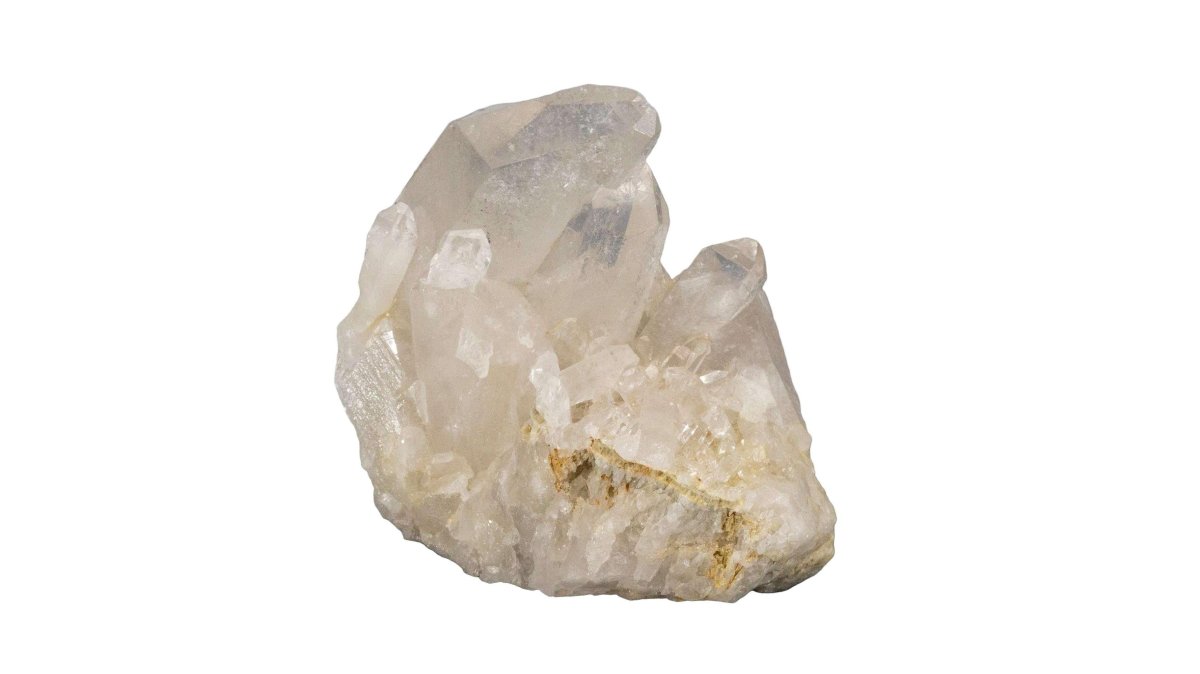
If you want a single anchor stone rather than a collection, a large cluster does more work than three small pieces. The Clear Quartz Crystal Cluster stands 101.6mm tall with multiple well-defined terminations, and in crystal tradition it is treated as an amplifier, so it strengthens whatever sits near it.
Crystals for Bedroom Calm and Rest
Bedrooms call for calmer stones and softer light. The goal is a room that winds down, not one that stimulates. Amethyst and Rose Quartz are the two most common choices here, and they do different jobs.

Amethyst is associated with the Third Eye and Crown Chakras, and it is the stone most often recommended for restful sleep and stress relief. Rose Quartz works with the Heart Chakra, and it is the gentler of the two, oriented toward emotional healing and self-compassion rather than mental quiet.
For a bedroom, a cluster or sphere beats a tower. Both radiate outward, so the energy spreads through the space instead of shooting upward toward the ceiling.
Which Stones Belong on a Nightstand
A nightstand has limited surface area, so one or two pieces is the right count. A Rose Quartz Crystal Sphere is the cleanest option: it is polished smooth, comes in 67mm, 71mm, and 75mm diameters, and it sends its energy outward in every direction equally. That even spread is why a sphere suits a bedside table better than a pointed stone.
If you want something with more visual drama, a Moroccan Agate geode slice stands upright on a small stand and shows its natural banding in cream, tan, rust, and grey. Agate is tied to the Root Chakra, so it leans toward grounding and calm focus rather than emotional warmth.
A quick way to decide between the two:
| If you want... | Choose | Why |
|---|---|---|
| Heart-centered warmth | Rose Quartz sphere | Radiates evenly, soft pink, Heart Chakra |
| Grounding and steadiness | Agate geode slice | Root Chakra, earthy tones, stable presence |
| Calm and mental quiet | Amethyst cluster | Third Eye and Crown Chakras, sleep support |
| Protection near an entry | Black Tourmaline | Dense, grounding, pairs with Clear Quartz |
How to Display Crystals at Home Without Clutter
Clutter comes from too many pieces competing for the same surface. The fix is grouping, not hiding. Pick one anchor stone per surface, then add at most two smaller pieces around it.
Three rules we give customers:
- One anchor per surface. A large cluster, freeform, or sphere earns the spot. Everything else supports it.
- Vary height, not quantity. A tall tower beside a low geode slice reads as intentional. Five similar tumbled stones read as mess.
- Keep like with like. Group warm tones together and cool tones together. Mixed palettes on one shelf look accidental.
Height variation also solves the light problem. A tower catches light from the side; a slice laid flat catches it from above. Placing them at different levels means at least one piece is always lit well.
How to Identify Real Crystals Before You Buy
Real crystals have natural variation. Fakes are too consistent. That single rule catches most problems before money changes hands.
Check for these signs:
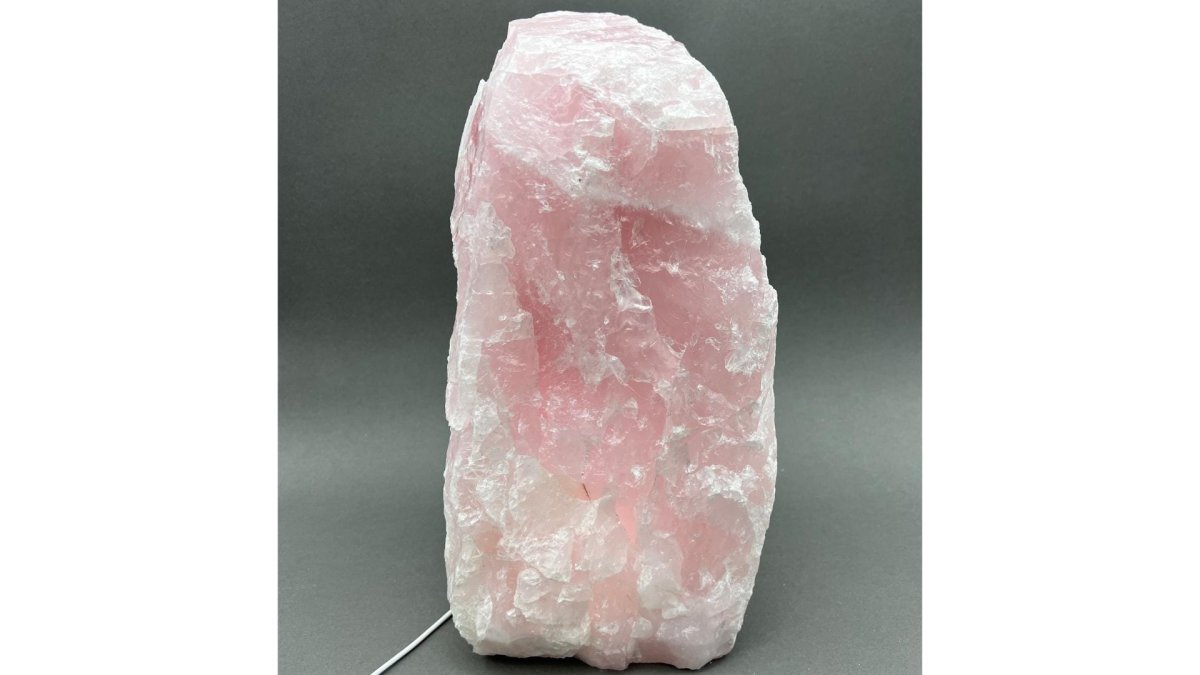
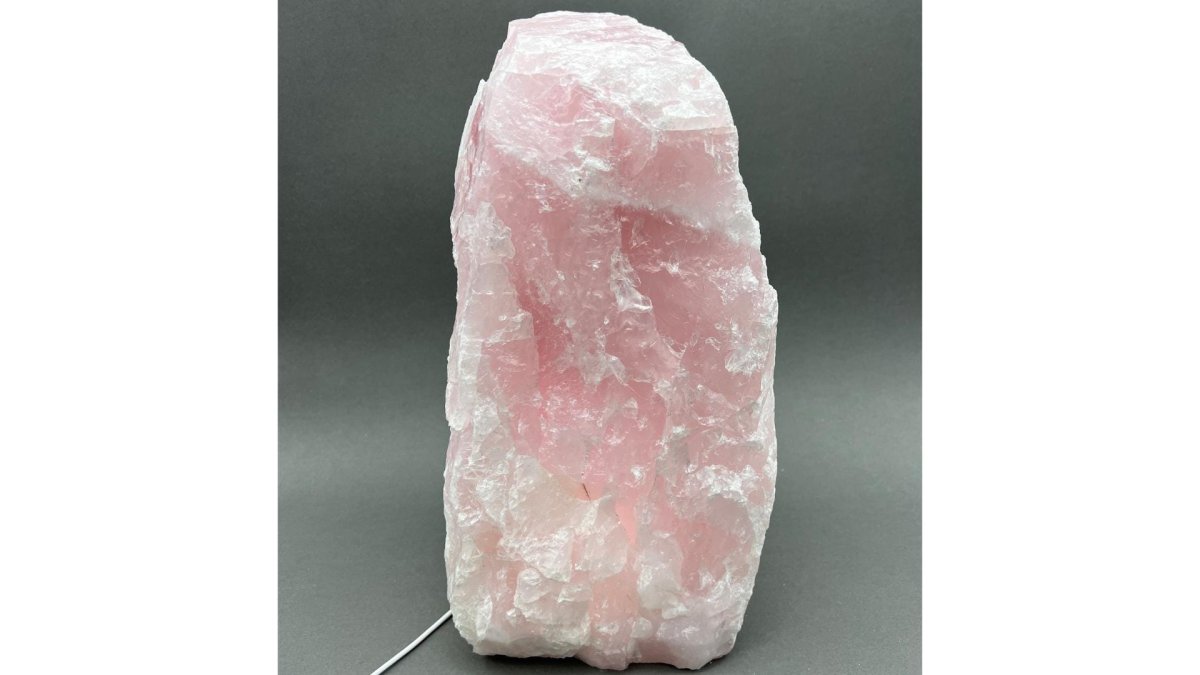
Rose Quartz Lamp 3 Inch Wood Base Size 2.5 to 3.5 Inches Crystal Decor →
- Color zoning. Natural Amethyst shifts from pale lavender to deep violet within one piece. Uniform purple across a large surface is a warning sign.
- Inclusions and cloudiness. Genuine Rose Quartz often carries slight cloudiness or internal variation. Perfectly clear pink is unusual in nature.
- Internal flash, not surface coating. Labradorite's blue and gold flash comes from light interfering between internal feldspar layers. It cannot be painted on, and it shifts as you rotate the stone.
- Weight and temperature. Real stone feels cool and dense in the hand. Resin and glass feel lighter and warm up quickly.
- Natural edges. A genuine geode slice has irregular outer edges. A perfectly round, perfectly smooth rim suggests a molded copy.
Ask the seller two questions: where the stone was mined, and whether the piece is the exact one pictured. A serious seller answers both without hesitation.
Federal Trade Commission guidance on advertising claims is worth a look if you buy from a seller making health claims about stones, since the same rules that govern any product claim apply here.
Pairing Crystals for Energy: Which Stones Work Together
Pairing works on a simple principle: one stone sets the tone, another supports it. Clear Quartz is the most common support stone because it is traditionally treated as an amplifier, strengthening whatever sits beside it.
Combinations that hold up in practice:
- Amethyst + Clear Quartz. Clarity on top of calm. A common pairing for meditation spaces.
- Smoky Quartz + Black Tourmaline. Both are grounding stones. Smoky Quartz is said to transmute heavy energy rather than simply block it, and Black Tourmaline reinforces that protective quality.
- Rose Quartz + Amethyst. Heart-centered warmth alongside spiritual clarity. Good for shared spaces and bedrooms.
- Labradorite + Amethyst. Two stones that both touch the Third Eye. Labradorite adds transformation, Amethyst adds calm.
The Smoky Quartz Crystal Tower is a strong anchor for a pairing setup because it carries three natural features in one piece: self-healing, phantom formations, and rainbow inclusions. The phantom layers support deeper meditative work, while the Root Chakra grounding keeps the combination from floating off.

Caring for Your Best Crystals for Home Decor and Energy
Care comes down to three things: dust, light, and water. Get those right and most pieces last indefinitely.
Dust with a soft dry cloth. For polished pieces, a slightly damp cloth is fine, then dry immediately. For energetic cleansing, many collectors smudge with sage or rest a stone on a Selenite plate overnight.
Watch the two failure modes:
- Sunlight fading. Amethyst and Rose Quartz can lose color with prolonged direct sun. Keep them out of all-day windows.
- Water damage. Quartz family stones tolerate a brief rinse. Fluorite does not. The Natural Rainbow Fluorite Diamond has a Mohs hardness around 4, so it scratches easily and should be wiped, never soaked.
Handle towers and freeforms on a stable surface. A tipped tower chips at the tip, and that damage is permanent.
Where to Find Curated Crystals for Your Home
Buying crystals online comes down to two questions: is the piece real, and is it the piece in the photo? Those are the questions that decide whether a purchase works out.
At CSShop, every specimen listing shows the exact piece you receive, with dimensions and weight stated up front. Our crystal collection spans clusters, towers, spheres, freeforms, and rough stones, so you can match the form to the room rather than settling for whatever shape happens to be in stock. If you love the idea of discovering stones without choosing them one by one, our Jewelry Mystery Boxes are a fun way to build a collection.
A few of our pieces that fit the rooms in this guide:
- Amethyst Crystal Cluster for a bedroom or meditation corner, $129.99
- Rose Quartz Crystal Sphere for a nightstand or shared space, $64.99
- Labradorite Crystal Freeform XL for a living room centerpiece, $349.99
- Large Black Tourmaline Crystals for entryway protection, $14.30
- Smoky Quartz Crystal Tower for grounding and deep meditation work, $89.99
You can browse the full range at csshop.shop.
Frequently Asked Questions
What are the best crystals to display at home?
The best crystals for home decor and energy depend on the room. Amethyst clusters work well in bedrooms and meditation corners for calm and clarity. Clear Quartz clusters serve as room anchors and can cleanse other stones placed nearby. Rose Quartz spheres bring a warm, heart-centered presence to living rooms and shared spaces. For grounding, Smoky Quartz towers and Moroccan Agate geode slices hold steady energy in entryways and workspaces.
Which crystals are popular for bedrooms and living rooms?
For bedrooms, Amethyst is the most common choice because it supports restful sleep and mental calm, and Rose Quartz spheres add gentle warmth on a nightstand. For living rooms, larger statement pieces tend to work best: Clear Quartz clusters, Labradorite freeforms, and Amethyst clusters. These stones radiate energy outward from multiple points, so they influence the whole room rather than a single corner.
How can you tell whether a crystal is natural?
Start with color variation. Natural Amethyst ranges from pale lavender to deep violet, and natural Rose Quartz varies from almost white to medium pink. Uniform, oversaturated color is a warning sign. Check for internal inclusions, cloudiness, or phantoms, which are normal in genuine stones. Ask whether the listing shows the exact piece you will receive. Sellers who photograph each specimen individually, like the one-of-a-kind listings at csshop.shop, make verification straightforward.
Can you display different crystals together?
Yes, and pairing usually improves the display. Clear Quartz amplifies whatever sits near it, so it works alongside almost any stone. Rose Quartz and Amethyst combine heart-centered warmth with spiritual clarity. Black Tourmaline and Smoky Quartz reinforce each other for grounding and protection. Keep softer stones like Fluorite, which has a Mohs hardness around 4, away from harder pieces that could scratch them during rearranging.
Building a collection that looks intentional and actually changes how a room feels is harder than picking pretty stones. It takes matching form to space, pairing stones that support each other, and buying pieces you can trust are genuine. CSShop curates jewelry and crystals with exactly that in mind, with one-of-a-kind specimens, clear sizing and weight details, and fast delivery so your pieces arrive ready to display. Start with the room that needs it most, and build from there.