
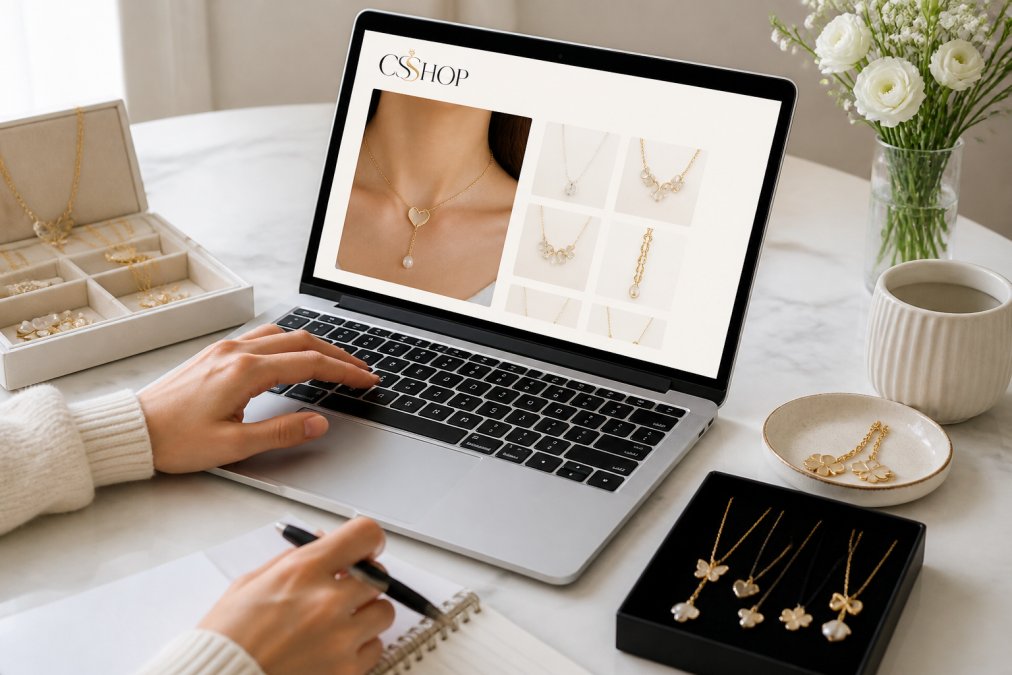
 comparison
Buying Fashion Jewelry Online vs. In Store: 2026 Guide
Table of Contents
- Online vs. In-Store Fashion Jewelry: The Core Trade-offs
- Quality, Materials, and What the Labels Actually Mean
- How to Identify High-Quality Fashion Jewelry Before You Buy
- Common Jewelry Scams to Avoid When Shopping Online
- Return Policies, Consumer Protection, and Buying with Confidence
- Virtual Try-On, AR Tools, and Sizing Accuracy for Fashion Jewelry Online
- Post-Purchase Care, Insurance, and Appraisal Basics
- Our Pick: Where to Start Your Fashion Jewelry Collection
Last Updated: August 13, 2026
Online vs. In-Store Fashion Jewelry: The Core Trade-offs
Buying fashion jewelry online has become one of the most common shopping decisions for style-conscious women today. At CSShop, we hear the same question constantly: is it really worth it, or does shopping in a physical store protect you from low-quality materials? The honest answer is that both channels have real strengths and genuine pitfalls. What separates a smart purchase from a regrettable one isn't where you shop, it's knowing exactly what to look for before you click "add to cart" or hand over your card at the counter.
Pros and Cons of Buying Fashion Jewelry Online
Shopping for fashion jewelry online gives you access to a far wider selection than any single physical store can carry. You can compare styles across dozens of retailers in minutes, read customer reviews, and often find better prices because online sellers carry lower overhead costs. The downsides are real: you can't feel the weight of a piece, assess the quality of a clasp, or check whether a stone sits flush in its setting. Photos can be misleading, and poor return policies leave you stuck with something that doesn't work.
Pros of buying online:
- Broader selection, including niche and bespoke styles
- Easier price comparison across multiple sellers
- Customer reviews and photos from real buyers
- Convenient home delivery with fast shipping options
Cons of buying online:
- No tactile experience before purchasing
- Sizing accuracy can be tricky, especially for rings
- Photos may not reflect true color or scale
- Risk of encountering low-quality or misrepresented materials
Pros and Cons of Shopping at Traditional Retailers
Physical jewelry stores offer something online shopping cannot: the experience of holding a piece, trying it on, and making a judgment call with your own hands. For high-value pieces, that tactile experience matters enormously. The trade-off is selection and price. Brick-and-mortar retailers carry higher overhead, which typically gets passed along as retail markup, and their inventory is limited by floor space.
Pros of shopping in-store:
- Full tactile experience and visual inspection under real lighting
- Immediate sizing help from staff
- Easier returns and exchanges
- Confidence in authenticity when buying from an established jeweler
Cons of shopping in-store:
- Higher prices due to retail markup
- Limited selection compared to online
- Less convenient, especially for specialty or bridal pieces
- Store hours restrict when you can shop
| Factor | Online | In-Store |
|---|---|---|
| Selection | Very wide | Limited to inventory |
| Price | Often lower | Higher due to overhead |
| Tactile experience | None | Full |
| Return process | Varies by retailer | Usually straightforward |
| Sizing accuracy | Requires careful research | Staff can assist |
| Customer reviews | Readily available | Word of mouth |
| Convenience | 24/7 access | Store hours only |
Quality, Materials, and What the Labels Actually Mean
Most jewelry disappointments, pieces that turn green, tarnish overnight, or cause skin reactions, trace back to misunderstanding what material labels mean. This is where buying fashion jewelry online requires the most diligence.
Hallmarks, Karat Stamps, and Certification to Check
Hallmarks are small stamps pressed into metal that indicate the metal's purity and, in some cases, the manufacturer or assay office that verified it. In the United States, the FTC guidelines on jewelry labeling require that gold content be accurately represented when a karat stamp is used. If a piece is stamped "14K," it must contain at least 14 parts gold out of 24.
What to look for:
- 925, sterling silver (92.5% pure silver)
- 14K or 585, 14-karat gold or gold-filled metal
- 18K or 750, 18-karat gold
- GP or GEP, gold plated or gold electroplated (thin layer over base metal)
- GF, gold-filled (thicker bonded layer, more durable than plating)
For gemstones, look for certification from recognized labs. Lab-grown diamonds and natural diamonds should ideally come with a grading report. Cubic zirconia and rhinestones are legitimate in fashion jewelry, but a reputable retailer will name them clearly.

Sterling Silver, Gold Vermeil, and Plating: Real Differences
These three terms describe very different levels of quality and durability.
Sterling silver is a solid metal alloy (92.5% silver, 7.5% other metals, usually copper). It is durable, tarnishes slowly with normal wear, and can be polished back to its original finish. It is an excellent choice for everyday jewelry.
Gold vermeil is sterling silver with a thick layer of gold plating (typically at least 2.5 microns, as defined by FTC standards). It looks like solid gold, costs significantly less, and holds up better than standard plating. The gold layer will eventually wear with frequent contact with skin or water.
Gold plating is a very thin layer of gold over a base metal, often brass or zinc alloy. It is the least durable option and most likely to tarnish or chip with regular wear. A piece described as "gold-toned" or "gold-colored" may have no gold content whatsoever, and that's legally fine as long as it's not misrepresented.
How to Identify High-Quality Fashion Jewelry Before You Buy
The biggest mistake shoppers make is judging fashion jewelry purely by how it looks in photos. Quality shows in the details, and those details are readable even when shopping online if you know what to check.
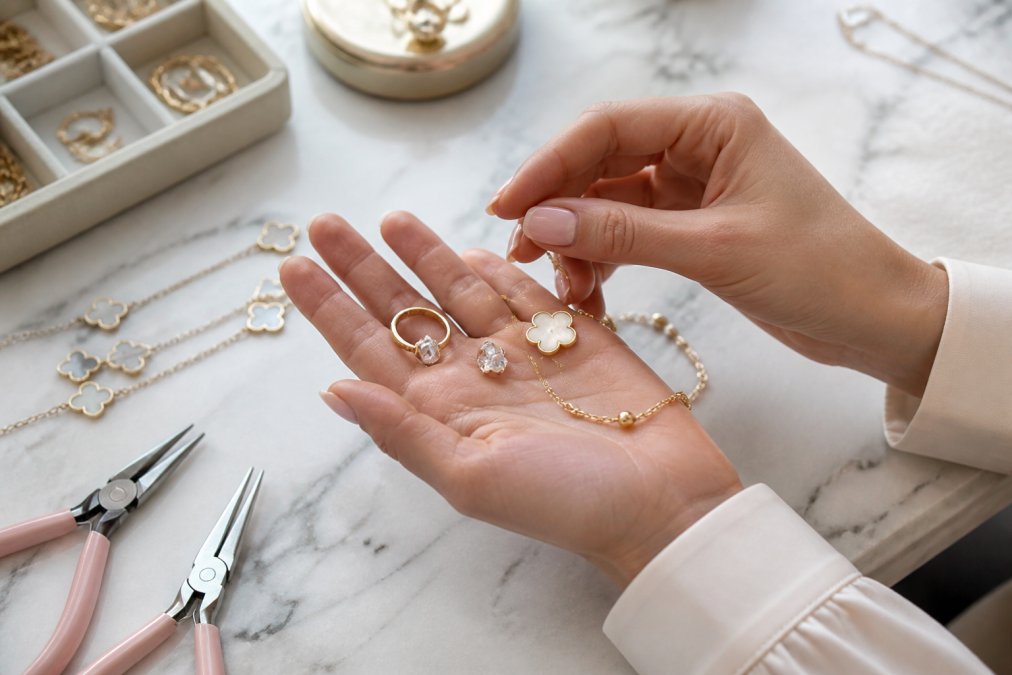
Start with the product description. A reputable retailer will clearly state the base metal, any plating details, stone type, and whether the piece is hypoallergenic or nickel-free. Vague descriptions like "alloy metal" or "fashion stone" without further detail signal a need to dig deeper or move on.
Check these specifics before purchasing:
- Metal composition, Is the base metal named? Brass and copper are common and acceptable. Zinc alloy is less durable. Unknown "alloy" with no further detail is a red flag.
- Plating thickness, For plated pieces, is the micron thickness stated? Thicker plating lasts longer.
- Stone identification, Is the stone named as cubic zirconia, crystal, or rhinestone? Avoid listings vague about stone type.
- Clasp and setting quality, Do product photos show the back of the piece? A poorly finished clasp or uneven prong setting will be worse in person.
- Customer photos, Look for reviews that include photos from actual buyers. These are far more reliable than professionally styled product shots.
- Hypoallergenic claims, Nickel-free and surgical steel posts matter for earrings, especially for sensitive ears. This should be stated explicitly.
Common Jewelry Scams to Avoid When Shopping Online
Online jewelry shopping has a well-documented scam problem. Knowing the patterns makes them easy to spot.
The "solid gold" bait-and-switch. A listing uses gold-adjacent language, "18K gold," "real gold finish," "genuine gold", without clarifying that the piece is plated over base metal. Read every word of the description. If "plated," "filled," or "toned" appears anywhere, the piece is not solid gold.
Fake gemstone certification. Some sellers attach certificates that look official but come from unrecognized labs. For any piece marketed as containing natural diamonds or precious stones, verify the certifying body. Recognized names include the Gemological Institute of America (GIA) and the American Gem Society (AGS).
Counterfeit hallmarks. Stamps can be faked. If a price seems impossibly low for the stated metal content, trust your instincts.
No-return "final sale" traps. Some low-quality sellers mark everything as final sale to avoid dealing with returns. This is a significant red flag.
Review manipulation. A product with hundreds of five-star reviews but no photos, no detailed text, and reviews all posted within a short window is likely using manufactured social proof. Look for reviews that mention specific details about how the piece held up over time.
Return Policies, Consumer Protection, and Buying with Confidence
Return policies are the clearest indicator of how much a jewelry retailer stands behind its products. A seller confident in their quality offers generous returns. One that's not hides behind "all sales final" language.
For consumer protection, the Federal Trade Commission's guides for the jewelry industry set baseline standards for how jewelry must be described and marketed in the U.S. These rules cover karat stamps, plating disclosures, and gemstone labeling.
Before purchasing fashion jewelry online, confirm:
- Return window, 14 to 30 days is standard. Anything shorter deserves scrutiny.
- Condition requirements, Most retailers require unworn items with original packaging. This is reasonable.
- Who pays return shipping, Reputable sellers often cover this for defective items.
- Secure checkout, Look for HTTPS in the URL and recognized payment methods.
- Warranty terms, Some quality fashion jewelry comes with a limited warranty against defects.
Paying with a credit card adds an additional layer of consumer protection through chargebacks if a product is significantly misrepresented.
Virtual Try-On, AR Tools, and Sizing Accuracy for Fashion Jewelry Online
Augmented reality try-on technology is transforming online jewelry retail. Several platforms now offer AR tools that let you see how a ring, earring, or necklace looks on your actual hand or face using your phone's camera. This directly addresses the biggest weakness of online jewelry shopping: the inability to see a piece on your body before buying.
For rings specifically, sizing accuracy is the most common pain point. Most reputable online jewelers provide detailed sizing guides with measurement instructions. Some offer free ring sizer tools by mail.
What to do for accurate sizing:
- Measure your finger at the end of the day, when fingers are slightly larger
- Measure in warm conditions, not cold
- If between sizes, size up for wide bands and size down for narrow bands
- Check whether the retailer offers free exchanges for sizing issues
Post-Purchase Care, Insurance, and Appraisal Basics
Buying quality fashion jewelry is only half the equation. How you care for it determines how long it stays beautiful.
Jewelry maintenance basics:
- Store pieces separately to prevent scratching
- Remove jewelry before bathing, swimming, or exercising
- Clean sterling silver with a soft cloth and mild soap
- For plated pieces, wipe with a dry soft cloth after wearing
- Keep costume jewelry away from perfume, hairspray, and lotion
For fine fashion jewelry with genuine precious metals or certified stones, professional cleaning once or twice a year keeps them looking their best.
Insurance and appraisal become relevant when a piece has significant monetary or sentimental value. A professional appraisal establishes the replacement value for insurance purposes. For fashion jewelry at accessible price points, formal appraisal is usually unnecessary. But for bridal pieces, heirloom-quality items, or anything with certified precious stones, an appraisal is worth the investment.
Our Pick: Where to Start Your Fashion Jewelry Collection
Starting a jewelry collection doesn't require a large budget or a trip to a high-end retailer. The smartest move is building a foundation of versatile pieces that work across different outfits and occasions without overpaying for retail markup.
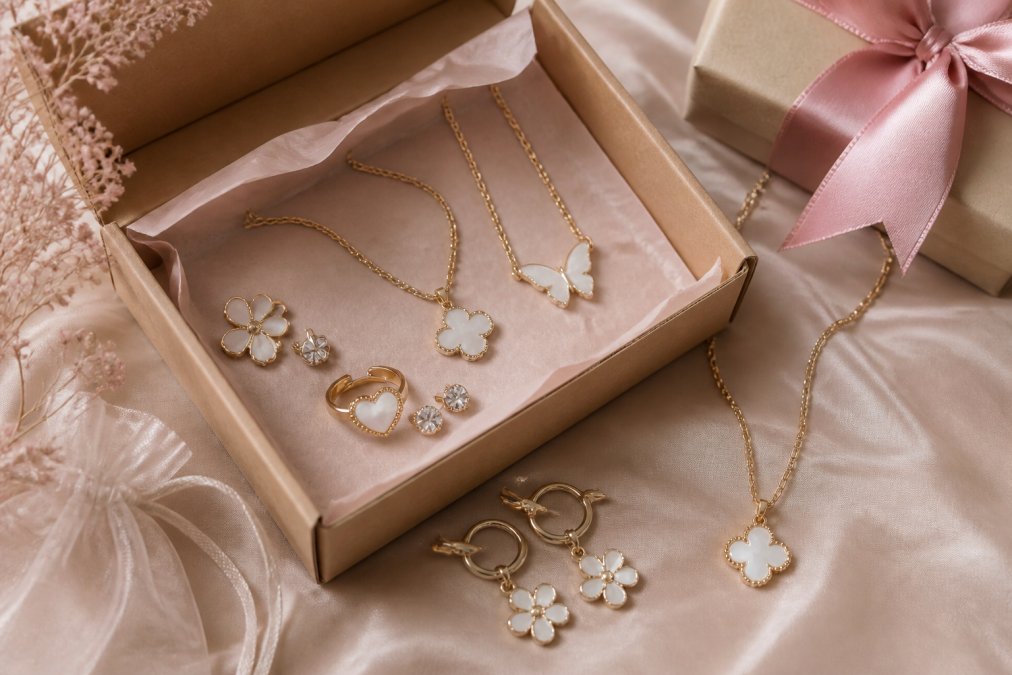
CSShop carries a curated selection of fashion jewelry designed specifically for women who want style, quality, and value in one place. Every piece in the collection is selected with durability and wearability in mind.
For building your base collection: The Jewelry Mystery Boxes are one of the most enjoyable ways to start. You receive a curated selection of pieces at a fraction of individual retail prices. It's beautifully packaged and takes the decision fatigue out of starting from scratch.

For a statement ring: The Sterling Silver Elongated Cushion Chocolate CZ Cocktail Ring is made from 14K gold-plated sterling silver with a lead- and nickel-free construction. The elongated cushion-cut CZ reads as fine jewelry without the fine jewelry price.
For everyday earrings: The LMTS Classic Pave Butterfly Stud Earring is hypoallergenic, nickel-free, and uses surgical steel posts, exactly the kind of specification you want to see stated clearly.

For classic elegance on a budget: The CAOSHI Oval-Shaped CZ Earrings deliver a clean, timeless look in brass and cubic zirconia, the kind of piece that works as well in a professional setting as it does for a weekend out.
For bridal occasions: The Fashion Crystal Bride Jewelry Set includes a rhinestone necklace and earring set in silver-plated zinc alloy and crystal, a complete bridal look for bridesmaids or budget-conscious celebrations.
Browse the full collection at csshop.shop to find pieces that match your style, whether you're building an everyday wardrobe or dressing for a special occasion.
Frequently Asked Questions
Is it better to buy jewelry in store or online?
Neither option is automatically better, it depends on what you're buying and how much you know about materials. In-store shopping gives you a tactile experience and immediate visual inspection, but online retailers often offer wider selections and lower prices because they carry less retail markup. For fashion jewelry, buying online from a reputable retailer with clear material disclosures, a solid return policy, and verified customer reviews is a practical and safe choice for most shoppers.
What are the risks of buying fashion jewelry from unverified online retailers?
The main risks include receiving pieces made from undisclosed base metals that tarnish quickly, misleading plating thickness claims, and sellers who misrepresent stones as precious when they are not. The FTC requires jewelry sellers to accurately disclose metal content and gemstone treatments. To protect yourself, check for hallmarks, read customer reviews, confirm return policies before purchasing, and buy only from retailers who clearly list materials like sterling silver, karat weight, or cubic zirconia rather than vague terms like 'gold-tone.'
How can you verify the quality of materials when shopping for jewelry online?
Start with the product listing: reputable sellers state exact materials, sterling silver, 14K gold plated, brass base, cubic zirconia, rather than generic descriptions. Look for hallmark information in the product description or photos. Check whether the retailer mentions lead-free and nickel-free compliance, which matters for sensitive skin. Read customer reviews specifically mentioning durability and tarnish. For higher-value pieces, ask whether a gemstone certification or appraisal document is available before completing your purchase.
What should you look for in a return policy when buying jewelry online?
A trustworthy return policy should allow at least 14-30 days for returns, cover quality defects without requiring you to pay return shipping, and clearly state the refund method. Watch for policies that exclude 'hygiene items' without defining them, some sellers use this to block all jewelry returns. Before buying, confirm whether exchanges are offered for sizing issues and whether the policy covers items that arrive damaged. Retailers who offer shipping insurance on outbound orders signal higher confidence in their own product quality.
Buying fashion jewelry online rewards shoppers who know what to look for and penalizes those who don't. CSShop is built around the idea that you shouldn't have to choose between affordability and quality. With clearly described materials, carefully curated pieces, and fast delivery, it's a straightforward place to start, or expand, a collection you'll actually reach for.
This article was written using GrandRanker